AC Running But Not Cooling? Causes and Fixes for CA Homes
Is your AC running but not cooling the house? Here are the 8 real causes, the free DIY checks to try first, and the pro-only fixes for Inland Empire homes.

Owner & Lead HVAC Technician, Alex Air & Heating · EPA 608 Universal Certified · Ontario, CA
TL;DR
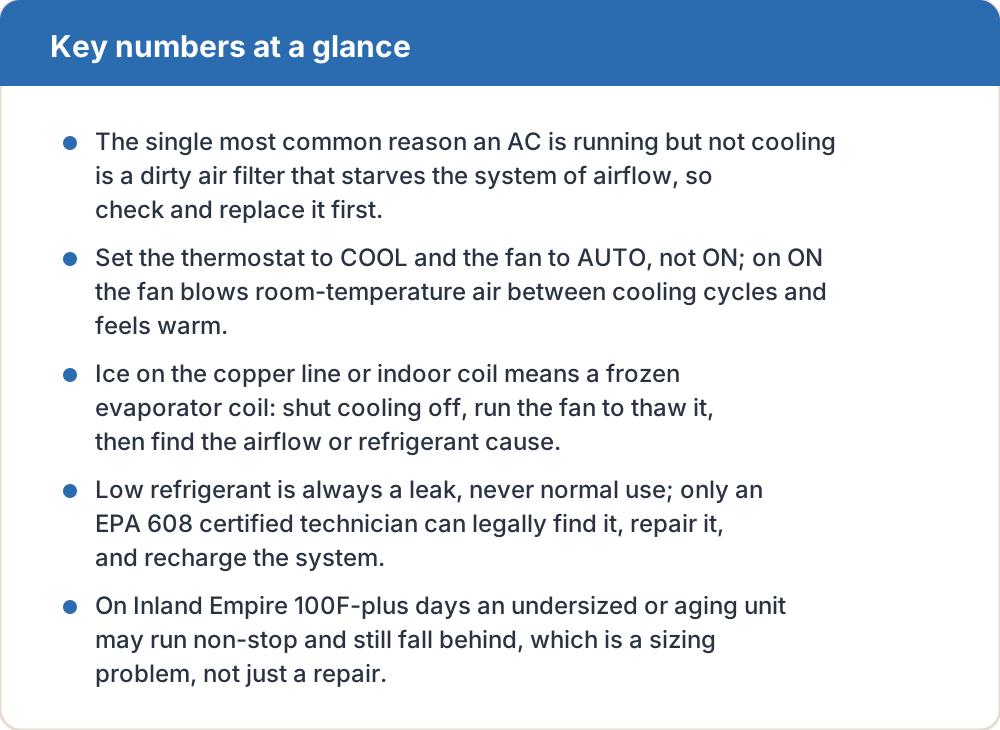
An AC running but not cooling is almost always caused by restricted airflow or lost cooling capacity: a clogged air filter, a frozen or dirty coil, or low refrigerant from a leak; start with the filter and thermostat before calling a pro.
- The single most common reason an AC is running but not cooling is a dirty air filter that starves the system of airflow, so check and replace it first.
- Set the thermostat to COOL and the fan to AUTO, not ON; on ON the fan blows room-temperature air between cooling cycles and feels warm.
- Ice on the copper line or indoor coil means a frozen evaporator coil: shut cooling off, run the fan to thaw it, then find the airflow or refrigerant cause.
- Low refrigerant is always a leak, never normal use; only an EPA 608 certified technician can legally find it, repair it, and recharge the system.
- On Inland Empire 100F-plus days an undersized or aging unit may run non-stop and still fall behind, which is a sizing problem, not just a repair.
On this page
- Why is my AC running but not cooling the house?
- Free DIY check 1: Is your air filter clogged?
- Free DIY check 2: Is the thermostat set to COOL and AUTO?
- Free DIY check 3: Is the breaker or outdoor unit the problem?
- Is your evaporator coil frozen?
- The pro-only causes: refrigerant, capacitor, compressor, and ducts
- Could the room just be too big for the AC?
- When should you call an HVAC pro in the Inland Empire?
Why is my AC running but not cooling the house?
When your AC is running but not cooling, the compressor and blower are working, yet the air reaching your rooms is not cold enough to bring the temperature down. Almost every case traces back to one of two problems: airflow is being choked off somewhere in the system, or the system has lost the ability to move heat because of low refrigerant, a frozen coil, or a failing electrical part.
The good news for homeowners in Ontario, Fontana, and Rancho Cucamonga is that the two most common causes, a clogged air filter and a thermostat set wrong, cost nothing to check and take five minutes. Work through the free DIY checks below first, then look at the causes that need a licensed technician. If you would rather skip straight to a fix, our AC repair team offers same-day diagnostics with upfront pricing.
This guide covers an AC that **runs and blows cool-ish air but never cools the house**. If the vents blow outright **warm or hot** air, start with Why is my AC blowing warm air?. If it cools but runs nonstop and stalls a few degrees above the setpoint, see AC won't reach the set temperature.
Free DIY check 1: Is your air filter clogged?
A dirty air filter is the number-one reason an AC runs but will not cool. The filter sits in the return airflow, and when it fills with dust, pet hair, and lint, far less air can pass through. The system keeps running but moves so little air that you barely feel it at the vents, and the U.S. Department of Energy notes that a clogged filter can even push the evaporator coil below freezing.
- Symptom: weak airflow at the vents, longer run times, warmer air than usual.
- Fix: pull the filter; if you cannot see light through it, replace it (or wash a reusable one).
- DIY or pro: DIY. Check monthly in summer and swap every 1 to 3 months.
| Cause | Symptom | Fix | DIY or pro |
|---|---|---|---|
| Dirty air filter | Weak airflow, long run times, warm air | Replace or wash the filter | DIY |
| Thermostat on ON not AUTO | Warm air between cooling cycles | Set fan to AUTO, mode to COOL | DIY |
| Tripped breaker / dead condenser | Indoor air blows but outdoor unit off | Reset breaker once; check disconnect | DIY (once) |
| Dirty condenser coil | Runs constantly, poor cooling, hot outdoor unit | Clear debris, gently rinse fins | DIY / pro |
| Frozen evaporator coil | Ice on line set, barely-cool air | Shut cooling off, run fan to thaw, find cause | DIY thaw, pro diagnose |
| Low refrigerant (leak) | Warm air, hissing, icing, rising energy bills | Leak repair and recharge | Pro (EPA 608) |
| Failing capacitor | Humming, compressor clicks and won't start | Replace capacitor | Pro |
| Failing compressor / leaky ducts | Little cooling with full charge; lost cold air | Compressor test or duct sealing | Pro |
Free DIY check 2: Is the thermostat set to COOL and AUTO?
It sounds too simple, but a thermostat on the wrong setting fools many homeowners. Make sure the mode is COOL and the setpoint is below the current room temperature. Then check the fan switch: it should be on AUTO, not ON. On ON, the blower runs constantly and pushes room-temperature air through the vents between cooling cycles, so the air feels warm even though nothing is broken.
Also replace weak thermostat batteries and confirm the schedule is not raising the setpoint mid-afternoon. If your AC still blows warm after this, our guide on why your AC is blowing warm air walks through the next layer of causes.
Free DIY check 3: Is the breaker or outdoor unit the problem?
Your system has two halves: the indoor air handler and the outdoor condenser. If only the indoor blower has power, you will feel airflow but it will never cool, because the outdoor unit does the actual heat rejection. Walk outside and confirm the large condenser is running and its fan is spinning.
- Check the breaker panel and the outdoor disconnect box for a tripped breaker; reset it once.
- Clear leaves, grass clippings, and cottonwood fluff from the condenser fins so it can breathe.
- Keep at least two feet of clearance around the unit; a smothered condenser cannot dump heat.
- If the breaker trips again immediately, stop and call a pro; that signals an electrical fault.
A caked-over condenser coil is a real cause of poor cooling on dusty Corona and Riverside lots. You can gently rinse the outside fins with a garden hose (power off), but do not bend them or use a pressure washer.
Is your evaporator coil frozen?
If you see ice on the copper refrigerant line or on the indoor coil, you have a frozen evaporator coil, and it will keep the system running while blowing barely-cool or warm air. Ice forms when airflow is restricted (dirty filter, blocked vents, weak blower) or when refrigerant is low. The frustrating part is that the ice itself blocks cooling, so the problem snowballs.
First response is DIY: turn the thermostat to OFF for cooling but set the fan to ON to melt the ice, which can take a few hours. Once it is fully thawed, replace the filter and open all supply vents. If it freezes again, the cause is deeper and needs a technician. Our frozen AC coil guide covers the full thaw-and-diagnose process step by step.
The pro-only causes: refrigerant, capacitor, compressor, and ducts
If the DIY checks come up clean and your AC is still running but not cooling, the cause is usually one a licensed technician must handle. These involve refrigerant, high-voltage electrical parts, or the sealed system, and they are not safe or legal for homeowners to service.
- Low refrigerant from a leak: warm air, ice on the line, hissing. Refrigerant never gets 'used up,' so low charge always means a leak. EPA 608 rules require a certified tech to repair and recharge it.
- Failing run capacitor: the AC hums or the compressor tries to start and clicks off, running without producing cold air. A common, affordable repair.
- Failing compressor: the heart of the system runs at reduced capacity or short-cycles, giving little cooling even with a full charge. Often the costliest fix.
- Leaky ducts: the DOE estimates typical homes lose up to 30% of cooled air to duct leaks, so cold air escapes into the attic instead of your rooms.
Because refrigerant handling is federally regulated, this is where an EPA 608 certified company matters. Alex Air & Heating is EPA 608 certified and based in Ontario, CA, and we can pinpoint leaks, replace capacitors, and test compressors the same day. When the house is dangerously hot, our emergency AC repair line is available for fast response.
Could the room just be too big for the AC?
Sometimes nothing is broken. On a 100F-plus Inland Empire afternoon, an aging or undersized unit can run non-stop and still fall a few degrees behind, especially in a west-facing room or a home with poor attic insulation. If one room stays hot while the rest of the house is fine, that points to airflow balance or duct issues rather than a failed part; our guide on fixing uneven cooling and hot rooms explains the difference.
If the whole house never reaches setpoint on hot days and the system is 12 or more years old, you may be dealing with a capacity problem. A technician can perform a load calculation to confirm whether the unit is truly undersized before you spend money chasing repairs.
When should you call an HVAC pro in the Inland Empire?
Call a professional if you have replaced the filter and set the thermostat correctly but the AC is still running but not cooling, if the coil keeps re-freezing, if the breaker trips repeatedly, or if you see or hear a refrigerant leak. During Ontario and Chino Hills heat waves, a house that will not cool can become a safety issue for kids, seniors, and pets, so do not wait it out.
Alex Air & Heating serves Ontario and the wider Inland Empire and East LA County with same-day and emergency AC repair, EPA 608 certified technicians, and upfront pricing before any work begins, so you know the cost before we start.
Frequently asked questions
The most common reasons are a clogged air filter, a thermostat set to fan ON instead of AUTO, or a dirty outdoor condenser coil, all of which you can check yourself. If those are fine, the cause is usually low refrigerant from a leak, a frozen evaporator coil, or a failing capacitor or compressor, which need a licensed technician.
Yes. A clogged filter starves the system of airflow, so it keeps running but moves very little cold air. Left long enough, restricted airflow can freeze the evaporator coil and stop cooling entirely. Checking and replacing the filter is the first and cheapest thing to try.
AUTO in almost all cases. On AUTO the blower runs only while the system is actively cooling, so you feel cold air. On ON the fan runs constantly and pushes room-temperature air through the vents between cooling cycles, which feels warm and can make you think the AC is broken when it is not.
No. Refrigerant is never consumed in normal operation, so a low charge always means a leak that must be found and sealed first. Handling refrigerant is federally regulated and requires EPA 608 certification. An Ontario technician can legally repair the leak and recharge the system correctly.
Not necessarily. On Inland Empire days above 100F, an aging or undersized unit may run non-stop and stay a few degrees behind, especially in west-facing rooms. If the whole house never reaches setpoint, have a technician run a load calculation to check whether the system is properly sized before paying for repairs.
It depends entirely on the cause: a filter or thermostat fix is free, a capacitor is an affordable repair, while refrigerant leak repairs and compressor work cost more. Alex Air & Heating provides upfront pricing after diagnosing the exact cause, so you approve the cost before any work begins.
Local next step
Turn this guide into a site-specific answer.
Guides explain the decision. Equipment condition, access, and safe next steps still need to match the home or business. Review the relevant service scope or request an assessment for Ontario, the Inland Empire, or East Los Angeles County. Availability depends on the current schedule.