Will R-410A Repairs Get More Expensive in 2026? What a Recharge Really Costs Now
R-410A recharge cost in 2026 is trending up as the federal HFC phase-down tightens supply. Here is what a top-off really costs, why the leak is the real bill, and when repeated recharges mean it is time to replace.

Owner & Lead HVAC Technician, Alex Air & Heating · EPA 608 Universal Certified · Ontario, CA
TL;DR
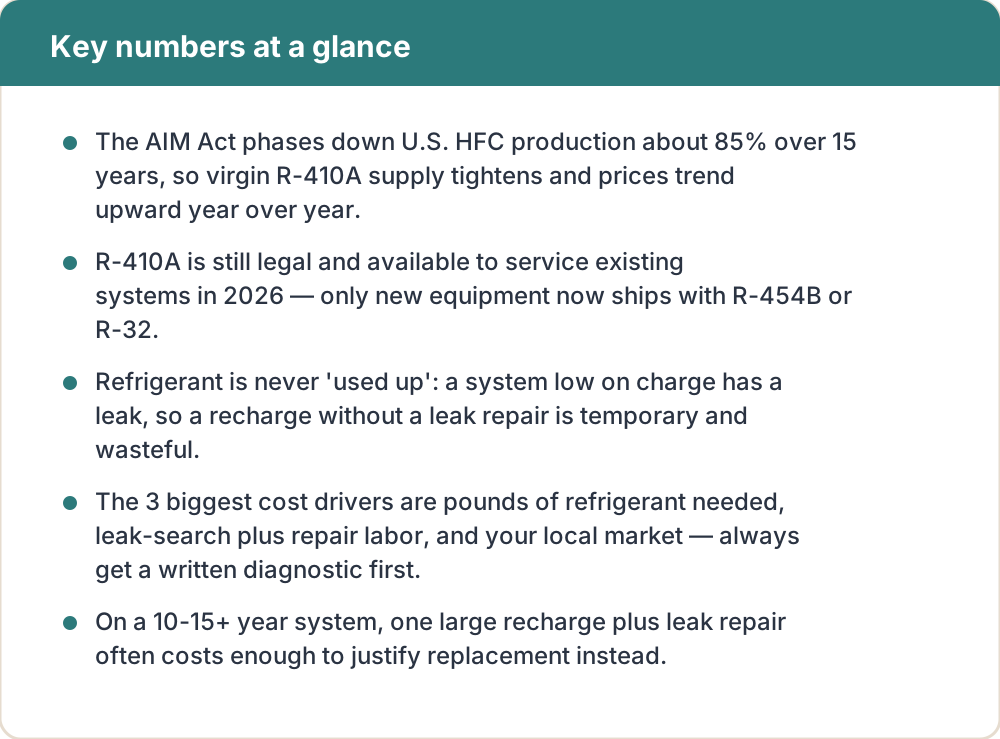
R-410A recharge cost in 2026 is higher than a few years ago and will keep drifting up, because the federal AIM Act is phasing down HFC production and tightening R-410A supply. A small, correctly-diagnosed top-off is still affordable, but the real cost is finding and fixing the leak that caused the low charge. On a 10-15+ year system, repeated recharges are the signal to price out replacement rather than keep paying rising refrigerant costs.
- The AIM Act phases down U.S. HFC production about 85% over 15 years, so virgin R-410A supply tightens and prices trend upward year over year.
- R-410A is still legal and available to service existing systems in 2026 — only new equipment now ships with R-454B or R-32.
- Refrigerant is never 'used up': a system low on charge has a leak, so a recharge without a leak repair is temporary and wasteful.
- The 3 biggest cost drivers are pounds of refrigerant needed, leak-search plus repair labor, and your local market — always get a written diagnostic first.
- On a 10-15+ year system, one large recharge plus leak repair often costs enough to justify replacement instead.
On this page
Will R-410A repairs get more expensive in 2026?
Yes. Recharging an R-410A system costs more in 2026 than it did a few years ago, and prices will keep drifting up as the federal HFC phase-down tightens R-410A production. A small, correctly-diagnosed top-off is still affordable — the real cost is fixing the leak behind the low charge.
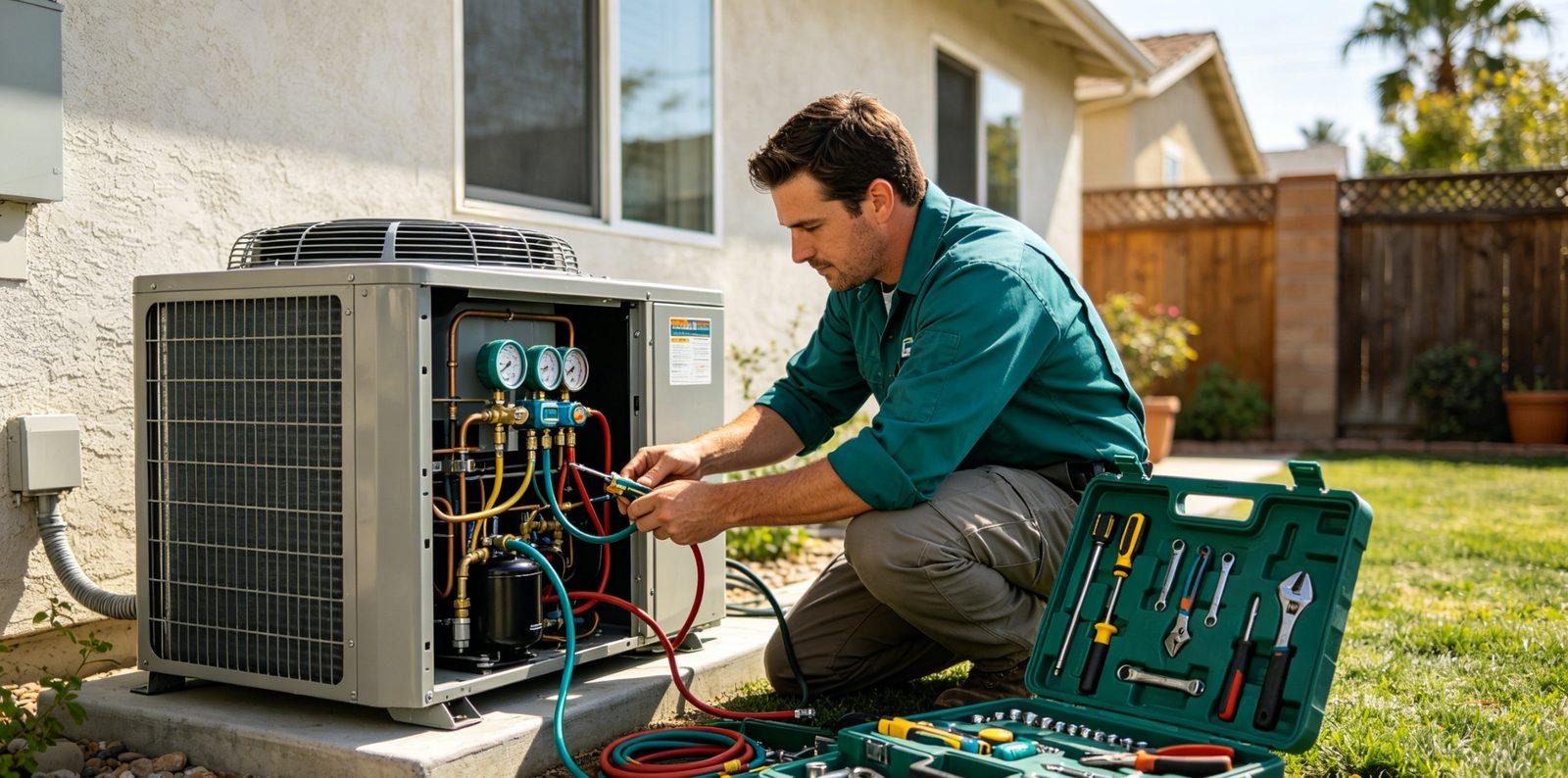
If you own an existing air conditioner or heat pump here in Ontario, Pomona, Rancho Cucamonga or anywhere in the Inland Empire, this matters because your system almost certainly runs on R-410A. The good news: it is still legal and available to service. The catch: the refrigerant itself is getting scarcer and pricier, so the smart money is on fixing leaks properly rather than repeatedly topping off.
Why is R-410A getting more expensive?
The driver is federal policy. The AIM Act directs the EPA to phase down production and import of HFCs — the family of refrigerants that includes R-410A — by roughly 85% over 15 years. Less new supply plus steady demand from millions of existing systems means prices trend upward year over year.
That is also why new equipment has switched: air conditioners and heat pumps sold today ship with lower-GWP refrigerants like R-454B or R-32. R-410A is not banned for service — a certified tech can still buy it and recharge your system in 2026 — but reclaimed (recycled) R-410A grows in importance as virgin production shrinks. For the full picture on availability, see our guide on whether R-410A is still available in 2026 and how R-454B compares to R-410A.
What actually drives the cost of a recharge?
Three things determine your bill, and only one of them is the gas itself:
- Pounds of refrigerant needed — a small top-off uses a fraction of what a fully-empty system requires, and with R-410A prices rising, every pound matters more each year.
- Leak-search and repair labor — finding where the charge escaped and sealing it is skilled diagnostic work, and it is usually the biggest part of a lasting repair.
- Your local market — parts, labor rates and refrigerant supply vary, which is exactly why you should get a written diagnostic and quote before any refrigerant goes in.
Here is the point most homeowners miss: refrigerant is never 'used up.' It circulates in a sealed loop. If your system is low, it has a leak — full stop. Paying to add new, increasingly expensive R-410A without finding that leak just sends the gas back out the same hole. That is why a recharge alone is temporary and wasteful, and why a frozen or underperforming system usually points to a charge problem worth diagnosing — see why AC coils freeze.
Typical R-410A recharge cost scenarios in 2026
The table below shows three common situations and the general direction of cost. Treat every figure as a labeled estimate that varies by market, leak size and system condition — a written diagnostic is the only way to know your real number.
| Scenario | Typical cost range (estimate, varies) | Recommended action |
|---|---|---|
| Minor leak, small top-off on a newer system | Lowest — a modest diagnostic plus a few pounds of R-410A | Fix the small leak and top off; monitor charge next maintenance visit |
| Moderate leak plus repair on a mid-life system | Mid-range — leak search, component repair, and a larger recharge | Repair the leak properly, then recharge; keep records for trend tracking |
| Major leak on a 12+ year system | Highest — large recharge on aging equipment at rising R-410A prices | Price out replacement with an R-454B system before committing to repair |
Notice the pattern: the older the system and the bigger the leak, the more the math tips toward replacement. When you are paying rising R-410A costs to recharge 12-year-old equipment that may leak again, a new system often wins on total cost. Our repair-vs-replace guide for 2026 and AC repair cost breakdown walk through the numbers, and signs you need a new AC system covers the red flags.
What the rules require your technician to do
This is not just good practice — it is federal law. EPA Section 608 requires that only certified technicians recover and handle refrigerant, and that leaks above set thresholds be repaired rather than repeatedly topped off. A reputable tech will recover refrigerant properly, perform a real leak search, and hand you a written diagnostic before adding gas.
If a company offers to 'just add a couple pounds' every summer without ever looking for the leak, that is a red flag — both for your wallet and under the regulations. The right approach protects you from paying for the same escaping refrigerant twice.
Before anyone adds refrigerant, insist on a leak search and a written estimate so you know whether you are buying a lasting repair or an expensive temporary fix. Alex Air & Heating serves Ontario, Pomona, Rancho Cucamonga, Fontana, Riverside, Chino and the greater LA area with certified diagnostics. Book professional AC repair and get your real number in writing.
For Inland Empire homeowners, one more local factor works in your favor: regular upkeep. Because our summers run long and hot, coils and connections take a beating, and small leaks are easier and cheaper to catch early. Scheduled AC maintenance keeps charge levels documented year over year, so you spot a developing leak before it becomes a large, costly R-410A recharge in the middle of a heat wave.
Frequently asked questions
There is no single guaranteed price — cost depends on how many pounds of refrigerant the system needs, the labor to find and fix the leak, and your local market. A small, correctly-diagnosed top-off is the least expensive scenario; a large recharge with leak repair costs considerably more. Always get a written diagnostic and quote before any refrigerant is added, because the underlying leak, not the gas, usually drives the bill.
The federal AIM Act phases down HFC production roughly 85% over 15 years, so the supply of new (virgin) R-410A tightens each year while demand from existing systems continues. That supply-and-demand pressure pushes prices upward year over year, and reclaimed R-410A grows in importance as a source. R-410A is still legal to service existing equipment in 2026; it is simply becoming a scarcer, pricier commodity over time.
Yes. R-410A remains legal and available to service and recharge existing systems in 2026. What changed is new equipment: air conditioners and heat pumps now ship with lower-GWP refrigerants like R-454B or R-32 instead. So if you already own an R-410A system, a certified technician can still repair and recharge it — you just face gradually rising refrigerant costs as production is phased down.
You need to fix the leak. Refrigerant is not consumed like fuel — if your system is low, it has a leak somewhere. Simply topping off sends new, increasingly expensive R-410A out the same hole within weeks or months. EPA Section 608 also requires certified technicians to repair leaks above set thresholds rather than repeatedly recharge. Finding and sealing the leak is what makes the repair last and protects your wallet long term.
When your system is 10-15+ years old and needs a large recharge plus leak repair, replacement often makes more financial sense. You would be spending rising R-410A costs on aging equipment that may leak again. A pattern of repeated recharges is the clearest signal. Ask your technician to price both the repair and a new R-454B system, and read our repair-versus-replace guide before deciding.
Only an EPA Section 608 certified technician may legally recover and handle refrigerant in your system. Certification exists because R-410A is a regulated greenhouse gas that must be recovered, not vented, and because leaks above certain thresholds must be repaired rather than topped off. A certified tech will also perform a proper leak search and give you a written diagnostic, so you know what you are paying for before any gas is added.
Local next step
Turn this guide into a site-specific answer.
Guides explain the decision. Equipment condition, access, and safe next steps still need to match the home or business. Review the relevant service scope or request an assessment for Ontario, the Inland Empire, or East Los Angeles County. Availability depends on the current schedule.