Best HVAC Filter for Wildfire Smoke: MERV 13, HEPA, and What Your System Can Handle
For wildfire smoke, a MERV 13 filter is the best practical choice for most central HVAC systems. Here's how MERV 13 compares to HEPA, whether it restricts airflow, and how to match the filter to your system.

Owner & Lead HVAC Technician, Alex Air & Heating · EPA 608 Universal Certified · Ontario, CA
TL;DR
The best HVAC filter for wildfire smoke is a MERV 13 filter for most central home systems. Wildfire smoke is mostly fine PM2.5, and MERV 13 captures a large fraction of it while still letting your blower breathe. True HEPA filters more but belongs in portable room air cleaners — most ducted systems can't push air through HEPA without starving airflow. Match the filter to what your system can handle, seal it in its slot, and change it often during smoke.
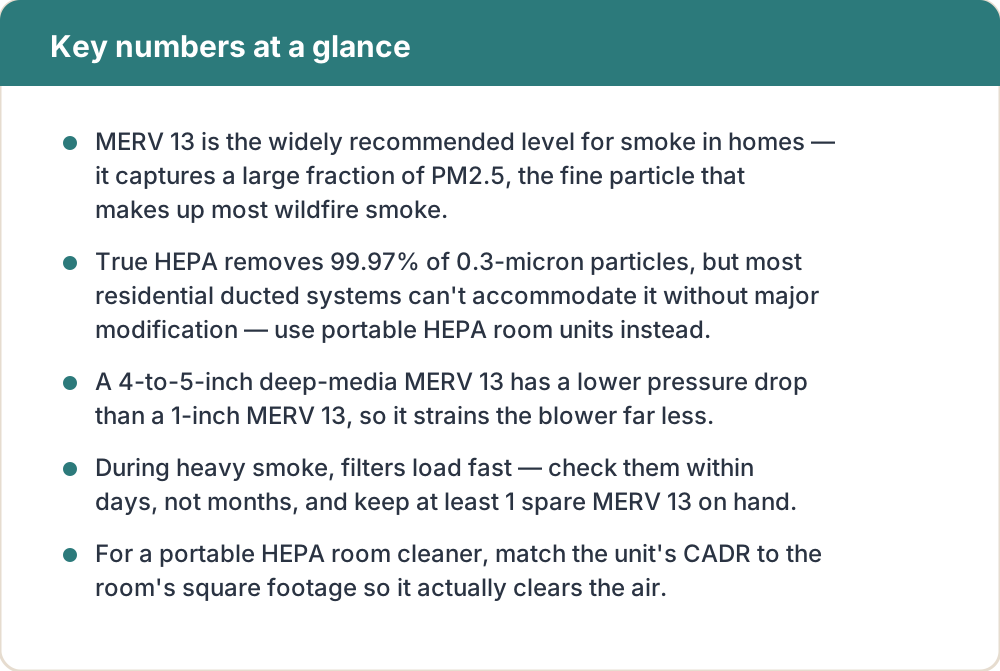
- MERV 13 is the widely recommended level for smoke in homes — it captures a large fraction of PM2.5, the fine particle that makes up most wildfire smoke.
- True HEPA removes 99.97% of 0.3-micron particles, but most residential ducted systems can't accommodate it without major modification — use portable HEPA room units instead.
- A 4-to-5-inch deep-media MERV 13 has a lower pressure drop than a 1-inch MERV 13, so it strains the blower far less.
- During heavy smoke, filters load fast — check them within days, not months, and keep at least 1 spare MERV 13 on hand.
- For a portable HEPA room cleaner, match the unit's CADR to the room's square footage so it actually clears the air.
On this page
- What's the best HVAC filter for wildfire smoke?
- Why wildfire smoke needs a fine-particle filter
- MERV 13 vs HEPA: what stops smoke, and what your system can handle
- Will MERV 13 restrict airflow?
- Where portable HEPA and DIY box fans fit
- Sealing, spare filters, and how often to change during smoke
- For Inland Empire and LA homes
What's the best HVAC filter for wildfire smoke?
For wildfire smoke, a MERV 13 filter is the best practical choice for most central HVAC systems. It captures a high share of the fine PM2.5 in smoke while still letting your blower breathe. True HEPA filters more, but it belongs in portable room units — most home systems can't push air through HEPA without starving airflow.
Why wildfire smoke needs a fine-particle filter
Wildfire smoke is mostly fine PM2.5 — particles so small they slip past the coarse filters built to catch dust and lint. That's why the ordinary 1-inch fiberglass filter in many homes does almost nothing for smoke. To pull PM2.5 out of the air, you need a filter rated to catch particles in that size range, and that rating is measured by MERV.
MERV stands for Minimum Efficiency Reporting Value: the higher the number, the more small particles the filter captures. MERV 8 catches larger dust. MERV 11 is better. MERV 13 captures a large fraction of PM2.5 and is the level widely recommended for smoke in homes. For more on how the scale works, see our air filter MERV rating guide.
MERV 13 vs HEPA: what stops smoke, and what your system can handle
Here's the trade-off in one view. Higher MERV captures more, but it also has a higher pressure drop — meaning the blower has to work harder to pull air through. Match the filter to what your system can actually handle, not just to the highest number on the shelf.
| Filter type | What it captures | Airflow / pressure-drop risk | Best use |
|---|---|---|---|
| MERV 8 | Larger dust, lint, pollen | Low | Basic dust control; too weak for smoke |
| MERV 11 | Finer dust, some smaller particles | Low to moderate | Better everyday air; still limited for heavy smoke |
| MERV 13 | A large fraction of fine PM2.5 | Moderate (much lower in 4–5 in. deep media) | Best practical HVAC filter for wildfire smoke |
| MERV 16 | Very high share of fine particles | High | Only if system is designed for it; can starve airflow |
| Portable HEPA | 99.97% of 0.3-micron particles | N/A (self-contained unit) | Room-by-room cleaning; sized by CADR |
True HEPA removes 99.97% of 0.3-micron particles — better than any MERV filter. But most residential ducted systems can't accommodate HEPA without major modification, because the blower simply can't pull enough air through it. So HEPA isn't the answer for your furnace or air handler; it's the answer for a portable room unit. We break the two approaches down in air purifier vs HVAC filter.
Will MERV 13 restrict airflow?
It can, but the size and depth of the filter matter more than the MERV number alone. The real risk is forcing a too-restrictive filter into a system not designed for it. That starves airflow, strains the blower, and can actually reduce whole-house filtration and cooling — the opposite of what you want during a smoke event.
- A 4-to-5-inch deep-media MERV 13 has a much lower pressure drop than a thin 1-inch MERV 13 — same rating, far less strain.
- If your system only takes a 1-inch filter, a 1-inch MERV 13 is fine for most units, but watch airflow and change it promptly.
- Signs of over-restriction: weak airflow at the vents, longer run times, or a blower that sounds like it's straining.
- When in doubt, have a technician confirm your system can handle MERV 13 and check your static pressure.
Where portable HEPA and DIY box fans fit
Because HEPA doesn't belong in most home ducts, use portable HEPA room air cleaners for the spaces you use most — bedrooms and the main living area. Match the unit's CADR (clean air delivery rate) to the room's square footage so it actually clears the air; an undersized unit in a big room won't keep up.
In a pinch, a DIY box-fan-plus-MERV-13 — a Corsi-Rosenthal box — can supplement a single room during an emergency. It's not a replacement for a filtered HVAC system or a real HEPA cleaner, but it lowers smoke particles in one space when you can't get anything else. For the bigger picture on running your system through a smoke event, read running your AC during wildfire smoke.
Sealing, spare filters, and how often to change during smoke
A great filter only works if air is forced through it, not around it. Confirm the filter seals snugly in its slot so air doesn't bypass it, and remember that leaky return ducts pull in unfiltered air from attics and crawlspaces — a common weak point that quietly undermines even a MERV 13. During smoke, filters load fast, so change them far more often than usual.
- Confirm the filter fits its slot with no gaps; tape or gaskets shouldn't be needed if it's the right size.
- During heavy smoke, check the filter within days and swap it as soon as it looks loaded.
- Keep at least one spare MERV 13 on hand through fire season so you're never running a saturated filter.
- Seal leaky return ducts so your system isn't pulling unfiltered attic air past the filter.
A MERV 13 only protects you if your blower can handle it and your ducts aren't leaking unfiltered air. A pro can confirm your static pressure, seal return leaks, and make sure the filter seats tightly — so you're ready when the sky turns orange. Book a visit through AC maintenance.
For Inland Empire and LA homes
Here in Ontario, Pomona, Rancho Cucamonga, Fontana, Riverside, Chino and the greater LA area, smoke season isn't hypothetical — and the 2026 forecast runs above normal into September. Keep a spare MERV 13 in the garage now, before the shelves empty during the first big fire. If your returns run through a hot attic, seal them: leaky ducts pull that unfiltered air straight past your filter. And if you're weighing whole-house options against room units, our indoor air quality guide for Los Angeles walks through both. When ducts are the weak link, duct repair closes the gap.
Frequently asked questions
A MERV 13 filter is the best practical choice for most central home HVAC systems during wildfire smoke. Smoke is mostly fine PM2.5, and MERV 13 captures a large fraction of those particles while still letting the blower move enough air. True HEPA filters more but usually can't be fitted to a home duct system without major modification, so pair MERV 13 in the HVAC with portable HEPA units in key rooms.
HEPA captures more: it removes 99.97% of 0.3-micron particles versus MERV 13's large fraction. But better on paper isn't better in practice for a whole house. Most residential ducted systems can't push air through HEPA without starving airflow and straining the blower. MERV 13 is the right level for the HVAC itself; use portable HEPA room air cleaners for concentrated cleaning where you spend the most time.
It can, but usually not enough to matter if you pick the right size. A 4-to-5-inch deep-media MERV 13 has a much lower pressure drop than a thin 1-inch MERV 13, so it strains the blower far less. The danger is forcing a too-restrictive filter into a system not designed for it — that starves airflow, stresses the blower, and can actually reduce whole-house filtration and cooling.
Usually not without major modification. True HEPA has a very high pressure drop, and most residential ducted systems can't accommodate it — the blower can't pull enough air through, which starves airflow and can damage the system. Instead of retrofitting HEPA into ductwork, run MERV 13 in the HVAC and add portable HEPA room air cleaners sized to each room.
Far more often than usual. During smoke, filters load quickly with fine particles, so check yours within days and change it as soon as it looks loaded rather than waiting the normal one-to-three months. A clogged filter restricts airflow and stops filtering well. Keep at least one spare MERV 13 on hand during fire season so you're never stuck running a saturated filter.
Yes, as a supplement in an emergency. A box fan taped to a MERV 13 filter — a Corsi-Rosenthal box — can add filtration to a single room when you can't get a portable unit. It doesn't replace a properly filtered HVAC system or a real HEPA room cleaner, but it meaningfully lowers smoke particles in one space. Make sure the filter faces the right way and the seal is tight.