Air Purifier vs HVAC Filter: Which One Actually Cleans Your Air (and Do You Need Both)?
Air purifier vs HVAC filter is the wrong either/or for most Inland Empire homes. Here is what each one actually removes, when your furnace filter is enough, and when wildfire smoke, allergies, or pets mean you need a dedicated purifier too.

Owner & Lead HVAC Technician, Alex Air & Heating · EPA 608 Universal Certified · Ontario, CA
TL;DR
Air purifier vs HVAC filter — which do I need? For most Inland Empire homes you need both, because they do different jobs. Your HVAC filter cleans air throughout the whole house every time the system runs but mainly protects the equipment, while an air purifier delivers deeper HEPA and carbon filtration in one room for allergies, wildfire smoke, pets, and odors. A good filter handles everyday dust; a purifier handles the hard cases.
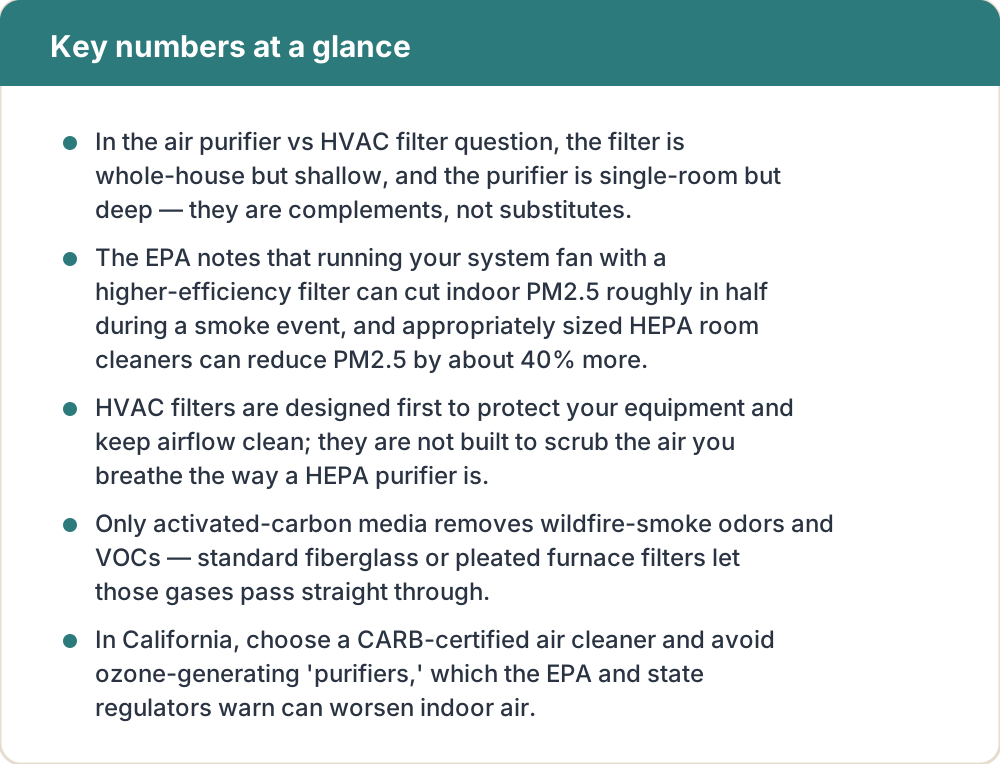
- In the air purifier vs HVAC filter question, the filter is whole-house but shallow, and the purifier is single-room but deep — they are complements, not substitutes.
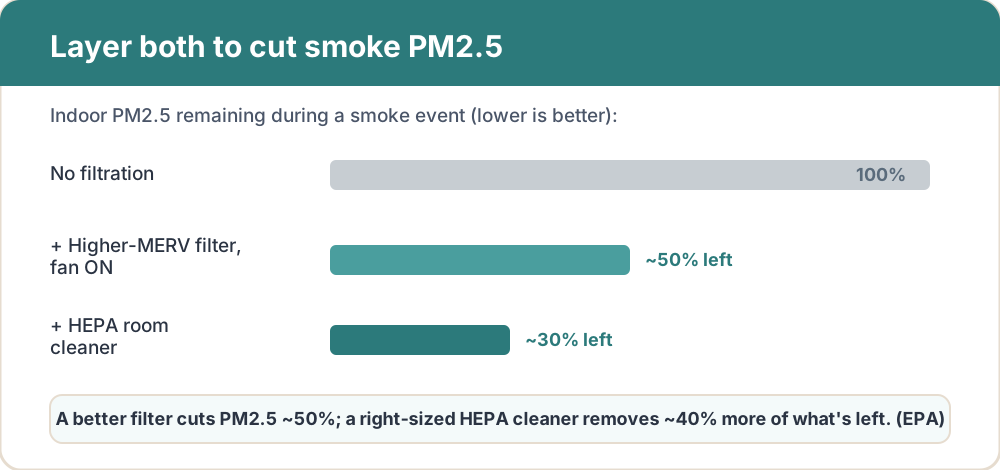
- The EPA notes that running your system fan with a higher-efficiency filter can cut indoor PM2.5 roughly in half during a smoke event, and appropriately sized HEPA room cleaners can reduce PM2.5 by about 40% more.
- HVAC filters are designed first to protect your equipment and keep airflow clean; they are not built to scrub the air you breathe the way a HEPA purifier is.
- Only activated-carbon media removes wildfire-smoke odors and VOCs — standard fiberglass or pleated furnace filters let those gases pass straight through.
- In California, choose a CARB-certified air cleaner and avoid ozone-generating 'purifiers,' which the EPA and state regulators warn can worsen indoor air.
On this page
- Air purifier vs HVAC filter: what does each one actually remove?
- Is my HVAC filter enough on its own?
- When do I truly need an air purifier, not just a filter?
- Portable air purifier vs whole-house air purifier — which layout wins?
- How do the costs and effectiveness compare over time?
- How does Inland Empire air change the air purifier vs HVAC filter decision?
Air purifier vs HVAC filter: what does each one actually remove?
Start with the core of the air purifier vs HVAC filter debate: they clean different things at different depths. Your HVAC (furnace) filter sits in the return of your central system and catches particles — dust, pollen, pet dander, lint — every time the blower runs, so it treats the whole house. But its first job is protecting the coil and blower from buildup, and most filters are chosen to balance capture with airflow, not to scrub every fine particle you breathe.
A dedicated air purifier is built the other way around. It pulls room air through a true HEPA element that captures 99.97% of particles down to 0.3 microns, and better units add an activated-carbon stage for gases and odors. The tradeoff: a portable purifier only cleans the room it sits in.
So the honest answer is that a filter gives you broad, everyday coverage, and a purifier gives you deep, targeted cleaning. If you want the underlying particle-size science, our MERV rating guide covers how filter efficiency numbers actually work.
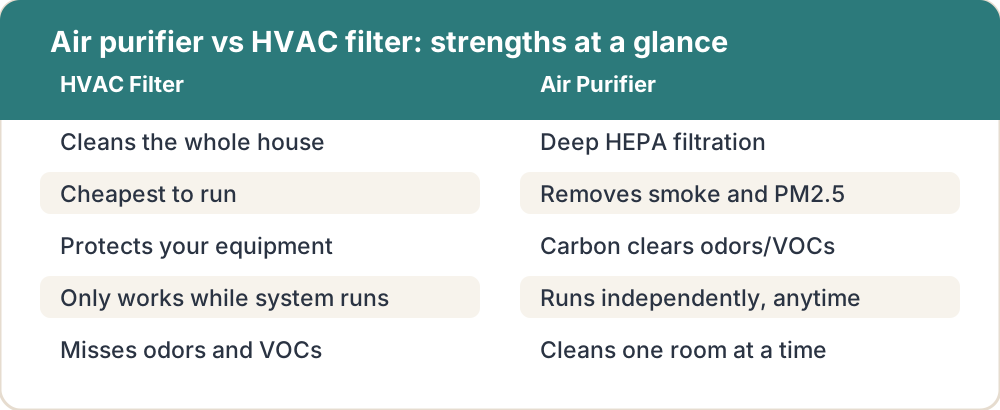
- HVAC filter removes: larger airborne particles (dust, pollen, dander, lint) as air circulates through the whole home.
- Air purifier removes: fine particles (PM2.5, smoke), and with carbon, odors and many VOCs — in one room.
- Neither removes everything: the EPA is clear that no single device eliminates all indoor pollutants.
Is my HVAC filter enough on its own?
For a lot of Ontario and Rancho Cucamonga homes, yes — a well-chosen, regularly changed HVAC filter is enough for everyday air. If nobody has significant allergies or asthma, there are no pets shedding dander, and you are not in a smoke event, a quality pleated filter running on a system that gets serviced will keep dust and pollen in check without a second device.
The catch is that a filter only works when air is moving through it. Central systems don't run constantly, so between cycles the filter isn't cleaning anything, and a clogged or cheap filter chokes airflow and makes the whole system work harder. That is exactly the kind of thing we check during AC maintenance, because the filter and the equipment protect each other.
If your home sits near the I-10, SR-60, or I-15 dust corridors, you will simply load filters faster. Check them monthly during dry, windy stretches and plan on more frequent changes than the box suggests.
| Factor | HVAC / furnace filter | Portable air purifier | Whole-house air purifier |
|---|---|---|---|
| What it removes | Larger particles: dust, pollen, dander, lint | Fine PM2.5 + smoke; odors/VOCs if carbon-equipped | Fine particles home-wide; odors if carbon-equipped |
| Coverage | Whole house, only while system runs | One room at a time | Whole house, only while system runs |
| Best for | Everyday dust and protecting equipment | Bedroom allergies, smoke sanctuary, pets | Home-wide allergy or heavy dust problems |
| Up-front cost | Low (a few dollars per filter) | Low to moderate per unit | Higher (installed at the system) |
| Ongoing maintenance | Replace every 1–3 months | Replace HEPA/carbon filters periodically | Replace media periodically; pro service |
| Removes odors/VOCs? | No | Only with activated carbon | Only with activated carbon |
When do I truly need an air purifier, not just a filter?
You cross from 'a filter is fine' into 'you need a purifier' when the air has problems a whole-house filter isn't designed to solve. The clearest triggers are allergies and asthma, wildfire smoke, pets, and chemical odors or VOCs from cleaning products, new furniture, or garages.
The reason is depth and gases. A HEPA purifier captures the fine PM2.5 that drives smoke and allergy symptoms far more aggressively than a typical furnace filter, and its carbon stage removes odors and VOCs that pass straight through any particle-only filter. Placing one in the bedroom or a home office — where you spend the most concentrated hours — gives you clean air exactly where it matters most.
- Allergies or asthma: HEPA-level filtration in the bedroom noticeably lowers pollen and dander exposure overnight.
- Wildfire smoke: fine PM2.5 needs deep filtration; run purifiers in the rooms you occupy and keep windows closed.
- Pets: dander and odor are a particle-plus-gas problem, so carbon matters as much as HEPA.
- VOCs and odors: only activated carbon removes these; particle filters do not touch them.
Portable air purifier vs whole-house air purifier — which layout wins?
If you decide you need real purification, the next fork is portable vs whole-house. A portable unit is cheap to buy, moves with you, and cleans one room fast — ideal if your main concern is a bedroom or a smoke-season sanctuary. Its limits are that it only treats the room it's in and adds a device (and a little noise) to that space.
A whole-house air cleaner or media cabinet installs at your central system and treats every room the air passes through, with no equipment sitting in your living space. It costs more up front and depends on the system running, but it is the cleanest layout for a home-wide allergy or dust problem. Many Inland Empire households land on a hybrid: a solid HVAC filter plus one good portable HEPA unit in the bedroom.
Humidity plays into this too — damp air breeds mold spores and dust mites that no purifier fully fixes, which is why we sometimes pair filtration advice with a whole-house dehumidifier. For a broader room-by-room plan, see our Los Angeles indoor air quality guide.
How do the costs and effectiveness compare over time?
Answer first: HVAC filters are the cheapest per month and the effort is just remembering to change them; purifiers cost more up front and add filter replacements, but they are the only option that meaningfully clears smoke, fine particles, and odors. You are paying for depth, not breadth.
The measurable payoff is real. The EPA reports that a higher-efficiency HVAC filter with the fan running can cut indoor PM2.5 roughly in half during a smoke event, and its research found appropriately sized HEPA room cleaners can reduce PM2.5 by around 40% more on top of that. Stacking whole-house filtration with a targeted purifier is what gets you the cleanest air, especially during a Santa Ana or wildfire stretch.
One warning that saves money and health: skip ozone-generating 'purifiers.' The EPA and California regulators warn they can irritate lungs rather than clean the air, and legitimate CARB-certified units don't rely on ozone. Note that the federal 25C efficiency tax credit expired December 31, 2025, so budget for equipment at current pricing.
How does Inland Empire air change the air purifier vs HVAC filter decision?
Local conditions push more Ontario, Pomona, and Rancho Cucamonga homes toward 'you need both' than the national averages suggest. The valley traps particulates, the I-10, SR-60, and I-15 corridors kick up constant road dust, spring pollen is heavy, and wildfire smoke can settle in for days at a time. That combination loads filters quickly and produces exactly the fine-particle and odor problems purifiers are built for.
A practical local setup is a good pleated HVAC filter changed on a tight schedule, one HEPA-plus-carbon portable unit in the primary bedroom, and a plan to run the system fan and purifiers whenever smoke rolls in. During heavy smoke, keep windows closed and let both layers work together.
If you're unsure what your specific home needs, that's a five-minute conversation during a tune-up. We'll look at your filter slot, blower capacity, and the household's allergy and pet situation, then tell you honestly whether a filter upgrade alone does the job or a purifier is worth it.
Our EPA 608–certified team tunes filtration and air quality for Inland Empire homes. See AC maintenance & air quality service
Sources & references
- 1.EPA – Air Cleaners and Air Filters in the Home
- 2.EPA – Guide to Air Cleaners in the Home
- 3.EPA – Strategies to Reduce Exposure to Wildfire Smoke Indoors
- 4.EPA – Research on DIY Air Cleaners to Reduce Wildfire Smoke Indoors
- 5.EPA – Ozone Generators That Are Sold as Air Cleaners
- 6.ENERGY STAR – Room Air Cleaners
- 7.AirNow – Wildfire Smoke and Your Health
Frequently asked questions
Not really, because they do different jobs. An HVAC filter cleans air throughout the whole home but shallowly, while an air purifier cleans one room deeply and can also remove odors and VOCs. For allergies, pets, or smoke, most homes are best served by using both together.
A true HEPA element captures far more fine particles (down to 0.3 microns) than a typical furnace filter. But you usually can't drop HEPA into a standard HVAC slot because it restricts airflow too much. That's why HEPA lives in a purifier and your HVAC uses a MERV-rated filter instead.
Yes. Fine PM2.5 is the main hazard in wildfire smoke, and HEPA purifiers with activated carbon remove both the particles and the smoke odor. Run them in the rooms you occupy, keep windows closed, and run your HVAC fan with a good filter at the same time for the best result.
For everyday dust and pollen in a home without allergies, pets, or smoke, often yes. The EPA notes a higher-efficiency filter with the fan running can cut indoor PM2.5 roughly in half during smoke events. But it won't remove odors or VOCs, so households with those issues still benefit from a purifier.
No. The EPA and California regulators warn that ozone-generating devices can irritate the lungs and don't effectively clean the air. In California, choose a CARB-certified purifier, which won't rely on ozone to work.
Local next step
Turn this guide into a site-specific answer.
Guides explain the decision. Equipment condition, access, and safe next steps still need to match the home or business. Review the relevant service scope or request an assessment for Ontario, the Inland Empire, or East Los Angeles County. Availability depends on the current schedule.