The Pet Owner's HVAC & Air Quality Guide: Dander, Fur, Odor, and the Habits That Save Your System
Pet dander and HVAC systems don't mix easily: fur clogs filters twice as fast, coats your coils, and corrodes the outdoor unit. Here's how often to change filters, how to cut dander and odor, and how to protect your equipment in the Inland Empire.

Owner & Lead HVAC Technician, Alex Air & Heating · EPA 608 Universal Certified · Ontario, CA
TL;DR
How do pets affect your HVAC and air quality? Pets add three loads: hair, dander, and odor. Pet dander and HVAC filters are a fast-clog combo, so shedding homes need filter changes every 30 days, plus regular grooming, HEPA vacuuming, and a clear, pet-free zone around the outdoor unit. Managing the source and the system together protects both your air and your equipment.
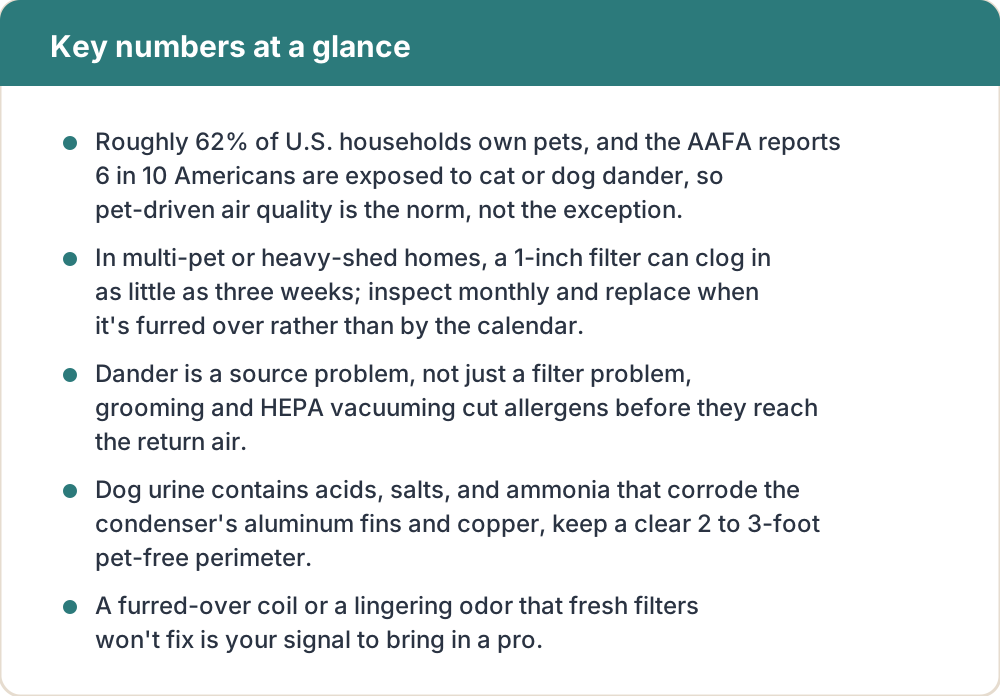
- Roughly 62% of U.S. households own pets, and the AAFA reports 6 in 10 Americans are exposed to cat or dog dander, so pet-driven air quality is the norm, not the exception.
- In multi-pet or heavy-shed homes, a 1-inch filter can clog in as little as three weeks; inspect monthly and replace when it's furred over rather than by the calendar.
- Dander is a source problem, not just a filter problem, grooming and HEPA vacuuming cut allergens before they reach the return air.
- Dog urine contains acids, salts, and ammonia that corrode the condenser's aluminum fins and copper, keep a clear 2 to 3-foot pet-free perimeter.
- A furred-over coil or a lingering odor that fresh filters won't fix is your signal to bring in a pro.
On this page
- How do pets actually affect my HVAC and air quality?
- How often should pet owners change the HVAC filter?
- How do I cut pet dander and allergens beyond the filter?
- How do I get rid of pet odor in my HVAC?
- How do I protect the outdoor condenser from fur, paws, and urine?
- When do pet air-quality issues need a pro?
How do pets actually affect my HVAC and air quality?
Pets add three distinct loads to your HVAC system: hair, dander, and odor. Hair and fur get pulled into the return grille, mat onto the air filter, and, once the filter is overwhelmed, drift onto the indoor evaporator coil and blower where they insulate the metal and choke airflow. Dander, the microscopic flakes of skin that carry most pet allergens, is far smaller than fur and can stay suspended for hours, recirculating through your ducts every time the system runs.
This is the frustrating part: the system meant to clean your air is also the one most burdened by pets. Left unmanaged, pet debris restricts airflow, forces the equipment to run longer, and drags down efficiency and indoor air quality at the same time. The good news is that the fix is a routine, not a renovation, the right filter changed often, plus grooming and outdoor-unit care.
In the Inland Empire the problem compounds. Ontario, Pomona, and Rancho Cucamonga homes already pull in fine desert dust, and when that mixes with fur during spring and fall shedding season and months of hard AC runtime, filters load up fast and coils get dirty faster than most owners expect.
How often should pet owners change the HVAC filter?
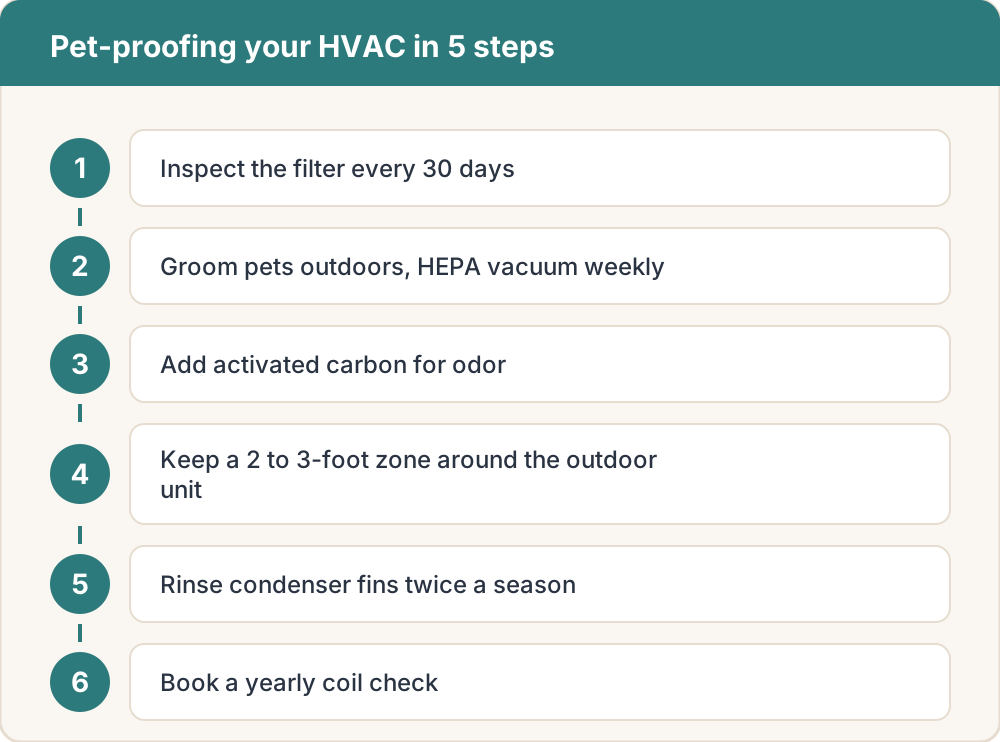
Pet hair and dander pack onto filter media quickly. A pet-free home can often stretch a pleated 1-inch filter to 60 to 90 days, but pets typically cut that in half, and in homes with multiple shedders or heavy coats a filter can clog in as little as three weeks. As a working rule, inspect a 1-inch filter every 30 days when you have shedding pets and plan to replace it monthly during peak shed and peak Inland Empire cooling months.
Skip the calendar and use the light test: hold the filter up to a bright light, and if you can't see light through it or the surface is furred over, swap it now. A clogged filter doesn't just recirculate dirty air, it starves airflow, makes the AC work harder, and lets unfiltered fur reach the coil. For the full filter-timing breakdown across filter types, see our guide on how often to change your HVAC air filter.
- One shedding pet: check at 30 days, replace by 45 to 60 days.
- Multiple pets or allergy sufferers in the home: replace every 30 days.
- Thicker 4 to 5-inch media filters last longer but still need checking during shed season.
- During heavy shedding or after a decline in air quality, check more often, not less.
| Household type | Filter check interval | Recommended action |
|---|---|---|
| No pets | Every 60 to 90 days | Standard pleated filter, replace when dirty |
| 1 shedding pet | Check every 30 days | Replace by 45 to 60 days; groom weekly |
| Multiple pets | Check every 30 days | Replace monthly; add HEPA vacuuming |
| Pets + allergy sufferers | Check every 30 days | Replace monthly; add portable HEPA cleaner |
| Strong pet odor | Check every 30 days | Add carbon layer; inspect coil/ducts if it lingers |
How do I cut pet dander and allergens beyond the filter?
Because dander is fine and airborne, filtration alone won't clear it, you have to stop it at the source and give the air extra cleaning. The EPA consistently points to source control combined with filtration as the most effective indoor-air strategy, and for pet allergens that means grooming, cleaning, and supplemental air cleaning working together.
Groom pets regularly and ideally outdoors to shed loose fur and dander before it ever reaches the return air. Vacuum with a HEPA-equipped vacuum, wash pet bedding weekly in hot water, and run a portable HEPA air cleaner in the rooms where pets and allergy sufferers spend the most time. Running the HVAC fan periodically also pushes more air through the filter to capture dander that would otherwise settle and re-suspend.
Filter choice matters too, but keep it simple: a mid-range filter captures most pet dander without starving airflow. The MERV rating details live in our air filter MERV rating guide, and if you're weighing a standalone purifier against your system's filter, our air purifier vs HVAC filter comparison walks through the trade-off.
How do I get rid of pet odor in my HVAC?
Odor is a gas, not a particle, so a standard particle filter won't remove it, and filter ratings say nothing about smell. To tackle pet odor you need two moves: activated-carbon filtration, which adsorbs odor molecules, layered with your particle filter, and source cleaning, litter boxes, bedding, soft furnishings, and the return-air pathway.
If a musty or persistent smell lingers even with fresh filters, the odor is usually coming from organic buildup inside the ducts or on a damp evaporator coil, which acts as a reservoir that keeps re-scenting the air. That's a job for a professional inspection, cleaning the coil and, where warranted, the ducts removes what the filter can never reach. Regular AC maintenance keeps that buildup from ever taking hold.
How do I protect the outdoor condenser from fur, paws, and urine?
The outdoor condenser is a magnet for pet trouble. Fur and grass clippings mat onto the coil fins and insulate them so the unit can't reject heat, which quietly raises bills and can push the system to overheat. Marking is worse: dog urine contains acids, salts, and ammonia that are corrosive to the aluminum fins and copper, and repeated marking can eat through them and cause refrigerant leaks.
Give the unit a clear, pet-free perimeter of at least 2 feet, and 3 feet is better for airflow and service access. Rinse the fins with a garden hose with the power off at the start of cooling season and again mid-summer to wash out matted fur. If a dog is marking the unit, a low decorative barrier or bushes placed a couple of feet away redirects the behavior without choking airflow. Never wrap or fully enclose the unit, it has to breathe.
- Keep a 2 to 3-foot clear, pet-free zone around the condenser.
- Rinse matted fur off the fins twice a season with the power off.
- Redirect marking with a low barrier or plantings set back for airflow.
- Never box in or cover the unit while it's running.
When do pet air-quality issues need a pro?
Most pet upkeep is DIY, but a few signs mean the fur has already gotten past the filter. Weak airflow from the vents, a system that runs longer to hit the same temperature, visible fur on the coil, a whistling return, or odor that fresh filters and cleaning won't budge all point to buildup on the coil, blower, or ducts, the places a homeowner can't safely reach.
That's where a tune-up pays for itself. A professional coil cleaning restores airflow and efficiency, and a technician can confirm your filter setup fits your blower and spot corrosion on the outdoor unit before it becomes a leak. Our AC maintenance service is built for pet-heavy homes, with upfront written pricing and same-day availability across Ontario and the wider Inland Empire.
For households running two or more shedders, a once-a-year professional coil check is the single highest-value habit, and our $199 per system, per year maintenance membership keeps it on schedule.
Our EPA 608-certified team keeps pet-heavy HVAC systems clean and efficient across the Inland Empire. See AC maintenance & air quality service
Frequently asked questions
With multiple shedding pets, inspect the 1-inch filter every 30 days and plan to replace it monthly, more often during peak shed and peak cooling season. In heavy-shed homes filters can clog in about three weeks. The reliable test is visual: if you can't see light through it, replace it now regardless of the date.
Yes. Dog urine contains acids, salts, and ammonia that corrode the condenser's aluminum fins and copper coil, and repeated marking can eventually eat through them and cause leaks. Keep a clear 2 to 3-foot pet-free perimeter, or set a low barrier or plantings back from the unit to redirect the behavior without blocking airflow.
Standard particle filters don't remove odor, because smell is a gas rather than a particle. To cut pet odor you need activated-carbon filtration plus source cleaning of litter boxes, bedding, and soft furnishings. A musty smell that lingers despite fresh filters usually means buildup on the coil or in the ducts, which is worth a professional inspection.
Not automatically. A finer filter traps more dander, but one that's too restrictive for your blower can starve airflow and strain the equipment, the same symptom you were trying to fix. Aim for a mid-range filter your system can handle, and if you need more, add a portable HEPA cleaner rather than forcing an oversized filter.
The coil gets furred when the filter is overwhelmed, so the fix starts with changing filters on time and grooming pets to shed loose fur before it reaches the return. If airflow is already weak or you can see fur on the coil, a professional coil cleaning is the only way to fully restore efficiency.
Yes. Because dander is a source problem, removing loose fur and skin flakes at the source, ideally by grooming outdoors, keeps allergens from becoming airborne and recirculating. Grooming paired with HEPA vacuuming and weekly bedding washes does more for pet-home air quality than any filter can do alone.