Should You Run Your AC During Wildfire Smoke? A Southern California Homeowner's Guide
Yes, keep your central AC running during wildfire smoke, but set it to recirculate indoor air, close windows and doors, and use a MERV 13 filter. Here's exactly how to protect indoor air quality across the Inland Empire.

Owner & Lead HVAC Technician, Alex Air & Heating · EPA 608 Universal Certified · Ontario, CA
TL;DR
Yes, run your AC during wildfire smoke, but set it to recirculate indoor air rather than fresh-air/economizer mode, close all windows and doors, and fit a MERV 13 filter if your system can handle it. Running the blower keeps filtering indoor air; the goal is to avoid pulling outdoor smoke inside. Add a portable true-HEPA purifier in your bedroom, change filters more often, and never run a whole-house fan during a smoke event.
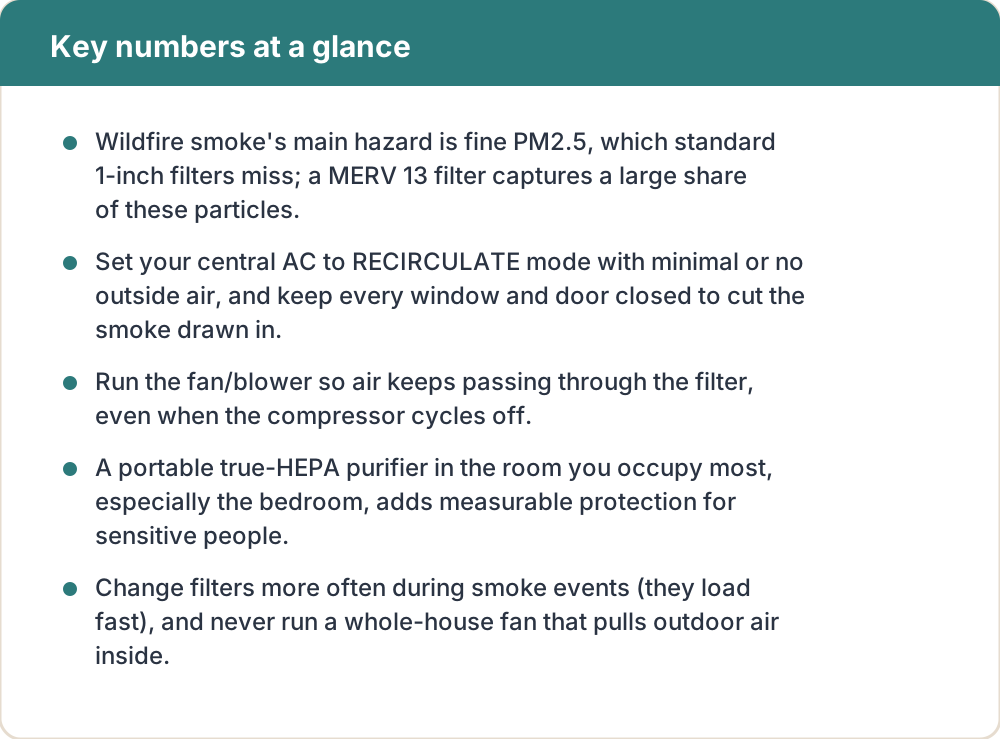
- Wildfire smoke's main hazard is fine PM2.5, which standard 1-inch filters miss; a MERV 13 filter captures a large share of these particles.
- Set your central AC to RECIRCULATE mode with minimal or no outside air, and keep every window and door closed to cut the smoke drawn in.
- Run the fan/blower so air keeps passing through the filter, even when the compressor cycles off.
- A portable true-HEPA purifier in the room you occupy most, especially the bedroom, adds measurable protection for sensitive people.
- Change filters more often during smoke events (they load fast), and never run a whole-house fan that pulls outdoor air inside.
On this page
- Should you run your AC during wildfire smoke?
- Why wildfire smoke is different from ordinary dust
- Your wildfire smoke AC operating checklist
- Set your system to recirculate, not fresh-air
- Add a portable HEPA purifier where you spend the most time
- A well-maintained system filters far better
- Check your local AQI before and during smoke
Should you run your AC during wildfire smoke?
Yes. Keep your central AC running during wildfire smoke, but set it to recirculate indoor air rather than fresh-air or economizer mode, close every window and door, and fit a MERV 13 filter if your system can handle it. Running the system keeps filtering indoor air; the key is not pulling outdoor smoke inside.
Why wildfire smoke is different from ordinary dust
The main hazard in wildfire smoke is fine particulate matter, PM2.5, particles small enough to slip past a standard low-MERV filter and deep into your lungs. That is why the usual 1-inch filter that handles household dust is not enough during a smoke event. A MERV 13 filter, or higher if your equipment supports it, captures a large share of PM2.5, which is why upgrading the filter matters more than almost anything else during smoke. For a deeper look at how filters compare, see our guide to the best HVAC filter for wildfire smoke.
Your wildfire smoke AC operating checklist
During an active smoke event, the settings below turn your central AC into a whole-house air cleaner. The single most important idea: keep the house sealed and recirculate the indoor air rather than bringing in fresh outdoor air.
| Setting | What to do | Why it matters |
|---|---|---|
| Recirculate mode | Recirculate indoor air; close or disable any economizer or fresh-air intake | Stops the system from pulling outdoor smoke into the house |
| Filter MERV | Fit MERV 13, or higher if the blower can handle it | Captures a large share of the fine PM2.5 that standard filters miss |
| Windows and doors | Keep them closed for the duration of the smoke event | Prevents smoke from leaking into the sealed indoor air you are filtering |
| Fan mode | Run the blower so air keeps circulating through the filter | Keeps filtering even when the compressor cycles off |
| Portable HEPA | Add a true-HEPA purifier in the room you occupy most | Drives particle levels much lower in the bedroom or main living area |
| Whole-house fan | Do not run it, and do not open windows for a breeze | It floods the house with outdoor smoke by design |
Set your system to recirculate, not fresh-air
Recirculate mode means your HVAC pulls air from inside the house, filters it, and returns it, instead of drawing air from outside. Most residential central AC systems here recirculate by default with no fresh-air damper. If you have an economizer, a fresh-air intake, or whole-house ventilation, close or disable it during smoke. Set the thermostat fan to keep air moving through the filter even when the compressor is not actively cooling, so the system keeps scrubbing particles out of the air.
Add a portable HEPA purifier where you spend the most time
Your central AC filters the whole house on average, but a portable true-HEPA air purifier drives one room's particle level much lower. Put it in the room you occupy most, ideally the bedroom, since you spend hours there sleeping. This matters most for anyone with asthma or COPD, or if you can smell smoke indoors despite a closed-up house. During severe episodes, sensitive people should consider leaving the area. To understand how these two tools compare, read air purifier vs HVAC filter.
A well-maintained system filters far better
A system with clean coils, a properly sealed filter slot, and good ductwork filters far more smoke than one with deferred maintenance. A poorly sealed filter is a common problem: air simply bypasses the filter media through the gaps, so even a MERV 13 filter never cleans the air it should. Change filters more often during smoke, because they load with particles fast and a clogged filter restricts airflow. If your house stays dusty even with the AC running, our guide on why your house is dusty with the AC running covers the usual bypass and duct culprits.
Check your local AQI before and during smoke
Check the air quality index on AirNow or the South Coast AQMD before deciding how tightly to seal up. The Inland Empire and the LA basin, including Ontario, Pomona, Rancho Cucamonga, Fontana, Riverside, and Chino, see recurring smoke, and forecasters project above-normal Southern California fire potential into September 2026. When AQI climbs, close the house, recirculate, and run your HEPA purifier. For a broader local picture, see our indoor air quality guide for Los Angeles.
The best time to seal a filter slot, clean the coils, and confirm your blower can handle a MERV 13 filter is before smoke arrives, not during it. A tuned system filters far more particles when it counts. Book AC maintenance with our Inland Empire team to get ready for the 2026 fire season.
Frequently asked questions
No, keep it running. A central AC set to recirculate mode continuously filters the air already inside your closed-up house, which is cleaner than the outdoor air. Turning it off stops that filtering. The only thing to avoid is any setting that pulls in fresh outdoor air, such as an economizer or fresh-air intake. With windows and doors closed and a good filter, running the system protects indoor air quality.
Recirculate mode means your HVAC pulls air from inside the house, filters it, and sends it back in, rather than drawing air from outside. Most residential central AC systems in Southern California recirculate by default with no fresh-air damper. If you have an economizer, whole-house ventilation, or a fresh-air intake, close or disable it during smoke. Set the thermostat fan to keep air moving through the filter.
Use a MERV 13 filter, or higher if your system supports it, because MERV 13 captures a large share of the fine PM2.5 particles in wildfire smoke that standard filters miss. Confirm your blower can handle the added resistance first; an oversized jump in MERV on an undersized system can restrict airflow. Our air filter MERV rating guide explains how to match a filter to your equipment safely.
A portable true-HEPA purifier adds measurable protection in the single room you occupy most, especially the bedroom where you spend hours sleeping. Your central AC filters the whole house on average, but a HEPA unit drives one room's particle level much lower. For anyone with asthma or COPD, or if you smell smoke indoors despite a closed-up house, a bedroom HEPA is worth adding during smoke events.
More often than usual, because filters load with smoke particles fast and a clogged filter restricts airflow and filters less effectively. Check it every couple of weeks during an active smoke period instead of the usual monthly or quarterly cadence, and replace it once it looks gray or loaded. A clean, properly sealed filter in a well-maintained system filters far better than a dirty one letting air bypass the media.
No, never run a whole-house fan during a wildfire smoke event. Whole-house fans work by pulling large volumes of outdoor air into the house and exhausting it through the attic, which is exactly what floods your home with smoke. The same rule applies to opening windows for a night breeze or running any fresh-air ventilation. Keep the house closed and rely on your central AC in recirculate mode instead.