Is a Dual-Fuel Heat Pump Worth It in Southern California?
A dual-fuel heat pump pairs electric heat-pump heating with gas-furnace backup. Learn when that hybrid design is worth evaluating in Southern California and what to ask before choosing it.

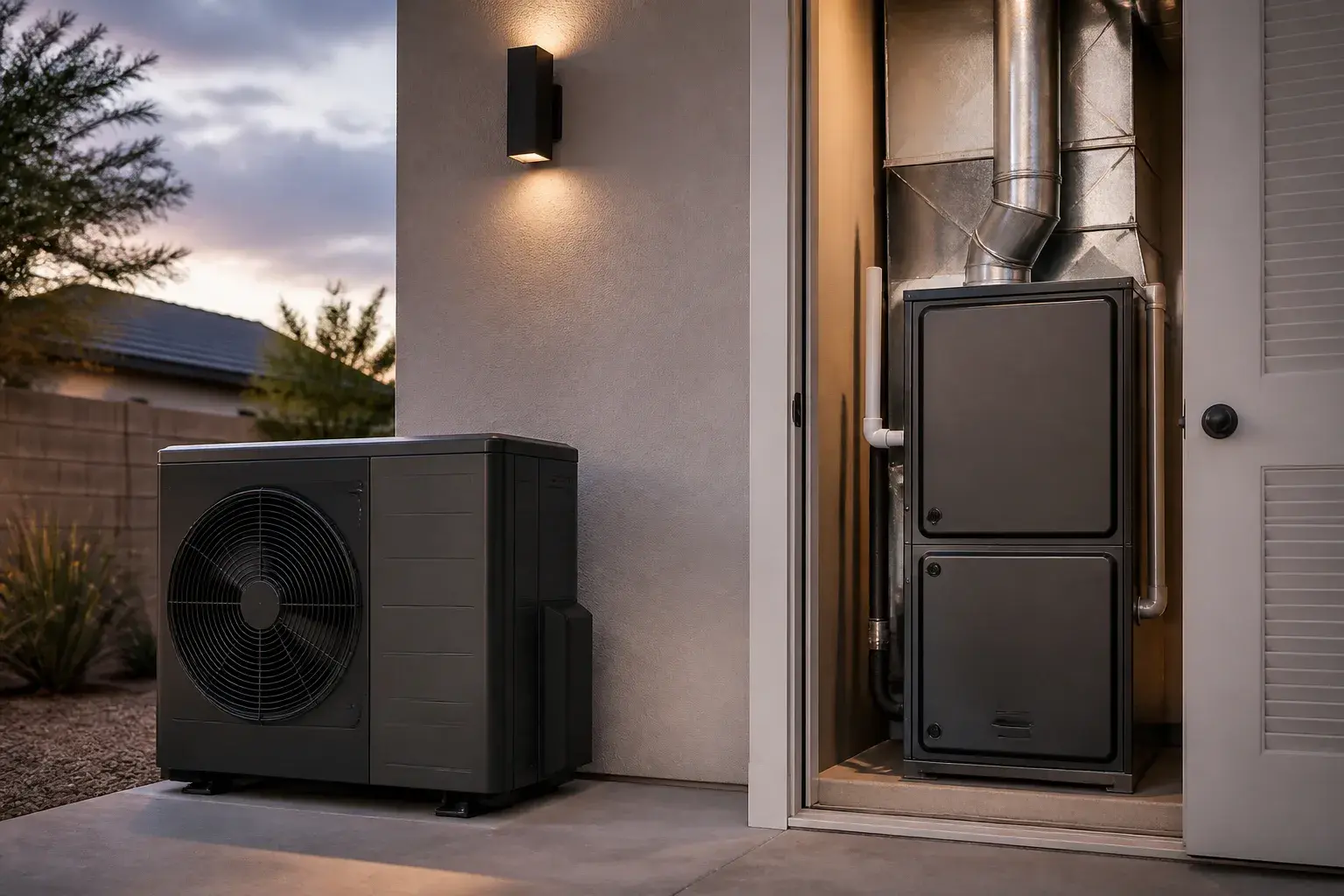
TL;DR
A dual-fuel heat pump can be worth evaluating in Southern California when you want heat-pump cooling and mild-weather heating while retaining a properly designed gas-furnace backup. It is not automatically better than a full heat pump or a like-for-like furnace replacement. The decision depends on load, ducts, equipment match, electrical scope, your utility rates and the controls that decide which heat source runs.
- Dual fuel is a coordinated heat pump plus gas furnace system; it should not be treated as two independent heaters.
- DOE describes hybrid systems as using the heat pump in milder weather and the furnace under configured colder conditions.
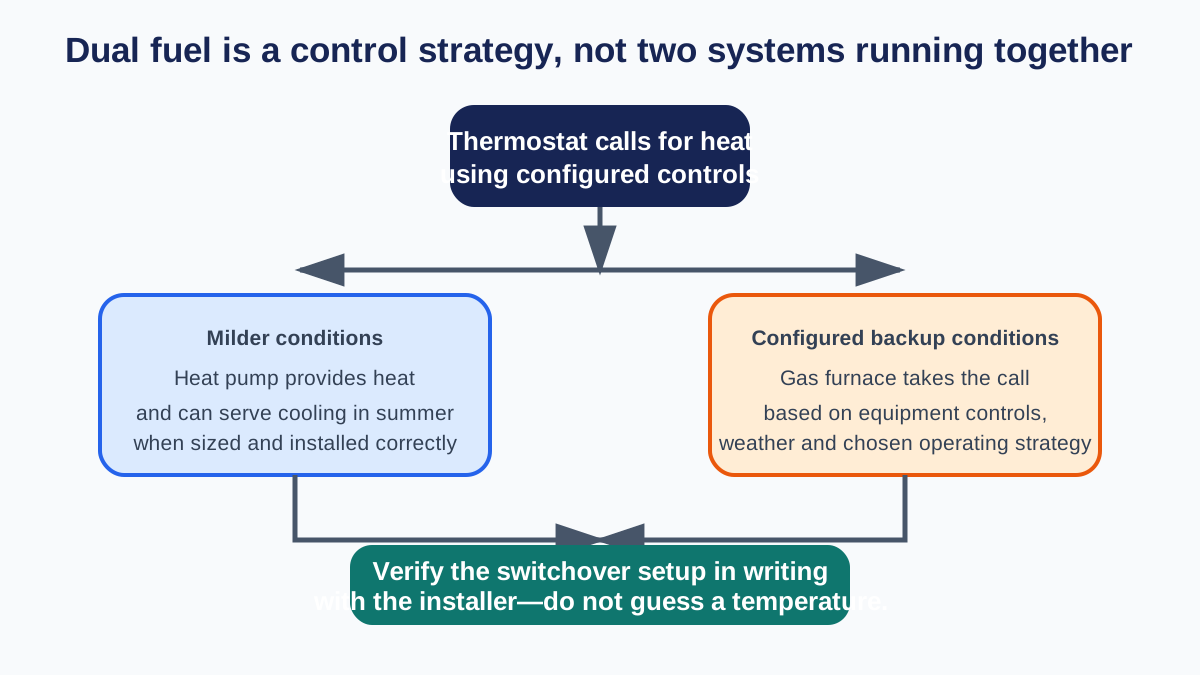
- The switchover strategy should be documented by the installer; do not assume one outdoor temperature works for every home.
- For homes in Ontario, Pomona, Diamond Bar, Walnut, Claremont and the Inland Empire, ask for a [heat-pump installation assessment](/services/heat-pump-installation) that includes ducts, controls and permit scope.
On this page
What is a dual-fuel heat pump, and how does it work?
A dual-fuel, or hybrid, system pairs an electric heat pump with a gas furnace. The heat pump can cool in summer and heat during milder conditions; the furnace is the configured backup for conditions where the selected controls call for gas heat. The Department of Energy describes this arrangement as a way to combine heat-pump efficiency with gas-furnace reliability. The important word is configured: it needs compatible equipment, a documented sequence and a proper load calculation.
A temperature found online cannot replace a control strategy that accounts for the home, equipment performance, rate plan and installer design. Ask for the sequence of operation in writing.
When dual fuel may be worth evaluating in Southern California
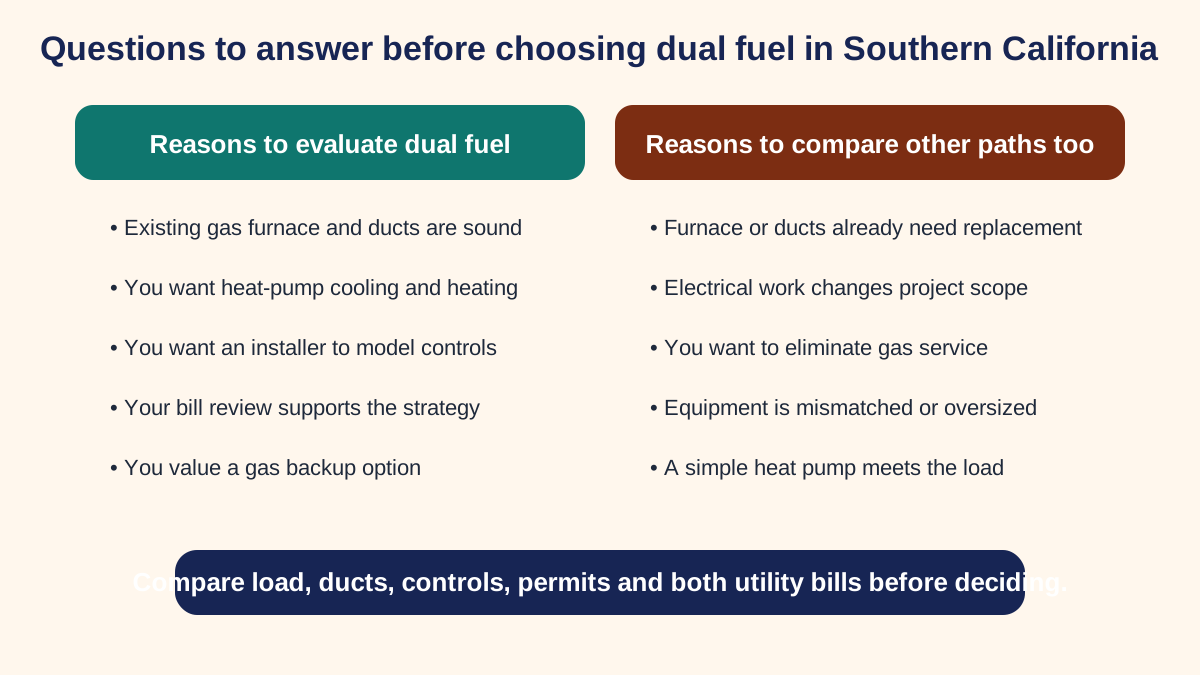
It can be a useful comparison when an existing home already has a sound gas furnace and duct system, the homeowner wants heat-pump cooling and mild-weather heating, and the project can retain compatible infrastructure. It may also suit homeowners who prefer a gas backup option. California’s 2025 Energy Code encourages heat-pump use in applicable new and alteration projects, but code direction does not eliminate the need to review ducts, electrical capacity, permits and equipment matching case by case.
| Question | Why it matters | What to request |
|---|---|---|
| Are the furnace and ducts sound? | Existing infrastructure can change the project scope. | Condition review and airflow findings. |
| Can one heat pump meet the load? | A mild climate does not remove sizing requirements. | Heating and cooling load calculation. |
| How will controls select heat? | The sequence affects comfort and utility use. | Written thermostat and switchover explanation. |
| What do the utility bills show? | TOU electricity periods and gas charges affect operating assumptions. | Review of current SCE and gas bills. |
| What work needs permits? | Replacement scope can trigger code requirements. | Written permit and compliance scope. |
When a simpler option may fit better
A full heat pump may be the cleaner comparison if both the furnace and AC are at end of life, the homeowner wants to remove gas service, or a correctly sized heat pump meets the load without a furnace. A like-for-like furnace path may make sense when only the furnace has failed and the AC, ducts and electrical scope do not support a larger project. Neither answer should be made from a single efficiency label or an assumed statewide utility bill.
Questions to put on a written proposal
- What load calculation supports the selected heat pump and furnace capacity?
- Which equipment models and thermostat controls are compatible together?
- When will the system call for heat pump versus gas furnace, and who programs that logic?
- What duct, electrical, gas-line, condensate and permit work is included or excluded?
- Which SCE rate-plan and gas-bill assumptions were used for any operating-cost illustration?
Next step: compare configurations, not slogans
Start with the operating-cost inputs in gas furnace vs. heat pump costs, then compare the broader system choice in heat pump vs. furnace in Southern California. If you are replacing equipment in the Inland Empire or Los Angeles County service area, request a local heat-pump installation assessment with the equipment, controls and project assumptions documented.
Frequently asked questions
It combines an electric heat pump with a gas furnace and shared ductwork or controls. The heat pump commonly serves milder-weather heating and cooling, while the furnace can provide backup heat when the configured operating conditions call for it.
A correctly configured dual-fuel system normally uses a control strategy to select one heat source for a call. The exact behavior depends on the equipment and thermostat configuration, so ask the installer to explain and document the sequence.
Not necessarily. Southern California’s mild climate can suit a properly sized all-electric heat pump. Dual fuel may be worth comparing when an existing gas furnace, ducts and project scope make it practical or when a homeowner wants gas backup; it is not a universal requirement.
Ask for a load calculation, equipment match, duct review, electrical and gas scope, permit requirements, thermostat/control sequence, rate assumptions and what conditions would cause the furnace to take over.
Local next step
Turn this guide into a site-specific answer.
Guides explain the decision. Equipment condition, access, and safe next steps still need to match the home or business. Review the relevant service scope or request an assessment for Ontario, the Inland Empire, or East Los Angeles County. Availability depends on the current schedule.