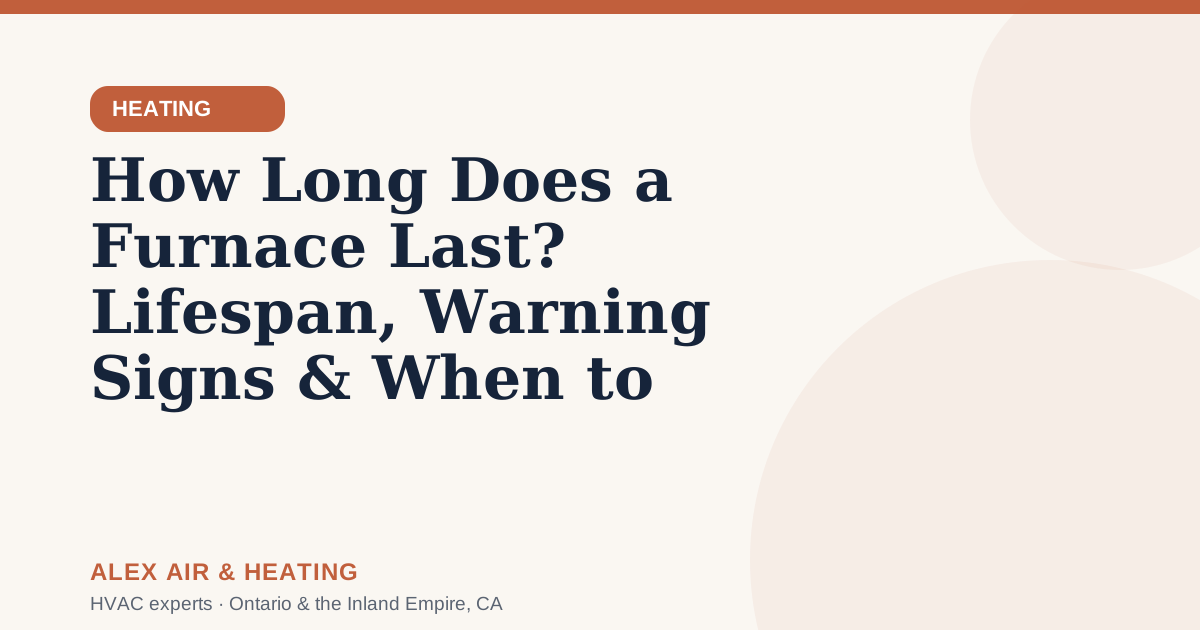
How Long Does a Furnace Last? Lifespan, Warning Signs & When to Replace
How long does a furnace last? Most gas furnaces run 15-20 years, and well-maintained units in the mild Inland Empire climate can push past 20. Here's what shortens or extends that life, the warning signs of a dying furnace, and how to make the repair-vs-replace call by age.

Owner & Lead HVAC Technician, Alex Air & Heating · EPA 608 Universal Certified · Ontario, CA
TL;DR
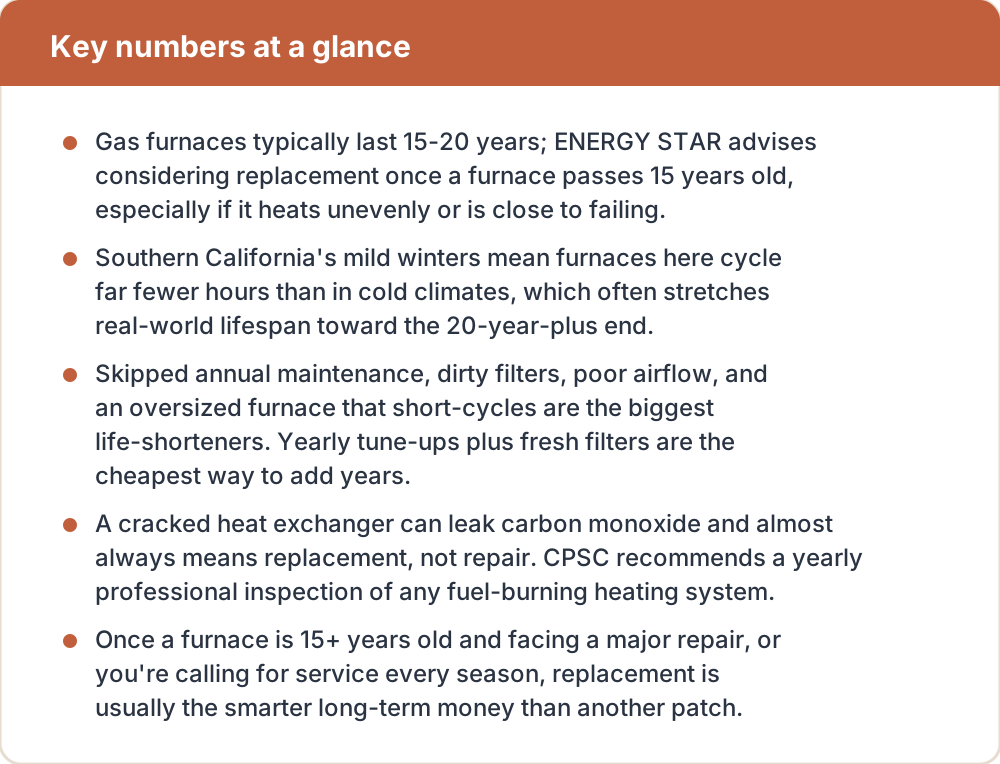
How long does a furnace last? A typical gas furnace lasts 15-20 years, and with annual maintenance a quality unit can reach 20-30 years; heat pumps average 10-15 years. In the mild Inland Empire climate, furnaces run fewer heating hours per winter, so many Ontario-area homes see the upper end of that range before replacement is worth it.
- Gas furnaces typically last 15-20 years; ENERGY STAR advises considering replacement once a furnace passes 15 years old, especially if it heats unevenly or is close to failing.
- Southern California's mild winters mean furnaces here cycle far fewer hours than in cold climates, which often stretches real-world lifespan toward the 20-year-plus end.
- Skipped annual maintenance, dirty filters, poor airflow, and an oversized furnace that short-cycles are the biggest life-shorteners. Yearly tune-ups plus fresh filters are the cheapest way to add years.
- A cracked heat exchanger can leak carbon monoxide and almost always means replacement, not repair. CPSC recommends a yearly professional inspection of any fuel-burning heating system.
- Once a furnace is 15+ years old and facing a major repair, or you're calling for service every season, replacement is usually the smarter long-term money than another patch.
On this page
How long does a furnace last on average?
How long does a furnace last? For a standard gas furnace, plan on 15 to 20 years. Well-built units that get annual professional maintenance can run 20 to 30 years, while heat pumps (which both heat and cool) average closer to 10 to 15 years because they work year-round. The U.S. Department of Energy notes that a furnace's efficiency is measured by AFUE (annual fuel utilization efficiency), and older units simply waste more fuel as they age past their prime.
These are averages, not guarantees. Two identical furnaces can be a decade apart in real lifespan depending on climate, installation quality, and how faithfully they were maintained. A furnace that heats a Minnesota home through six-month winters will wear out faster than the same model in Ontario, CA, where it may run only a handful of cold mornings and evenings each year.
If you're weighing a new system, our guide to new furnace installation cost in 2026 breaks down what a replacement actually runs in this area, and our furnace installation service covers what a clean, code-correct install includes.
Why do furnaces last longer in the Inland Empire?
Climate is the single biggest variable in furnace lifespan, and Southern California hands local homeowners an advantage. In Ontario, Pomona, Rancho Cucamonga, and across the Inland Empire, winters are mild and short. Your furnace runs far fewer heating hours per season than a comparable unit in a cold-winter state, and fewer run hours means fewer heating cycles, less thermal stress on the heat exchanger, and slower overall wear.
That's why many local furnaces comfortably reach the 20-year-plus end of the range before replacement makes sense. The flip side: a lot of Inland Empire homes still have their original furnace from when the house was built, quietly running well past 20 years. Low usage can hide age, so a furnace that 'still works fine' may already be well down the efficiency and safety curve.
- Fewer cold days = fewer heating cycles = less wear per year.
- Lower heating load is easier on the blower motor and heat exchanger.
- Many older Inland Empire homes still run original, 20+ year furnaces.
- Low run hours can mask both declining efficiency and safety wear.
| System type | Average lifespan | Key life-extending factor |
|---|---|---|
| Gas furnace | 15-20 years (up to 20-30 with care) | Annual tune-up + clean filters |
| Electric furnace | 20-30 years | Airflow and blower maintenance |
| Heat pump (heat + cool) | 10-15 years | Twice-yearly service (runs all year) |
| Note | Mild SoCal winters = fewer run hours | Lower heating load often stretches lifespan toward the top of each range |
What shortens a furnace's life?
If lifespan varies so much, what pushes a furnace toward the short end? Almost all of it comes down to airflow, maintenance, and how well the system was sized and installed in the first place. The good news is that most life-shorteners are preventable and inexpensive to address.
The most common culprit is a dirty filter. When a filter clogs, it starves the furnace of airflow, forcing the heat exchanger to overheat and the blower to strain, which accelerates wear across the whole system. Skipping annual maintenance lets small problems (a worn igniter, a failing capacitor, a drifting gas valve) compound until something bigger breaks.
- Skipped annual tune-ups so minor issues go unnoticed and compound.
- Dirty or forgotten filters that choke airflow and overheat the unit.
- Poor airflow from blocked vents, undersized ducts, or a failing blower.
- An oversized furnace that short-cycles, turning on and off too often and wearing parts fast.
- Cheap or improper installation, wrong gas pressure, or bad venting.
Sizing matters more than most homeowners realize. An oversized furnace heats the house too quickly, shuts off, then restarts minutes later, a pattern called short-cycling that hammers components. Correct sizing and a proper install are exactly why a professional replacement outlasts a rushed one.
What are the signs a furnace is near the end of its life?
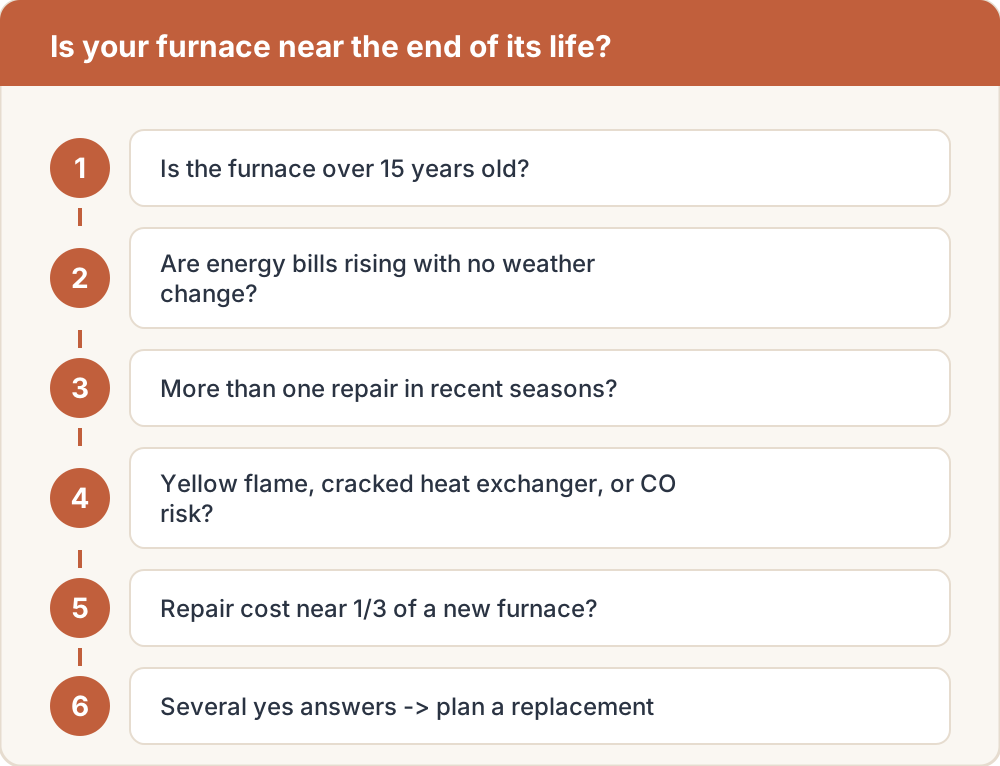
How do you know your furnace is dying rather than just needing a small repair? Watch for a cluster of these signs appearing together, especially as the unit passes 15 years old. One symptom alone may be a cheap fix; several at once usually points to a system on its way out.
Rising energy bills without a colder-than-usual winter often mean the furnace is burning more fuel to make the same heat. Frequent repairs, longer run times to hit the thermostat setting, uneven heating from room to room, and strange squealing, grinding, or banging noises all signal advancing wear. If yours is struggling to ignite, our guide on a furnace not igniting walks through what's fixable and what isn't.
- Energy bills climbing with no change in weather or usage.
- Two or more repair calls in the last couple of heating seasons.
- Uneven heat: some rooms cold while others stay warm.
- New squealing, grinding, popping, or banging noises during operation.
- A yellow or flickering burner flame instead of a steady blue one.
- Visible rust, soot, or a cracked heat exchanger flagged by a technician.
A yellow burner flame and a cracked heat exchanger are the two signs to never ignore. Both can indicate incomplete combustion and a carbon monoxide risk. If a technician confirms a cracked heat exchanger, the safe answer is almost always replacement, not repair. Book furnace repair for a proper diagnosis before deciding.
Repair or replace? Making the call by furnace age
The repair-vs-replace decision gets simpler when you anchor it to age. ENERGY STAR advises that once a furnace passes 15 years old, you should start considering replacement, because older units heat inconsistently and are closer to failing. Under 10 years, most problems are worth repairing. In the 10-to-15 window it depends on the cost. Past 15, a big-ticket repair rarely pays off.
A useful rule of thumb: if the repair costs more than about a third of a new furnace and the unit is over 15 years old, replacement is usually the better long-term money. You also stop pouring cash into a low-AFUE system that wastes fuel every month. If you're comparing heating options entirely, our heat pump vs. furnace for Southern California breakdown is worth a read given the mild local climate.
- Under 10 years: repair almost always makes sense.
- 10-15 years: repair if the cost is modest; weigh efficiency gains of a new unit.
- Over 15 years + major repair (heat exchanger, blower, control board): replace.
- Repairs every season, or repair cost near a third of a new furnace: replace.
One note on incentives: the federal 25C energy-efficient home improvement tax credit expired December 31, 2025, so it no longer offsets a new high-efficiency furnace. Utility rebates may still apply. We give an honest repair-or-replace recommendation with upfront written pricing, no pressure to replace a unit that has years left.
How do you make a furnace last longer?
Since maintenance is the biggest lever on lifespan, the way to reach the 20-year-plus end of the range is straightforward and cheap. The goal is protecting airflow and combustion so the furnace never has to strain.
Change your filter every 1 to 3 months, more often if you have pets or run the system hard. Schedule a professional tune-up before each heating season so a technician can clean the burners, inspect the heat exchanger, check gas pressure and venting, and catch small issues early. Keep supply and return vents clear of furniture and rugs so the blower moves air freely.
- Replace the air filter every 1-3 months to protect airflow.
- Get an annual professional tune-up before winter.
- Keep all supply and return vents unblocked.
- Fix small problems (noises, weak ignition) promptly before they cascade.
- Install a carbon monoxide alarm near sleeping areas, as CPSC recommends.
Our EPA 608-certified team gives honest repair-or-replace advice and clean furnace installs across the Inland Empire. See furnace installation service
Frequently asked questions
Because Inland Empire winters are mild, furnaces here run far fewer heating hours than in cold climates. A well-maintained gas furnace often reaches the upper end of the 15-to-20-year range, and many quality units push past 20 years. Low usage can hide age, though, so still schedule annual inspections.
Usually not, if the repair is significant. Past 15 years ENERGY STAR suggests considering replacement, and by 20 years a major part failure (heat exchanger, blower, or control board) generally means a new furnace is the smarter long-term investment. Small, inexpensive fixes can still make sense if the unit is otherwise safe.
Neglected maintenance and dirty filters. A clogged filter starves the furnace of airflow, overheats the heat exchanger, and strains the blower, accelerating wear everywhere. Skipping annual tune-ups lets minor problems compound. Both are cheap to prevent and are the top reasons a furnace dies years ahead of schedule.
Yes. A cracked heat exchanger can leak carbon monoxide, an invisible, odorless gas, into your home. It almost always means replacement rather than repair. CPSC recommends a yearly professional inspection of fuel-burning heating systems and a carbon monoxide alarm on each level near sleeping areas.
Once a year, ideally before the heating season starts. A technician cleans the burners, inspects the heat exchanger, checks gas pressure and venting, and tests safety controls. Combined with changing the filter every 1 to 3 months, annual service is the single best way to extend furnace life.
Often, yes. An older furnace may have an AFUE in the 70s or low 80s, wasting 20 to 30 percent of its fuel, while a modern high-efficiency unit reaches 90 percent or higher. ENERGY STAR-qualified furnaces are about 15 percent more efficient than a conventional model, which shows up on monthly bills.