Heat Pump Rebates California 2026: What You Can Still Claim
A current, honest look at heat pump rebates in California 2026 - which programs are open, reserved, or expired, plus a real Inland Empire net-cost example.

Owner & Lead HVAC Technician, Alex Air & Heating · EPA 608 Universal Certified · Ontario, CA
TL;DR
In 2026 the biggest heat pump rebates California homeowners chased are tighter than before - the federal 25C credit expired and TECH Clean California and HEEHRA single-family funds are largely reserved - but income-qualified waitlists, multifamily rebates, and upcoming HOMES money can still deliver $4,000 to $8,000.
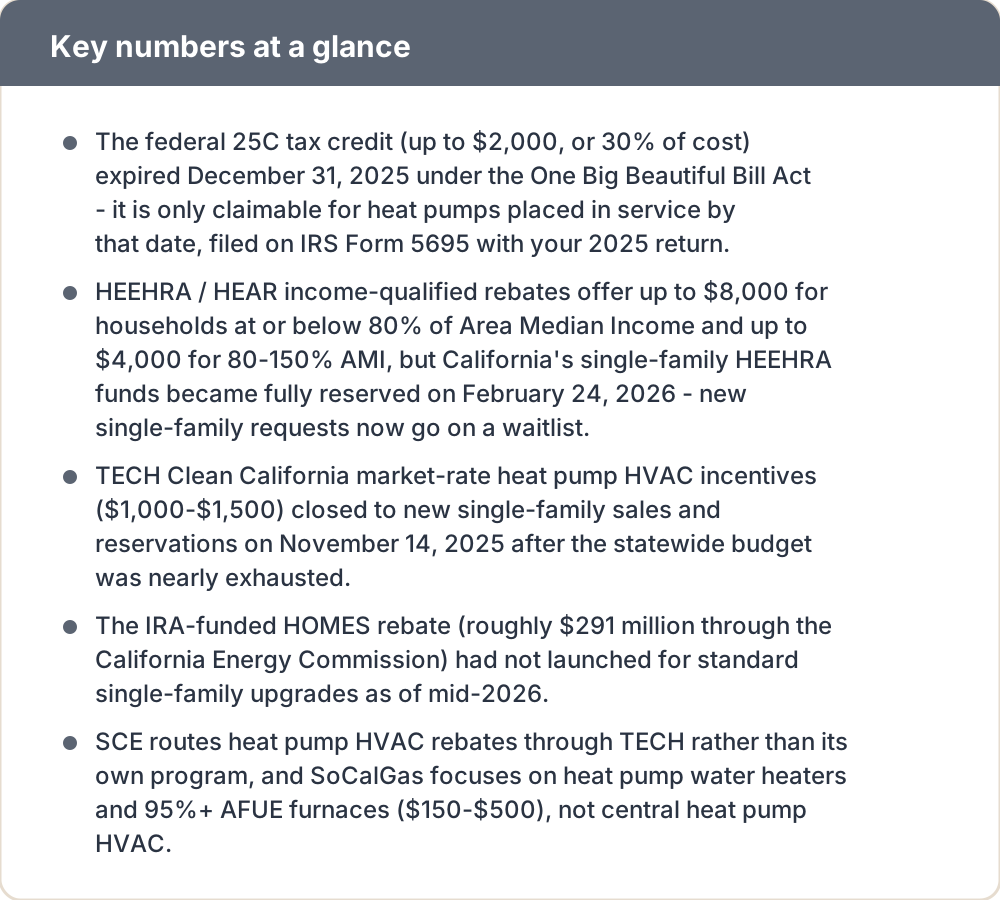
- The federal 25C tax credit (up to $2,000, or 30% of cost) expired December 31, 2025 under the One Big Beautiful Bill Act - it is only claimable for heat pumps placed in service by that date, filed on IRS Form 5695 with your 2025 return.
- HEEHRA / HEAR income-qualified rebates offer up to $8,000 for households at or below 80% of Area Median Income and up to $4,000 for 80-150% AMI, but California's single-family HEEHRA funds became fully reserved on February 24, 2026 - new single-family requests now go on a waitlist.
- TECH Clean California market-rate heat pump HVAC incentives ($1,000-$1,500) closed to new single-family sales and reservations on November 14, 2025 after the statewide budget was nearly exhausted.
- The IRA-funded HOMES rebate (roughly $291 million through the California Energy Commission) had not launched for standard single-family upgrades as of mid-2026.
- SCE routes heat pump HVAC rebates through TECH rather than its own program, and SoCalGas focuses on heat pump water heaters and 95%+ AFUE furnaces ($150-$500), not central heat pump HVAC.
On this page
- What heat pump rebates can California homeowners actually get in 2026?
- Did the federal 25C heat pump tax credit survive into 2026?
- How much is the HEEHRA / HEAR income-qualified heat pump rebate?
- Is TECH Clean California still paying heat pump rebates?
- What about SCE, SoCalGas, and HOMES rebates?
- A realistic net-cost example for an Inland Empire home
- How do you stack heat pump rebates in California without wasting time?
- Why heat pumps still make sense in the Inland Empire even with fewer rebates
What heat pump rebates can California homeowners actually get in 2026?
The honest answer for heat pump rebates in California 2026 is: fewer than you may have read about, and you have to move fast on the ones that remain. Over the last two years, headlines promised stacked incentives worth well over $10,000. In 2026 the picture is different - the federal tax credit expired at the end of 2025, and the two biggest California rebate pools reserved most of their money before the year even began. That does not mean there is nothing left, but it does mean you should verify current program status before you count on any dollar figure.
Here is the realistic landscape as of mid-2026: the largest live opportunity is the income-qualified HEEHRA / HEAR program (up to $8,000), though single-family funds are on a waitlist. Multifamily HEEHRA is still processing. The state's HOMES program money is appropriated but not yet flowing to typical single-family projects. And local utility rebates for central heat pump HVAC are thin. When you plan a professional heat pump installation this year, treat rebates as a possible bonus, not a guaranteed discount, and read our broader California HVAC rebates and tax credits guide for programs beyond heat pumps.
Did the federal 25C heat pump tax credit survive into 2026?
No. The Section 25C Energy Efficient Home Improvement Credit - which covered up to 30% of a qualifying heat pump's cost, capped at $2,000 per year - expired on December 31, 2025. It was eliminated by the One Big Beautiful Bill Act (OBBBA), signed July 4, 2025. For any heat pump placed in service on or after January 1, 2026, there is no federal 25C credit.
One nuance matters for Inland Empire homeowners who upgraded late last year. The IRS rule is 'placed in service,' meaning the system had to be fully installed and running by December 31, 2025 - a signed contract or paid deposit does not count. If your unit was operational by that date, you can still claim the credit on IRS Form 5695 with your 2025 federal return. If your install slips into 2026, the federal credit is gone, and you should focus on the state and income-qualified programs below.
| Program | Who qualifies | Amount (2026) | Notes |
|---|---|---|---|
| Federal 25C tax credit | Any federal taxpayer | Up to $2,000 (30% of cost) | Expired Dec 31, 2025. Only for units placed in service by that date; file IRS Form 5695 with 2025 return. |
| HEEHRA / HEAR (single-family) | Household at/below 150% AMI | Up to $8,000 (<=80% AMI) or $4,000 (80-150% AMI) | Fully reserved statewide as of Feb 24, 2026; new single-family requests go on a waitlist. |
| HEEHRA (multifamily) | Income-qualified multifamily | Up to $14,000 per unit (bundle) | Still processing completed projects in mid-2026. |
| TECH Clean California (market rate) | Most homeowners | $1,000-$1,500 (equity rate $3,500-$4,000) | Closed to new single-family sales/reservations Nov 14, 2025; may reopen if refunded. |
| HOMES rebate (CEC) | Varies; efficiency-based | TBD (~$291M appropriated) | Not launched for standard single-family projects as of mid-2026. |
| SoCalGas rebates | SoCalGas customers | $150-$500 (95%+ AFUE furnace); HPWH rebates | Focus on heat pump water heaters and high-efficiency furnaces, not central heat pump HVAC. |
How much is the HEEHRA / HEAR income-qualified heat pump rebate?
HEEHRA (California's version of the federal HEAR program) is the most valuable heat pump rebate still on the table in 2026 - if you income-qualify. For a heat pump HVAC system replacing your primary heating source, households at or below 80% of Area Median Income (AMI) can receive up to $8,000, and households between 80% and 150% AMI can receive up to $4,000 (structured as 50% of project cost up to the cap). AMI varies by county; in the greater Los Angeles-Long Beach-Anaheim area, 80% AMI for a family of four was roughly $76,100.
The catch is availability. As of February 24, 2026, California's single-family HEEHRA rebates were fully reserved statewide, and the program stopped accepting new income-verification applications for single-family projects. New reservation requests are placed on a waitlist in case additional budget is released. Multifamily HEEHRA rebates (up to $14,000 per unit for a bundle of upgrades) were still being processed. So it is worth applying to the waitlist and confirming status, but do not schedule your project assuming the $8,000 will arrive.
- At or below 80% AMI: up to $8,000 toward a heat pump HVAC system (HEEHRA).
- 80-150% AMI: up to $4,000, calculated as 50% of eligible project cost.
- Single-family status (mid-2026): fully reserved - waitlist only.
- Multifamily: up to $14,000 per unit, still processing completed projects.
Is TECH Clean California still paying heat pump rebates?
TECH Clean California is the statewide market-rate program that most non-income-qualified homeowners used to tap. It offered heat pump HVAC incentives of roughly $1,000-$1,500 for market-rate customers and $3,500-$4,000 for equity-rate (disadvantaged community) customers. For 2026, the important news is that TECH closed its single-family heat pump HVAC and heat pump water heater incentives to new sales and reservations on November 14, 2025, after the statewide budget was nearly fully reserved.
Because Southern California Edison funds and co-administers heat pump HVAC rebates through TECH rather than running its own separate program, the TECH closure effectively removes SCE's main central heat pump HVAC rebate too. If the state refreshes TECH's budget later in 2026, that could change - so ask your contractor to check the live incentive portal at the time of your quote. This is exactly the kind of paperwork we help homeowners track when we scope a job.
What about SCE, SoCalGas, and HOMES rebates?
For central heat pump HVAC specifically, the local utilities are not a big source of cash in 2026. Southern California Edison channels its heat pump HVAC incentives through TECH (covered above) rather than a standalone rebate. SoCalGas focuses its electrification rebates on heat pump water heaters and offers furnace rebates for 95%+ AFUE gas units in roughly the $150-$500 range - useful if you compare a heat pump against a high-efficiency furnace, which we break down in our heat pump vs. furnace comparison for Southern California.
The other program people ask about is HOMES (the IRA's Home Efficiency Rebates). California received roughly $291 million for HOMES through the California Energy Commission, but as of mid-2026 it had not launched for standard single-family projects - the early rollout has focused on an Equitable Building Decarbonization direct-install pathway for income-qualified households. Watch the California Energy Commission's rebate page for when broad HOMES rebates open, and be cautious of any contractor promising HOMES money today for a typical single-family swap.
A realistic net-cost example for an Inland Empire home
Numbers make this concrete. Say a homeowner in Fontana or Rancho Cucamonga installs a properly sized ducted central heat pump - a common Inland Empire project running about $16,000 all-in for equipment and professional installation (exact pricing depends on tonnage, ductwork, and electrical). Here is how 2026 changes the math versus 2025.
In 2025, that same homeowner might have layered the $2,000 federal 25C credit plus a TECH market-rate incentive, trimming a few thousand dollars off. In 2026, with 25C expired and TECH single-family closed, a market-rate household likely pays close to full price unless a program budget reopens. An income-qualified household (at or below 80% AMI) that secures a HEEHRA reservation - or clears the waitlist - could still cut up to $8,000, bringing net cost near $8,000. That is a large gap, which is why confirming your income eligibility and program status early is the single most valuable step. We give upfront, itemized pricing so you can see exactly what each rebate would offset before you commit.
- Sample project: ~$16,000 ducted central heat pump, professionally installed.
- Market-rate 2026: little to no rebate right now; net cost near full price.
- Income-qualified (<=80% AMI) with HEEHRA: up to $8,000 off, net near $8,000.
- Always confirm live program status the week you sign - budgets reopen and close.
How do you stack heat pump rebates in California without wasting time?
Stacking still works when programs are funded - a utility or TECH incentive can sit alongside an income-qualified rebate, and in prior years a federal credit could top it off. The trick in 2026 is sequencing and verification. Start by checking your household income against 80% and 150% AMI for your county, because HEEHRA is where the real money is. If you qualify, get on the waitlist immediately even though single-family funds are reserved. Then have your contractor confirm whether TECH or any utility incentive has reopened at quote time.
Avoid two common mistakes. First, do not delay a needed replacement purely to chase a rebate that may not fund - a failing system in a hot Ontario, Chino, or Corona summer costs more in energy and comfort than most incentives save. Second, only use a program-registered, certified installer; many rebates require it, and a bad install can void eligibility. As an EPA 608-certified company based in Ontario, we handle the rebate paperwork and program registration as part of the job, so nothing gets left on the table. If your existing system is limping along, our heat pump repair service can buy you time while you sort out eligibility.
Why heat pumps still make sense in the Inland Empire even with fewer rebates
Rebates are a nice discount, but they are not the reason a heat pump fits Inland Empire homes - the climate is. Our region runs long, hot summers and mild winters, which is close to ideal for a heat pump. In summer it works as an efficient air conditioner; in winter, mild lows in Riverside, Ontario, and the surrounding valley mean the heat pump rarely fights extreme cold, so it heats efficiently without the backup-heat penalty that hammers colder climates.
That translates into year-round energy savings and one system instead of a separate furnace and AC. Even at full 2026 pricing, many homeowners come out ahead over the equipment's life on utility bills alone, and any rebate that does come through is upside. The smart move this year is to size and install the system correctly for your home, capture whatever incentive is live at signing, and not let rebate uncertainty push you into an overheated summer with failing equipment.
Sources & references
- 1.IRS - Energy Efficient Home Improvement Credit (25C)
- 2.California Energy Commission - Inflation Reduction Act Residential Energy Rebate Programs
- 3.TECH Clean California - Single Family Incentives
- 4.TECH Clean California - HEEHRA Rebates
- 5.ENERGY STAR - Federal Tax Credits for Energy Efficiency
- 6.Southern California Edison - Rebates & SCE Marketplace
Frequently asked questions
Right now, market-rate options are limited. The federal 25C credit expired at the end of 2025, and TECH Clean California closed its single-family market-rate incentives in November 2025. A market-rate household should confirm whether TECH or a utility program has reopened at quote time, but should not assume a rebate is available. Income-qualified households have the strongest remaining pathway through HEEHRA.
Only if your heat pump was fully installed and operational by December 31, 2025. The IRS 'placed in service' rule means a signed contract or deposit does not qualify. If it was running by that date, claim it on IRS Form 5695 with your 2025 federal return. Installs completed in 2026 do not qualify for any federal 25C credit.
HEEHRA is based on Area Median Income (AMI) for your county. At or below 80% AMI you can qualify for up to $8,000 toward a heat pump HVAC system; between 80% and 150% AMI you can get up to $4,000. Because single-family funds were fully reserved as of February 24, 2026, you would join a waitlist. Check current AMI limits and status through TECH Clean California or the California Energy Commission.
Usually not, if your system is failing. Inland Empire summers are punishing, and a dead system costs you comfort and higher energy bills. Several 2026 rebate programs are reserved or expired, so waiting may not pay off. A better approach is to plan the replacement, apply for any income-qualified waitlist, and capture whatever incentive is live when you sign.
Yes. We are EPA 608-certified and based in Ontario, and we handle program registration and rebate documentation as part of a heat pump installation. We give upfront, itemized pricing so you can see exactly what each available incentive would offset before you commit, and we serve Ontario, Fontana, Rancho Cucamonga, Chino, Corona, and Riverside.
Local next step
Turn this guide into a site-specific answer.
Guides explain the decision. Equipment condition, access, and safe next steps still need to match the home or business. Review the relevant service scope or request an assessment for Ontario, the Inland Empire, or East Los Angeles County. Availability depends on the current schedule.