Do You Need a Whole House Dehumidifier in Southern California? Cost & HVAC Guide
Most Inland Empire homes stay dry enough to skip one, but a whole house dehumidifier is worth it for coastal-influenced, monsoon-prone, or over-cooled homes. Here is who actually needs one in Southern California and what it costs installed.

Owner & Lead HVAC Technician, Alex Air & Heating · EPA 608 Universal Certified · Ontario, CA
TL;DR
Do you need a whole house dehumidifier in Southern California, and what does it cost? Most Inland Empire homes are dry enough not to need one, but a whole house dehumidifier makes sense if you have coastal humidity, muggy monsoon spells, an indoor pool, a damp crawlspace, or clammy air from over-cooling. Installed cost typically runs $1,500 to $3,500+, integrated with your ducted HVAC.
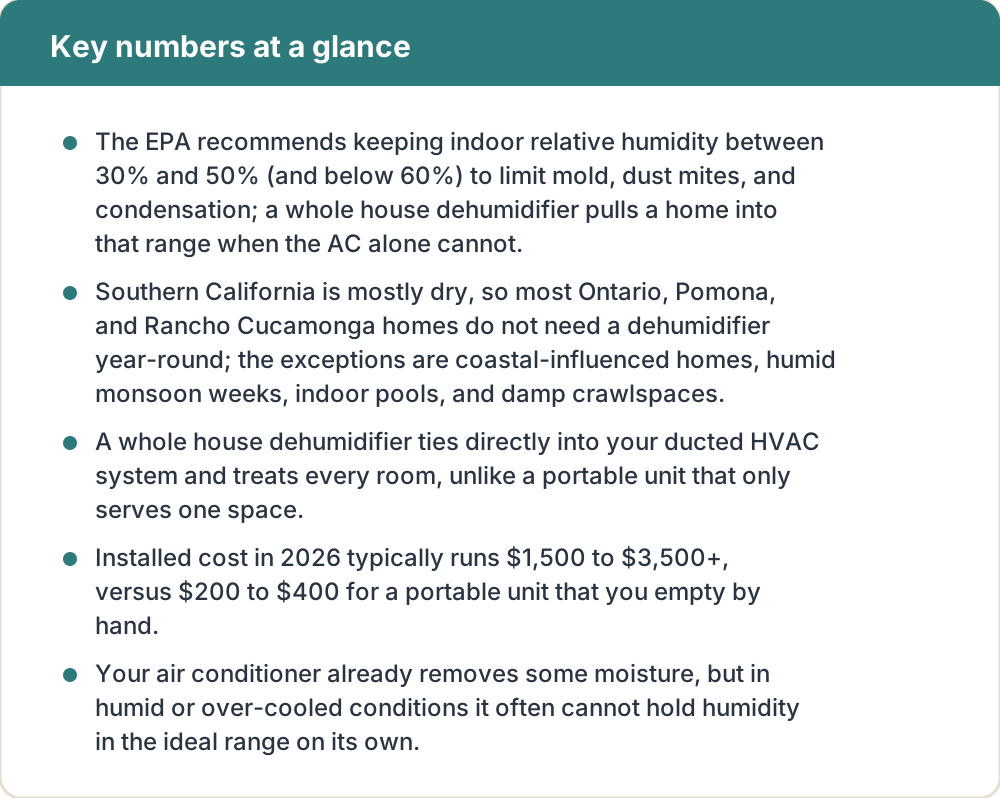
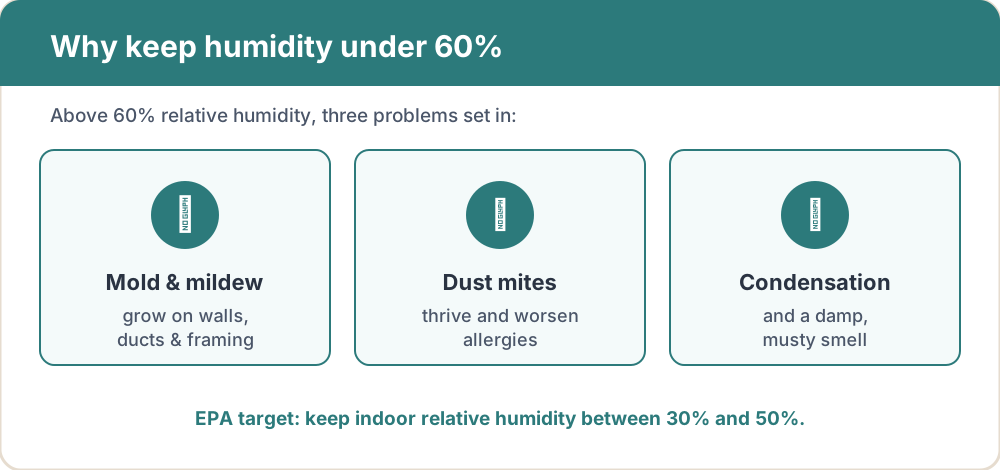
- The EPA recommends keeping indoor relative humidity between 30% and 50% (and below 60%) to limit mold, dust mites, and condensation; a whole house dehumidifier pulls a home into that range when the AC alone cannot.
- Southern California is mostly dry, so most Ontario, Pomona, and Rancho Cucamonga homes do not need a dehumidifier year-round; the exceptions are coastal-influenced homes, humid monsoon weeks, indoor pools, and damp crawlspaces.
- A whole house dehumidifier ties directly into your ducted HVAC system and treats every room, unlike a portable unit that only serves one space.
- Installed cost in 2026 typically runs $1,500 to $3,500+, versus $200 to $400 for a portable unit that you empty by hand.
- Your air conditioner already removes some moisture, but in humid or over-cooled conditions it often cannot hold humidity in the ideal range on its own.
On this page
- Do most Southern California homes actually need a whole house dehumidifier?
- Who in the Inland Empire genuinely benefits from one?
- Why can't my air conditioner just handle the humidity?
- How does a whole house dehumidifier integrate with ducted HVAC?
- What size do I need, and how is capacity rated?
- What does a whole house dehumidifier cost, and what are the alternatives?
Do most Southern California homes actually need a whole house dehumidifier?
For most homes across the Inland Empire, the honest answer is no. Ontario, Pomona, Rancho Cucamonga, and Corona sit in a semi-arid climate where relative humidity is often comfortable or even low, so the bigger year-round comfort battle here is dry air and summer heat, not dampness. A whole house dehumidifier is not standard equipment for a typical valley home.
That said, Southern California is not uniformly dry. Homes closer to the coast, near the base of the foothills, or in low-lying pockets pick up marine-layer moisture. The late-summer monsoon can push muggy, sticky air into the Inland Empire for days at a time, and specific home features (crawlspaces, indoor pools, or accessory dwelling units) can trap moisture regardless of the outdoor climate.
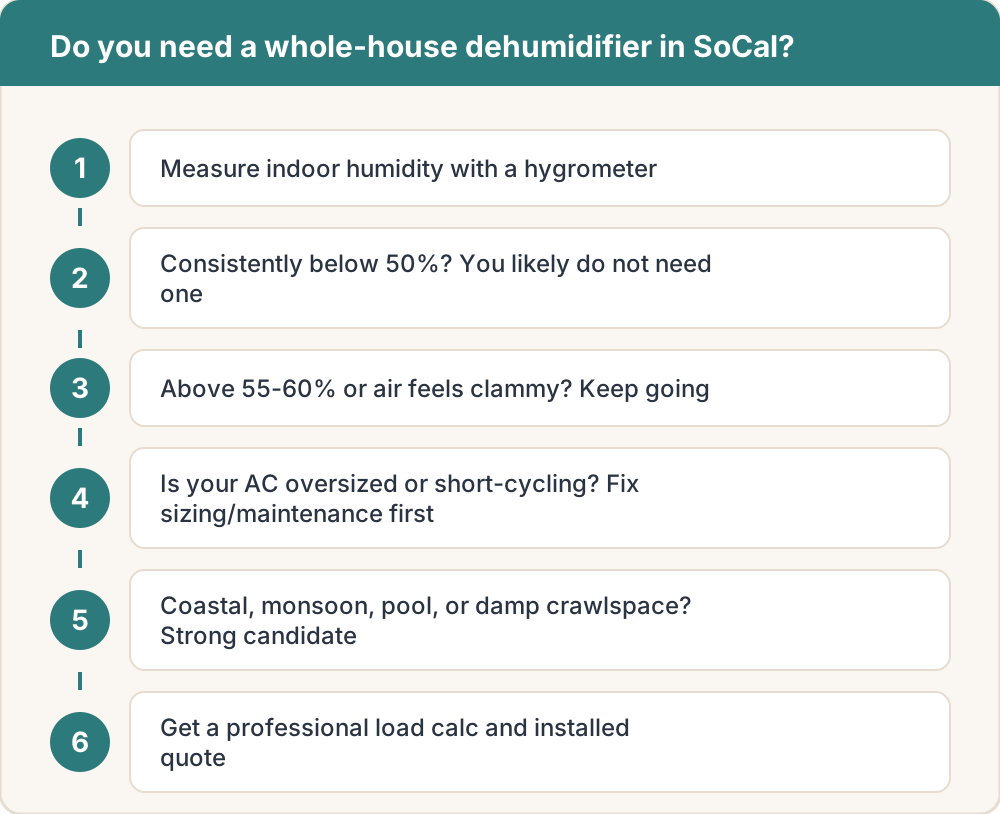
So this is a targeted upgrade, not a default one. The right move is to measure your indoor humidity first with an inexpensive hygrometer, then decide. If you are consistently above 55 to 60% indoors, that is when a dehumidifier earns its keep.
Who in the Inland Empire genuinely benefits from one?
A whole house dehumidifier is worth serious consideration if your home fits one of the moisture-prone profiles below. These are the situations where humidity is either persistent or too heavy for your air conditioner to manage on its own.
- Coastal-influenced or foothill homes that regularly feel damp or smell musty during the marine layer.
- Homes that get clammy during the summer monsoon, when outdoor dew points spike for a week or two.
- Houses with an indoor pool, hot tub room, or heavy indoor plant load that continuously adds moisture.
- Homes with a damp crawlspace or poorly sealed foundation feeding moisture upward.
- ADUs, additions, or bonus rooms that are poorly ventilated and hold humidity.
- Households dealing with recurring mold, mildew smells, or allergy and asthma symptoms tied to dampness.
There is also a comfort-and-efficiency angle. If your air feels cold but clammy, you may be over-cooling. Dropping the thermostat to fight stickiness wastes energy and still leaves the air damp. Right-sizing your system and pairing it with dehumidification is a cleaner fix; our guide to the best summer thermostat temperature explains why chasing comfort with the thermostat alone backfires.
| Option | Capacity (pints/day) | Coverage | Installed cost | Best for |
|---|---|---|---|---|
| Portable unit | 20 - 50 | One room | $200 - $400 | A single damp room, ADU, or temporary fix |
| Standard whole-house unit | 70 - 98 | Whole home via ducts | $1,500 - $2,800 | Most single-family homes with real humidity issues |
| High-capacity whole-house unit | 120 - 200 | Large or very damp home | $2,500 - $3,500+ | Homes with pools, additions, or damp crawlspaces |
| Right-size / maintain existing AC | N/A | Whole home | Maintenance from ~$199/yr | Homes where over-cooling or a dirty system is the real cause |
Why can't my air conditioner just handle the humidity?
Your AC does remove moisture as a side effect of cooling: warm indoor air passes over the cold evaporator coil, water condenses, and it drains away. On a normal SoCal day, that is often enough. This is why humidity is rarely a primary complaint in a dry valley home with a healthy, correctly sized system.
The problem appears in two situations. First, on mild-but-muggy days, the AC does not run long enough to wring out much water, because the house hits its temperature target before it dehumidifies. Second, an oversized AC short-cycles: it cools fast, shuts off, and never removes enough moisture, leaving air cold and damp. In both cases the air conditioner is doing its job on temperature but losing the humidity battle.
A whole house dehumidifier decouples the two. It handles moisture directly so your AC is not forced to over-cool just to feel dry. If your system short-cycles or was never sized right, a proper load calculation during AC installation is the foundation; dehumidification is the finishing layer on top.
How does a whole house dehumidifier integrate with ducted HVAC?
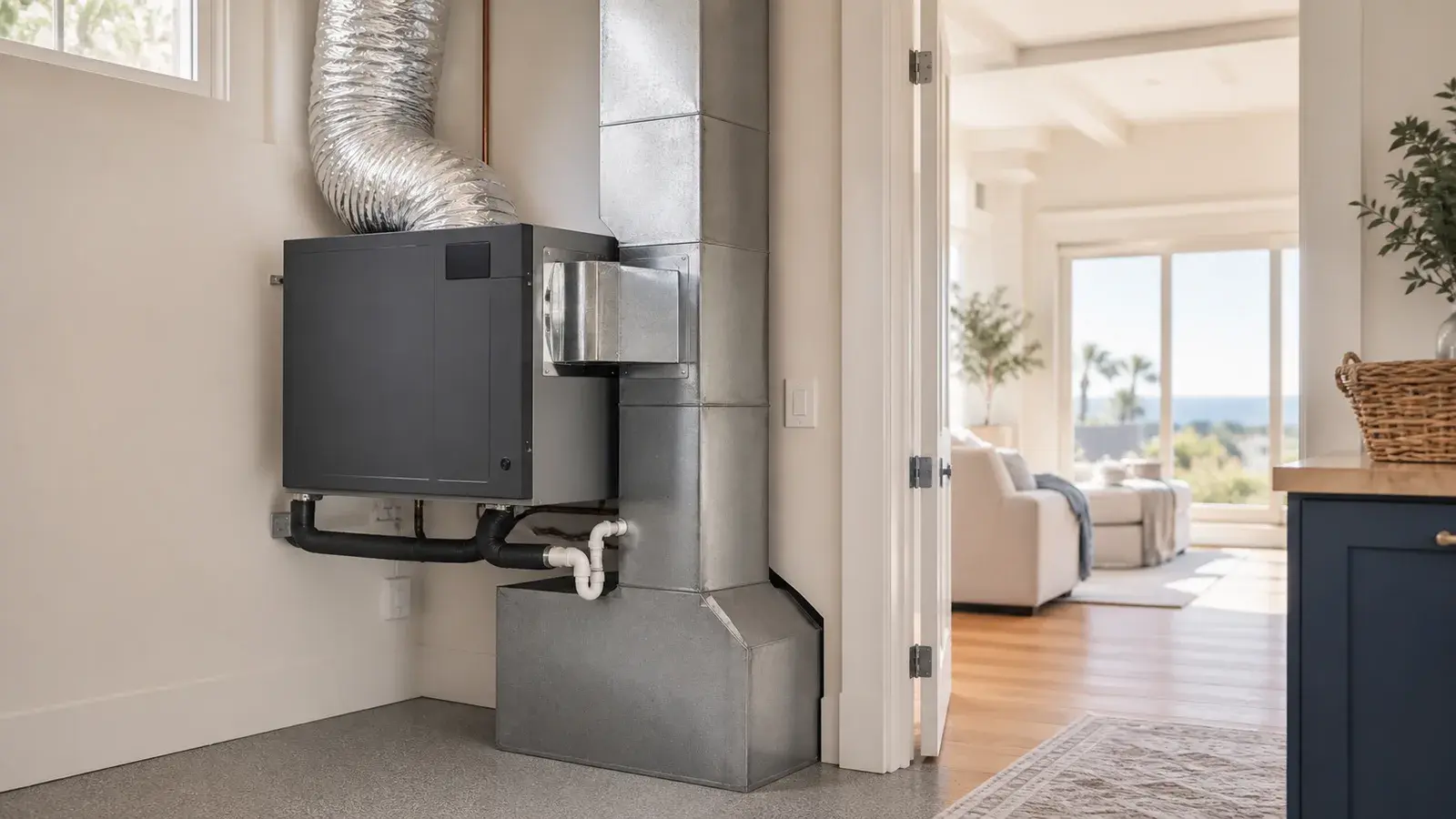
A whole-house unit is not a portable box you empty by hand. It is a dedicated appliance tied into your ductwork so it treats the entire home from one location, typically installed near the air handler in a garage, closet, or attic space.
There are two common integrations. In the most complete setup, the dehumidifier draws air from return ducts, dries it, and delivers it back through the supply ducts, coordinating with the HVAC blower. In a simpler setup it is ducted independently and runs on its own humidistat. Either way it drains continuously to a condensate line, so there is no bucket to empty.
- It runs on a humidistat, kicking on when indoor humidity climbs past your set point (commonly 45 to 50%), independent of whether the AC is cooling.
- Because it is ducted, it dries every room, not just the space it sits in.
- It drains automatically to a condensate line or pump, so there is no manual emptying.
- It works alongside your air handler, so proper duct connections and drainage matter as much as the unit itself.
Controlling humidity also reduces the airborne moisture that mold and dust mites need. That is a companion to good filtration, not a replacement for it; our air purifier vs HVAC filter breakdown covers how the two work together for cleaner indoor air.
What size do I need, and how is capacity rated?
Whole-house dehumidifiers are rated in pints of water removed per day. Residential models typically run from about 60 to 200 pints per day. Sizing depends on square footage, how leaky the home is, the moisture source, and your local climate, so it is done per home rather than off a generic chart.
One important catch: the big number on the box can overstate real-world performance. Older AHAM nameplate ratings are measured at warm, humid test conditions, so a unit labeled 100 pints may only deliver 60 to 70 pints at typical indoor conditions. This is exactly why professional sizing matters; you want capacity rated for your actual home, not a marketing figure.
As a rule of thumb, most typical single-family homes here land in the 70 to 98 pint range, while larger homes, homes with pools, or very damp crawlspaces push toward the high-capacity 120-plus pint units. Getting this right the first time avoids either an underperforming unit or one that short-cycles.
What does a whole house dehumidifier cost, and what are the alternatives?
In 2026, a whole house dehumidifier typically costs $1,500 to $3,500 or more installed, depending on capacity, how it ties into your ductwork, and whether a condensate pump is needed. Expect roughly $10 to $30 per month in added energy use when it runs, which in our dry climate is often only during humid stretches, not year-round.
The alternatives are cheaper but narrower. A portable unit runs $200 to $400 and can be enough for a single damp room, though you have to empty the tank and it does nothing for the rest of the house. And in many SoCal homes, the real fix is not a dehumidifier at all: a correctly sized, well-maintained AC, plus fixing crawlspace or ventilation issues, solves the problem. Regular AC maintenance keeps the coil clean and the system draining properly so it removes moisture the way it should.
We give upfront written pricing before any work, so you see the real installed number for your home rather than a range. Note that the federal 25C energy-efficiency tax credit expired on December 31, 2025, so it is no longer available to offset this cost.
We size and install whole-house dehumidifiers that integrate with your HVAC across the Inland Empire. See AC & system installation service
Frequently asked questions
Most of the Inland Empire is dry enough that a dehumidifier is not necessary year-round. The exceptions are coastal-influenced homes, humid summer monsoon spells, and homes with pools, damp crawlspaces, or poor ventilation. The best way to know is to measure your indoor humidity and see whether it regularly climbs above 55 to 60%.
The EPA recommends keeping indoor relative humidity between 30% and 50%, and always below 60%. Staying in that range limits mold, dust mites, and condensation. Most homes target a humidistat setting around 45 to 50% for a good balance of comfort and moisture control.
It removes some moisture while cooling, and on typical dry SoCal days that is often enough. But on mild-but-muggy days the AC does not run long enough to dehumidify, and an oversized system short-cycles and leaves air cold and clammy. In those cases a dedicated dehumidifier handles the moisture your AC cannot.
In 2026 the typical installed cost is $1,500 to $3,500 or more, depending on capacity and how it ties into your ductwork. Running it adds roughly $10 to $30 per month when in use. A portable single-room unit is far cheaper at $200 to $400 but only treats one space.
Yes, indirectly. Mold, mildew, and dust mites need moisture to thrive, so keeping humidity in the EPA's 30 to 50% range makes your home less hospitable to them. It works best alongside good filtration and fixing any underlying leaks or crawlspace moisture, not as a standalone cure.
Local next step
Turn this guide into a site-specific answer.
Guides explain the decision. Equipment condition, access, and safe next steps still need to match the home or business. Review the relevant service scope or request an assessment for Ontario, the Inland Empire, or East Los Angeles County. Availability depends on the current schedule.