AI and Predictive HVAC Maintenance: How Sensors Catch a Failing Compressor Weeks Early
Predictive HVAC maintenance uses connected sensors and machine learning to spot a failing compressor, low airflow, or a widening temperature split 2 to 4 weeks before a breakdown, turning an emergency into a planned repair.

Owner & Lead HVAC Technician, Alex Air & Heating · EPA 608 Universal Certified · Ontario, CA
TL;DR
Predictive HVAC maintenance uses connected sensors plus machine learning to watch how your system actually runs and flag trouble before it stops you cold. Instead of waiting for a breakdown (reactive) or servicing only by the calendar (preventive), it reads signals like rising compressor amperage or a shrinking temperature split and can surface some compressor problems roughly 2 to 4 weeks early. For an Inland Empire home, that means catching a failing part before a 108F August afternoon, turning a costly emergency into a planned, cheaper repair.
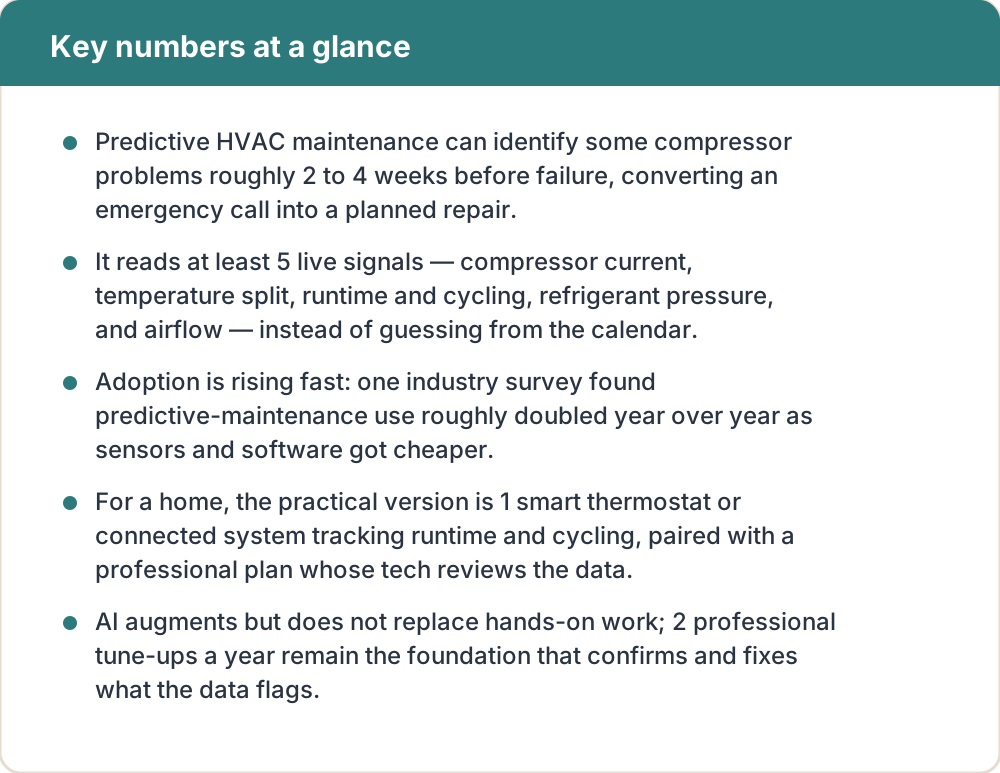
- Predictive HVAC maintenance can identify some compressor problems roughly 2 to 4 weeks before failure, converting an emergency call into a planned repair.
- It reads at least 5 live signals — compressor current, temperature split, runtime and cycling, refrigerant pressure, and airflow — instead of guessing from the calendar.
- Adoption is rising fast: one industry survey found predictive-maintenance use roughly doubled year over year as sensors and software got cheaper.
- For a home, the practical version is 1 smart thermostat or connected system tracking runtime and cycling, paired with a professional plan whose tech reviews the data.
- AI augments but does not replace hands-on work; 2 professional tune-ups a year remain the foundation that confirms and fixes what the data flags.
On this page
- How does predictive HVAC maintenance catch a failing compressor weeks early?
- Reactive vs. preventive vs. predictive: what's the difference?
- What does the system actually monitor, and what does each signal warn about?
- How much of this can a home realistically use today?
- Is adoption actually growing, or is this just hype?
- Where does AI stop and a technician start?
- Why this matters most for Inland Empire homes
How does predictive HVAC maintenance catch a failing compressor weeks early?
Predictive HVAC maintenance uses connected sensors and machine learning to watch how your system runs and flag trouble — a compressor drawing abnormal current, a widening temperature split — often 2 to 4 weeks before a breakdown, turning an emergency call into a planned, cheaper repair.
Reactive vs. preventive vs. predictive: what's the difference?
There are three ways to maintain an air conditioner. Reactive maintenance means you fix it after it breaks — the most expensive and least convenient, usually during a heat wave. Preventive maintenance means servicing on a fixed calendar, like a spring tune-up, which catches a lot but can miss faults that develop between visits.
Predictive maintenance is the newest layer. Connected sensors plus machine-learning software watch the system continuously and detect early signs of failure, rather than waiting for a breakdown or trusting the calendar alone. It does not replace the calendar tune-up — it fills the gap between visits so a slow-developing fault gets caught before it strands you.
The key shift is timing. A reactive repair happens at the worst possible moment, when the house is already hot and the phone lines are jammed. A preventive tune-up happens on a schedule that may or may not line up with when a part actually starts to fail. Predictive maintenance is the only one of the three that responds to the equipment's real condition, on the equipment's own timeline, which is what makes the early warning possible.
What does the system actually monitor, and what does each signal warn about?
Predictive tools don't watch one thing — they track several running signals at once and look for patterns that drift away from normal. Here are the five that matter most for a home system and the failures each one helps head off.
| What gets monitored | Early warning sign | What it can prevent |
|---|---|---|
| Compressor current (amperage) | Amperage climbs above the normal running range | A seized or burned-out compressor — the most expensive AC repair |
| Temperature split (return vs. supply air) | The split narrows and cooling weakens | Low refrigerant charge or a failing compressor going unnoticed |
| Runtime and cycling | Short-cycling, or longer runtimes to hit setpoint | Wasted energy, worn contactors, and a compressor running hot |
| Refrigerant pressure | Pressure drifts outside the expected range | A leak or undercharge that quietly kills capacity and efficiency |
| Airflow | Airflow drops as a filter or coil clogs | A frozen coil, poor cooling, and strain on the whole system |
Several of these overlap with problems homeowners already ask about. If your system won't stop restarting, our guide to AC short-cycling causes and fixes explains what monitoring often catches first, and what your AC noises mean covers the sounds that back up the data.
How much of this can a home realistically use today?
You don't need an industrial sensor array. For a home, the practical version of predictive maintenance is a smart thermostat and/or connected equipment that tracks runtime, cycling, and temperature differentials and sends alerts to your phone — and to your HVAC company. A capable thermostat is the on-ramp; our smart thermostat comparison for 2026 walks through the options.
The data only pays off when a trained person reviews it. That's why the strongest setup is a connected thermostat paired with a professional maintenance plan whose technician actually reads the runtime and temperature trends between visits. If you're weighing whether a plan earns its keep, see is an HVAC maintenance plan worth it.
Is adoption actually growing, or is this just hype?
It's growing quickly. As sensors and software have gotten cheaper, one industry survey found predictive-maintenance use roughly doubled year over year. Early adopters report meaningful gains — reduced downtime and lower maintenance costs — because catching a fault early is almost always cheaper than replacing a part that failed and took others with it. A compressor that seizes can push metal and acid through the refrigerant loop, so what starts as a flagged amperage reading and ends as a same-day repair might otherwise become a contaminated system and a much larger bill.
- Fewer emergency breakdowns during peak demand, when repair slots are scarce and prices climb.
- Lower maintenance costs, because a flagged part is repaired before it damages the rest of the system.
- Less downtime — a planned repair on a mild morning beats a no-cooling emergency in August.
Where does AI stop and a technician start?
Be honest about the limits: AI augments hands-on inspection, it does not replace it. Software is very good at flagging where to look — a shrinking temperature split, rising amperage, a runtime creeping up — but it cannot open the unit. A certified technician still has to check the refrigerant charge, inspect electrical connections, and clean the coils to confirm and fix what the data points to.
Think of it as division of labor. The data narrows the search from the whole system to one likely culprit; the tech confirms the diagnosis and does the repair. Neither replaces the twice-yearly professional tune-up, which remains the foundation everything else builds on — see our HVAC maintenance checklist for what a real visit covers.
A smart thermostat only helps if someone reads the trends. In the Inland Empire's 100-plus-degree summers, that early warning can mean the difference between a planned fix and a no-cooling August. Pair your connected system with our AC maintenance service and let a tech review the data.
Why this matters most for Inland Empire homes
In Ontario, Pomona, Rancho Cucamonga, Fontana, Riverside, and Chino, summer afternoons routinely hit 100 to 110F, and systems run hard for months on end. High runtime is exactly the condition that turns a small fault into a full failure, and it does so fastest in July and August when you can least afford it. Catching a failing part before an August breakdown is the real payoff of monitoring here.
The playbook for a local homeowner is simple: run a smart thermostat, keep filters clean, book two professional tune-ups a year, and let your technician review the runtime and temperature data at each visit. If something is already off, don't wait — our AC repair team can confirm what the numbers are hinting at before the next heat wave arrives.
Frequently asked questions
Predictive HVAC maintenance uses connected sensors plus machine-learning software to detect early signs of failure while the system is still running. Unlike reactive maintenance (fix it after it breaks) or preventive maintenance (service on a fixed calendar), it watches live data — compressor current, temperature split, runtime — and sends an alert when a pattern drifts, often weeks before the equipment quits on you.
A struggling compressor usually leaves a trail before it dies: it draws more electrical current (amperage) than normal, the temperature split across the coil narrows, and runtimes stretch as the system fights to hit setpoint. Software watching those signals flags the drift, and industry reporting suggests some compressor problems can be identified roughly 2 to 4 weeks before failure — enough time to plan the repair.
For a home, the practical version today is a smart thermostat and/or connected HVAC equipment that logs runtime, cycling, and temperature differentials and sends alerts. Pair that with a professional maintenance plan whose technician reviews the data at each visit. You do not need an industrial sensor array — the thermostat plus a trained tech reading trends does most of the useful work.
No. AI and sensors augment a technician, they do not replace one. Data can flag where to look — declining airflow, rising amperage, short-cycling — but a certified tech still has to physically confirm the cause and fix it: checking refrigerant charge, tightening electrical connections, cleaning coils. The data points; a person diagnoses and repairs. Both together beat either alone.
In Ontario, Fontana, and Riverside, summers hit 100 to 110F and systems run hard for months, so a small fault can escalate to a full breakdown fast. Catching a failing part before an August afternoon is the real payoff — a planned repair on a mild morning costs far less than an emergency call during a heat wave. A twice-yearly tune-up remains the foundation.
The most useful early signals are short-cycling (the system turning on and off too often), a declining temperature split between return and supply air, rising compressor amperage, longer runtimes to reach setpoint, and airflow drops from a clogging filter or coil. None of these is obvious to a homeowner day to day, which is why continuous monitoring plus a tech's review catches them sooner.