Heat Pump Water Heater: Is It Worth It in California in 2026?
For most California homes with a good spot for it, a heat pump water heater is worth it. Here is how it works, what it costs, how it compares to gas, and the realistic payback in the Inland Empire.

Owner & Lead HVAC Technician, Alex Air & Heating · EPA 608 Universal Certified · Ontario, CA
TL;DR
A heat pump water heater is worth it for most California homes with a suitable spot, especially a garage. It uses about 60 to 70 percent less energy than a standard electric tank and cuts water-heating costs substantially, usually paying back its higher upfront price in roughly 3 to 8 years depending on your rates, usage, and any rebate. In a Southern California garage the mild ambient air is close to ideal, and newer 120V plug-in models can skip a costly panel upgrade.
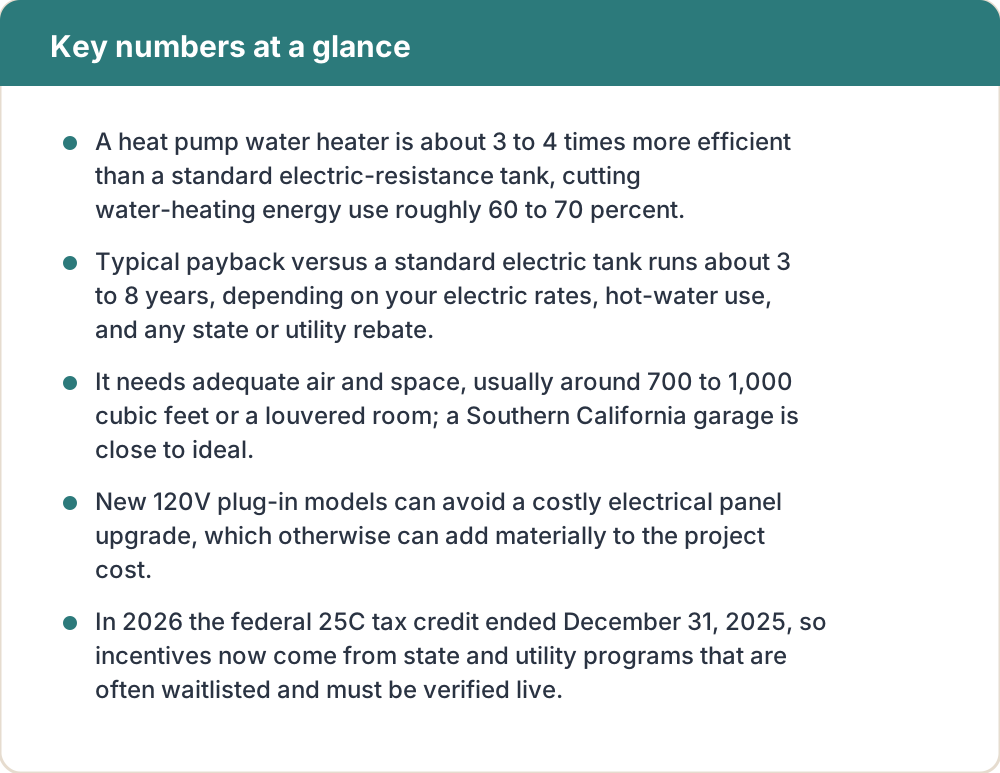
- A heat pump water heater is about 3 to 4 times more efficient than a standard electric-resistance tank, cutting water-heating energy use roughly 60 to 70 percent.
- Typical payback versus a standard electric tank runs about 3 to 8 years, depending on your electric rates, hot-water use, and any state or utility rebate.
- It needs adequate air and space, usually around 700 to 1,000 cubic feet or a louvered room; a Southern California garage is close to ideal.
- New 120V plug-in models can avoid a costly electrical panel upgrade, which otherwise can add materially to the project cost.
- In 2026 the federal 25C tax credit ended December 31, 2025, so incentives now come from state and utility programs that are often waitlisted and must be verified live.
On this page
- Is a heat pump water heater worth it in California in 2026?
- How does a heat pump water heater actually work?
- Heat pump water heater vs standard electric vs gas tank
- What does a heat pump water heater cost, and when does it pay back?
- Where should it go, and how big should the tank be?
- What rebates and incentives apply in 2026?
- The bottom line for Inland Empire homeowners
Is a heat pump water heater worth it in California in 2026?
For most California homes with a suitable spot, especially a garage, a heat pump water heater is worth it. It uses about 60 to 70 percent less energy than a standard electric tank and can cut water-heating costs substantially, usually paying back its higher upfront price in roughly 3 to 8 years depending on your rates, usage, and any rebate.
How does a heat pump water heater actually work?
A heat pump water heater (HPWH), also called a hybrid water heater, moves heat from the surrounding air into the water instead of generating heat directly. That single change makes it about 3 to 4 times more efficient than a standard electric-resistance tank and cuts water-heating energy use roughly 60 to 70 percent. The heat pump does the everyday work, and a built-in electric element can kick in only when demand spikes.
Because it borrows heat from the air, an HPWH gives off two side effects worth planning around: it produces cool, dehumidified air and it makes some noise, roughly like a quiet fan or refrigerator. In a hot Inland Empire garage, that cool exhaust is a bonus rather than a problem, but the noise means placement matters. The U.S. Department of Energy explains the same operating principle in its consumer guidance on heat pump water heaters.
Heat pump water heater vs standard electric vs gas tank
The clearest way to judge whether an HPWH is worth it is to line it up against the two tanks it usually replaces. The table below compares efficiency, a labeled yearly operating-cost estimate, upfront cost, and what each type is best for. Dollar figures are rough ranges that vary widely by home, rates, and usage, so use them for direction only and confirm with a written quote.
| Type | Efficiency | Yearly operating cost (est.) | Upfront cost | Best for |
|---|---|---|---|---|
| Heat pump (hybrid) | About 3-4x a standard electric tank; ~60-70% less energy | Lowest of the three (est., varies) | Highest upfront (est.) | Homes with a garage or roomy space electrifying off gas |
| Standard electric tank | Baseline electric resistance | Highest of the three (est., varies) | Lowest upfront (est.) | Tight spaces where a heat pump will not fit |
| Natural gas tank | Moderate; depends on gas rates | Low where gas is cheap (est., varies) | Moderate upfront (est.) | Homes staying on cheap natural gas |
Against a standard electric tank the case is strong: the energy savings are large and steady. Against cheap natural gas the operating-cost savings are smaller, but you still gain much higher efficiency, cooler drier air, and full electrification. If you are already planning to move off gas, an HPWH fits naturally into a broader whole-home electrification plan.
What does a heat pump water heater cost, and when does it pay back?
An HPWH costs more upfront than a standard tank, and the exact number depends on tank size, your electrical setup, and site conditions. The payback comes from the energy it saves every month. Versus a standard electric-resistance tank, payback is usually about 3 to 8 years. Higher electric rates and heavier hot-water use shorten that window; very cheap natural gas lengthens it if you are comparing against a gas tank.
One cost driver is electrical. Older HPWHs need a 240V circuit, which can trigger a panel upgrade in some homes. Newer 120V plug-in models can avoid that expense by using an existing standard outlet, which keeps the project simpler and cheaper. Since the difference can be significant, ask your installer which model fits your panel. For the broader math on heat pumps in our climate, see whether a heat pump is worth it in California.
Where should it go, and how big should the tank be?
An HPWH needs adequate surrounding air and space, since it harvests heat from the room around it. Manufacturers typically want roughly 700 to 1,000 cubic feet of air or a louvered space, plus moderate ambient temperatures. A Southern California garage checks those boxes better than almost anywhere, which is a big reason HPWHs perform well across Ontario, Fontana, Riverside, and the rest of the Inland Empire.
- Space and air: aim for roughly 700 to 1,000 cubic feet or a louvered room so the unit can pull heat freely.
- Ambient temperature: moderate, garage-like conditions are close to ideal; extreme cold hurts efficiency.
- Noise: expect quiet fan or refrigerator level sound, so avoid placing it against a bedroom wall.
- Cool exhaust: the dehumidified air it produces is a welcome bonus in a hot garage.
- Sizing: match the tank to your household's demand using the first-hour rating so you do not run short.
Sizing matters as much as placement. Match the tank to your household's peak demand using the first-hour rating, which measures how much hot water the unit can deliver during a busy morning. Undersize it and the electric backup runs more often, erasing savings; oversize it and you pay for capacity you never use. A good installer sizes to your real usage, not a guess.
What rebates and incentives apply in 2026?
Incentives changed in 2026. The federal 25C tax credit ended December 31, 2025, so the savings now come from state and utility programs rather than the IRS. California programs such as TECH Clean California HPWH incentives exist, but they are largely reserved or waitlisted, and availability shifts month to month. Never assume a specific dollar amount until you have verified live status.
Because these programs move fast, treat rebate hunting as its own step. Our up-to-date guides to California heat pump rebates and California HVAC rebates and tax credits track what is open. If a permit or code question comes up, note that water-heater work in new or altered systems can intersect with Title 24 HVAC requirements.
Every HPWH decision comes down to your garage, your panel, and your hot-water habits, so the only reliable numbers are the ones sized to your home. Ask for a written quote that names the model, whether it is 120V or 240V, the tank size and first-hour rating, and any electrical work. Our team handles the full job through heat pump installation.
The bottom line for Inland Empire homeowners
For a typical home in Ontario, Pomona, Rancho Cucamonga, Fontana, Riverside, or Chino with a garage or roomy utility space, a heat pump water heater is usually worth it. Our mild Southern California climate is close to ideal for the technology, the energy savings are real and repeatable, and a 120V model can keep the install simple. Weigh it against cheap gas honestly, verify current rebates, and size the tank to your household. Keeping the rest of your system efficient with regular AC maintenance rounds out a lower-energy, electrified home.
Frequently asked questions
Yes, for most California homes with a suitable installation spot a heat pump water heater is worth it. It uses roughly 60 to 70 percent less energy than a standard electric tank, so it usually pays back its higher upfront cost in about 3 to 8 years. A garage in the Inland Empire, with mild ambient air, is close to an ideal location, which improves both efficiency and payback.
Installed HPWH cost in California is typically higher than a standard tank, and the exact figure depends on tank size, your electrical setup, and site conditions. A 120V plug-in model can avoid a panel upgrade, while a 240V unit may add electrical work. Because prices vary widely by home and installer, treat any range as an estimate and get a written quote before you decide.
It depends on your goals. Against a standard electric tank, a heat pump water heater saves a lot of energy and money. Against cheap natural gas the operating-cost savings are smaller, but you gain much higher efficiency, cooler drier air, and full electrification, which matters if you are moving off gas. If your gas rates are low, run the numbers on your actual usage before switching.
Compared with a standard electric-resistance tank, the payback period is usually about 3 to 8 years. Your exact payback depends on local electric rates, how much hot water your household uses, whether you qualify for a rebate, and installation cost. Higher electric rates and heavier hot-water use shorten payback; very cheap natural gas lengthens it versus a gas tank.
Yes, and a Southern California garage is often close to ideal. The unit pulls heat from surrounding air, so it wants adequate space, usually around 700 to 1,000 cubic feet or a louvered room, and moderate temperatures. As a bonus it blows out cool, dehumidified air, which is welcome in a hot Inland Empire garage. It does make some noise, like a quiet fan or refrigerator, so placement matters.
In 2026 incentives are state and utility based, not federal, because the federal 25C tax credit ended December 31, 2025. California programs such as TECH Clean California HPWH incentives exist but are largely reserved or waitlisted, so availability changes. Verify live status before you count on any dollar amount, and see our California heat pump rebates and tax-credit guides for current details.