Why Does a New AC Cost More in 2026? A2L Refrigerant, Title 24, and the Real Cost Drivers
A new AC costs more in 2026 for four concrete reasons beyond inflation: A2L (R-454B) equipment, California Title 24 permits and HERS testing, line-set/refrigerant changes, and higher SEER2 minimums. Here's what each adds and why it's worth it.

Owner & Lead HVAC Technician, Alex Air & Heating · EPA 608 Universal Certified · Ontario, CA
TL;DR
AC installation is more expensive in 2026 because of four real changes, not just inflation. New systems use low-GWP A2L refrigerant (R-454B) with redesigned components and leak sensors, California Title 24 requires a permit plus HERS field verification, you can't reuse an old R-410A charge so the line set may need flushing or replacing, and higher SEER2 efficiency minimums raise base equipment prices. The federal 25C credit also ended 12/31/2025. Get an itemized written quote in the Inland Empire.
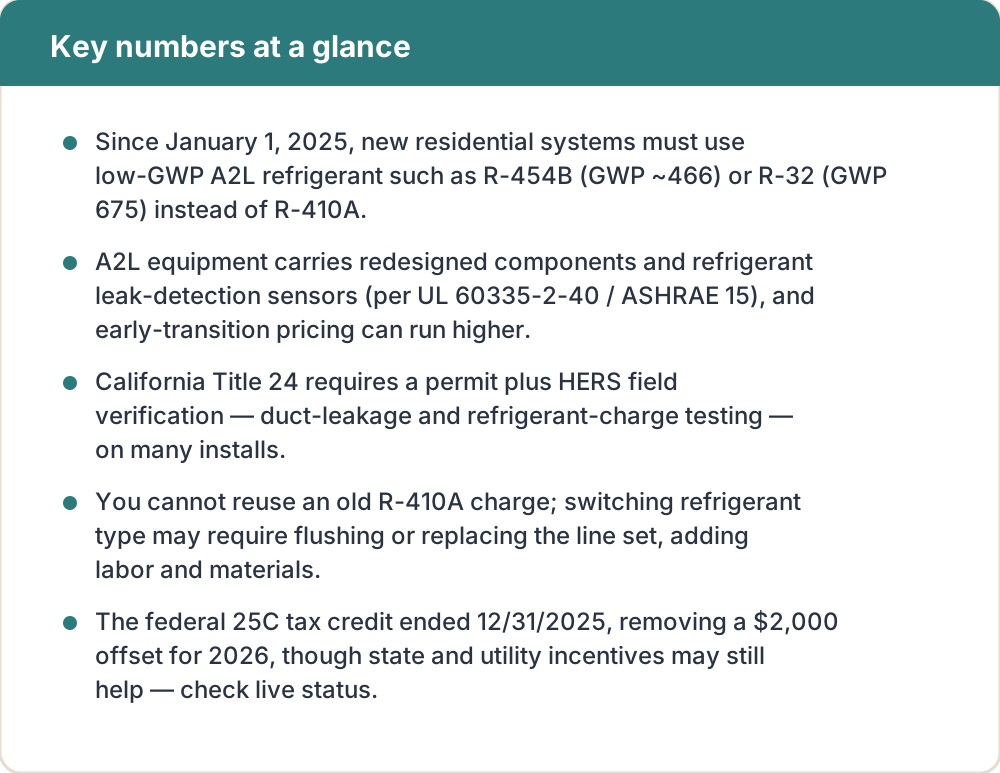
- Since January 1, 2025, new residential systems must use low-GWP A2L refrigerant such as R-454B (GWP ~466) or R-32 (GWP 675) instead of R-410A.
- A2L equipment carries redesigned components and refrigerant leak-detection sensors (per UL 60335-2-40 / ASHRAE 15), and early-transition pricing can run higher.
- California Title 24 requires a permit plus HERS field verification — duct-leakage and refrigerant-charge testing — on many installs.
- You cannot reuse an old R-410A charge; switching refrigerant type may require flushing or replacing the line set, adding labor and materials.
- The federal 25C tax credit ended 12/31/2025, removing a $2,000 offset for 2026, though state and utility incentives may still help — check live status.
On this page
- Why is AC installation more expensive in 2026?
- Cost driver 1: A2L (R-454B) equipment
- Cost driver 2: Title 24 permit and HERS verification
- Cost driver 3: Line-set and refrigerant changes
- Cost driver 4: Higher SEER2 minimums
- Labor, electrical, and the expired 25C credit
- The 2026 cost factors at a glance
- Is a 2026 system worth the higher price?
Why is AC installation more expensive in 2026?
A new AC can cost more in 2026 than a few years ago for four concrete reasons beyond inflation: the switch to A2L (R-454B) equipment with new safety components, California Title 24 permitting and HERS verification, possible line-set or electrical changes because you can't reuse an old R-410A charge, and higher SEER2 efficiency minimums. Here is what each one adds and why it's worth it.
Cost driver 1: A2L (R-454B) equipment
Since January 1, 2025, new residential systems use low-GWP A2L refrigerant instead of R-410A. The two common choices are R-454B (global warming potential around 466) and R-32 (GWP 675) — both a fraction of R-410A's climate impact. A2L refrigerants are mildly flammable, so equipment is redesigned around them: sealed components, revised electrical parts, and built-in refrigerant leak-detection sensors that meet UL 60335-2-40 and ASHRAE 15 safety standards.
That extra engineering costs money, and early in any transition, manufacturer pricing tends to run higher before supply and competition catch up. If you want the full background on how A2L affects buying decisions, see our guide to buying a new AC in 2026 and the R-454B vs R-410A comparison.
Cost driver 2: Title 24 permit and HERS verification
California's Title 24 energy code requires a permit plus HERS field verification on many AC installs. A HERS rater — an independent third party — tests duct leakage and verifies the refrigerant charge after installation. This is a genuine cost, but it's the reason a code-compliant system actually delivers its rated efficiency instead of quietly running low on charge or leaking cooled air into your attic.
For a full breakdown of what the code demands, read our Title 24 HVAC requirements guide. Ask any contractor to list the permit and HERS fees as separate line items so you can see exactly what you're paying for.
Cost driver 3: Line-set and refrigerant changes
You cannot reuse an old R-410A refrigerant charge in an A2L system. Depending on the condition and compatibility of your existing line set — the copper tubing that connects the outdoor and indoor units — the installer may need to flush it thoroughly or replace it entirely to avoid contaminating the new refrigerant. Either path adds labor and materials, and a careful installer inspects the line set before quoting rather than after.
Cost driver 4: Higher SEER2 minimums
SEER2, the 2023 test standard, measures cooling efficiency under more realistic operating conditions. The Southern region — which includes California — carries higher minimums: 14.3 SEER2 for split-system central AC. That means the baseline unit you can legally install is more efficient, and typically more expensive, than the units sold a few years ago. The payoff is lower running costs across the equipment's life. Our SEER2 explained guide walks through how the number maps to your utility bill.
Labor, electrical, and the expired 25C credit
Labor and any electrical work add cost too — especially if you're moving to a heat pump, which may need panel or circuit upgrades. On top of the equipment changes, the federal 25C tax credit ended December 31, 2025, removing a $2,000 offset for 2026 installs. State and utility incentives may still help in the Inland Empire, but programs change often, so check current status before counting on any figure.
The 2026 cost factors at a glance
| Cost factor | What it is | Rough impact | What you get for it |
|---|---|---|---|
| A2L equipment | New R-454B / R-32 units with redesigned parts and leak sensors | Higher base equipment price during early transition | Lower climate impact, code-current safety, future-proofed |
| Title 24 permit + HERS | Permit and independent field verification of ducts and charge | Added permit and rater fees | Verified performance at the efficiency you paid for |
| Line-set / refrigerant change | Flush or replace line set; can't reuse R-410A charge | Extra labor and materials, varies by home | Clean, compatible system with no cross-contamination |
| SEER2 minimum | 14.3 SEER2 floor for Southern-region split systems | Higher baseline equipment cost | Better efficiency and lower running costs over time |
| Labor / electrical | Install labor, plus panel or circuit work for heat pumps | Varies by scope and home | Safe, correct installation that meets code |
Every figure above is a typical range that varies by home, system, and site conditions. The only way to know your real number is an itemized written quote. Learn more about local pricing in our AC installation cost in the Inland Empire and AC replacement cost in California 2026 guides.
Is a 2026 system worth the higher price?
Yes. Net of all these factors, a 2026 system is safer, more efficient, code-compliant, and future-proofed against refrigerant phase-downs. You're not paying more for the same thing — you're buying different, better equipment that meets today's standards. The right move is to compare itemized quotes so you can see each line and decide with clear eyes.
Ask your contractor to break out equipment, A2L components, permit and HERS fees, line-set work, and labor separately. In the Inland Empire, we provide clear written estimates so you know exactly what each cost driver adds. Start with our AC installation service.
Serving Ontario, Pomona, Rancho Cucamonga, Fontana, Riverside, Chino, and the greater Los Angeles area, Alex Air & Heating installs code-compliant A2L systems and handles Title 24 permitting and HERS verification so your new AC performs exactly as rated.
Frequently asked questions
AC installation is more expensive in 2026 for four concrete reasons beyond inflation: new systems use low-GWP A2L refrigerant (R-454B) equipment with redesigned components and leak sensors, California Title 24 requires a permit plus HERS field verification, you can't reuse an old R-410A charge so the line set may need work, and higher SEER2 efficiency minimums raise base equipment prices. Expiration of the federal 25C credit adds to net cost.
A2L is a class of mildly flammable, low-global-warming-potential refrigerants like R-454B (GWP ~466) and R-32 (GWP 675) that replaced R-410A in new residential systems from January 1, 2025. A2L equipment includes redesigned components and refrigerant leak-detection sensors built to UL 60335-2-40 and ASHRAE 15. Early in the transition, pricing can be higher. Always get a written quote, because ranges vary by system and home.
Yes. California Title 24 requires a permit plus HERS field verification on many installs, meaning an independent rater tests duct leakage and refrigerant charge. That is a real line item, but it ensures the system actually performs as rated instead of running low on charge or leaking air into an attic. Ask your contractor to itemize the permit and HERS fees on your written quote.
Not the refrigerant charge — you cannot reuse an old R-410A charge in an A2L system. Depending on line-set condition and compatibility, the installer may flush the existing line set or replace it entirely to avoid cross-contamination. That adds labor and materials. A good contractor inspects the line set before quoting and lists any flushing or replacement clearly on your written estimate.
SEER2 is the 2023 test standard for measuring cooling efficiency under more realistic conditions. Southern-region minimums are higher — 14.3 SEER2 for split-system central AC — so the baseline equipment you can legally install is more efficient, and often more expensive, than older units. The upside is lower running costs over the life of the system. See our SEER2 explainer for how the rating affects your bill.
The federal 25C tax credit ended December 31, 2025, so the $2,000 offset it provided is gone for 2026 installs. State and utility incentives may still be available in the Inland Empire, but programs change often, so check live status before you count on any amount. Ask your contractor which current rebates apply and confirm eligibility in writing before you sign.