Whole-Home Electrification in California: What to Replace First, and What It Costs in 2026
A practical, plain-English roadmap to electrifying your Inland Empire home in 2026 — which gas appliance to swap first, why order matters, and how to spread the cost by replacing at end of life.

Owner & Lead HVAC Technician, Alex Air & Heating · EPA 608 Universal Certified · Ontario, CA
TL;DR
Whole home electrification in California means swapping gas appliances for efficient electric ones — a heat pump for heating and cooling, a heat pump water heater, induction cooking, and a heat pump dryer. The smart approach is to electrify in order, biggest and oldest first, usually the HVAC system and water heater, replacing each at end of life. That spreads the cost, avoids waste, and delivers the largest comfort and efficiency gains right away.
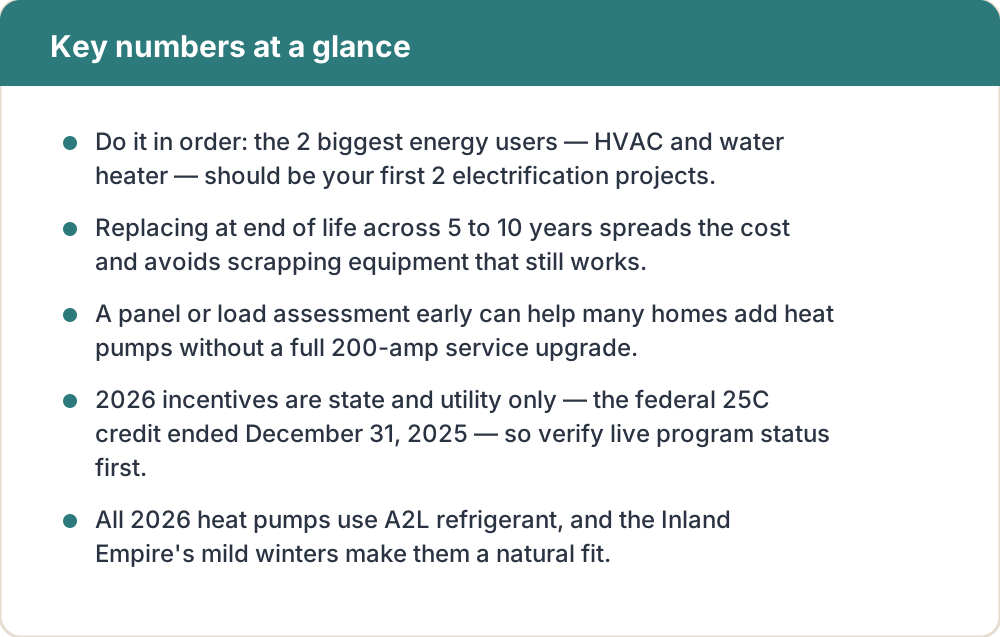
- Do it in order: the 2 biggest energy users — HVAC and water heater — should be your first 2 electrification projects.
- Replacing at end of life across 5 to 10 years spreads the cost and avoids scrapping equipment that still works.
- A panel or load assessment early can help many homes add heat pumps without a full 200-amp service upgrade.
- 2026 incentives are state and utility only — the federal 25C credit ended December 31, 2025 — so verify live program status first.
- All 2026 heat pumps use A2L refrigerant, and the Inland Empire's mild winters make them a natural fit.
On this page
- What is whole-home electrification, and what should you replace first in California?
- The four appliances you are actually replacing
- Why order matters: biggest and oldest first
- Priority order and typical cost ranges
- Do the panel assessment early — you may not need an upgrade
- The benefits: safety, cost, and a future-proofed home
- Incentives in 2026: state and utility, not federal
- Local note for Ontario and the Inland Empire
What is whole-home electrification, and what should you replace first in California?
Whole-home electrification means swapping your gas appliances for efficient electric ones — a heat pump for heating and cooling, a heat pump water heater, induction cooking, and a heat pump dryer. The smart approach in California is to do it in order, biggest and oldest first, usually the HVAC system and water heater, replacing each at end of life.
The four appliances you are actually replacing
Electrification is not one purchase — it is a set of four swaps plus one assessment. You are trading combustion appliances for high-efficiency electric ones, and each has a different payoff and price tag. Knowing the whole list up front helps you sequence the work instead of reacting appliance by appliance.
- Air-source heat pump — replaces your gas furnace and air conditioner with one system that both heats and cools, usually the single biggest efficiency gain in the house.
- Heat pump water heater (HPWH) — replaces a gas tank water heater and is often two to three times more efficient than the electric-resistance kind.
- Induction cooktop — replaces a gas range with faster, cleaner, precisely controlled electric cooking.
- Heat pump clothes dryer — replaces a gas or electric-resistance dryer and sips energy by comparison.
- Electrical panel and service — not an appliance, but the backbone that determines whether the other swaps need an upgrade.
Why order matters: biggest and oldest first
The single most useful rule of electrification is to prioritize the biggest energy users and whatever is nearest the end of its life. Your HVAC system and water heater together dominate home energy use, so replacing them first delivers the largest comfort and efficiency gains. The cheaper items — the range and dryer — are best done opportunistically, when the old one fails or you happen to be remodeling. This is how you avoid scrapping equipment that still has years left and how you keep any single year's budget manageable.
If you are still weighing whether the core swap pays off for your home, our guide on whether a heat pump is worth it in California walks through the economics, and the heat pump vs. furnace comparison covers the heating side specifically.
Priority order and typical cost ranges
The table below lays out a sensible sequence for most Inland Empire homes. Cost figures are labeled typical ranges only — they vary widely by home, equipment, and electrical work, so use them to plan the order, not to lock a budget. An on-site assessment is the only way to get real numbers.
| Appliance | Replaces | Why this priority | Typical cost range (estimate) |
|---|---|---|---|
| HVAC heat pump | Gas furnace + AC | Biggest energy user; largest comfort and efficiency gain; do first, especially if the furnace or AC is near end of life | $8,000–$18,000+ |
| Heat pump water heater | Gas tank water heater | Second-biggest load; big efficiency jump; a 120V model can avoid a panel upgrade | $2,500–$5,500 |
| Electrical panel / service | N/A (assessment) | Assess early; determines whether other swaps need an upgrade or can share circuits | $0 if no upgrade; $2,000–$5,000+ if needed |
| Induction range | Gas cooktop/range | Cheaper, opportunistic; swap when the old range fails or during a kitchen remodel | $1,000–$3,500 |
| Heat pump dryer | Gas / electric-resistance dryer | Smallest energy user; swap when the old dryer dies | $1,000–$2,000 |
For a closer look at the two big-ticket items, see our breakdown of heat pump installation costs in Southern California and whether a heat pump water heater is worth it for your setup.
Do the panel assessment early — you may not need an upgrade
One of the most common electrification fears is a costly electrical service upgrade. Do a panel and load assessment early, before you assume the worst. Many California homes can add heat pumps without a full panel upgrade, using tools that keep total demand within the existing service.
- 120-volt heat pump water heaters that plug into a standard circuit instead of a new 240V line.
- Circuit-sharing devices that let two appliances safely share one circuit.
- Smart load-management panels and splitters that throttle demand so you never exceed your service capacity.
- Right-sizing new equipment so its actual draw fits what your panel already supports.
These options can turn a feared $5,000 service upgrade into no upgrade at all. Some homes — often older ones with 100-amp panels — will still need the upgrade, and that is fine; the point is to find out early so it becomes a planned line item rather than a mid-project surprise.
The benefits: safety, cost, and a future-proofed home
Electrification does more than modernize your appliances. Removing on-site combustion eliminates carbon-monoxide risk from those units and cuts your home's emissions. Efficient equipment often lowers operating cost, and the whole package aligns your home with California's building-decarbonization direction — a genuine future-proofing benefit as codes and incentives increasingly favor electric homes. In the Inland Empire specifically, mild winters in Ontario, Pomona, and Rancho Cucamonga make heat pumps a natural fit, and the garages common to these neighborhoods are ideal locations for a heat pump water heater.
Incentives in 2026: state and utility, not federal
The rebate landscape changed at the start of 2026. The federal 25C tax credit ended December 31, 2025, so the incentives you can tap now are state and utility programs. Many California programs — including TECH and HEEHRA — are reserved or waitlisted, meaning funding can dry up or reopen without much notice. Always verify a program's live status before you count on it in your budget.
Our California heat pump rebate guide and the broader California HVAC rebates and tax credits roundup track what is currently open and how to stack utility and state incentives so you claim the most before funds run out.
You do not have to electrify everything at once. The winning move is a sequence: assess your panel, then replace the HVAC and water heater at end of life, then pick off the range and dryer when they fail. Alex Air & Heating can map that order for your Inland Empire home and size the equipment to your existing panel. Book a heat pump installation assessment.
Local note for Ontario and the Inland Empire
Homes across Ontario, Pomona, Fontana, Rancho Cucamonga, Chino, and Riverside share a climate that flatters heat pumps: winters are mild enough that one system covers both heating and the summer cooling these areas really need. That makes the HVAC swap the clearest win in the whole sequence, often paired with an AC replacement when an aging condenser is already on its way out. If your furnace and AC are both near end of life, replacing them with a single heat pump is usually the highest-value first step — and the natural anchor for a phased, whole-home electrification plan.
Frequently asked questions
Whole-home electrification means replacing every gas or combustion appliance in your house with a high-efficiency electric equivalent. In practice that is four swaps: an air-source heat pump for heating and cooling, a heat pump water heater, an induction cooktop, and a heat pump clothes dryer, plus a check of your electrical panel and service. The goal is to eliminate on-site combustion while lowering emissions and, with efficient equipment, often operating cost.
Start with the biggest energy users and whatever is nearest end of life — typically your HVAC system and water heater first, because they deliver the largest comfort and efficiency gains. Do the cheaper items, the induction range and heat pump dryer, opportunistically when the old appliance fails. Get an electrical panel or load assessment early so you know whether any swap needs an electrical upgrade before you plan the sequence.
Not always. Many California homes can add heat pumps without a full panel upgrade by using 120-volt heat pump water heaters, circuit-sharing, or smart load-management devices that keep total demand within your existing service. Those options can avoid a costly service upgrade. Some homes will still need one, especially older 100-amp panels. A load assessment early in the process tells you which camp you are in before you commit.
Costs vary widely by home, equipment, and electrical work, so treat any figure as a labeled estimate that only an on-site assessment can confirm. The point of electrifying in order is that you never pay for it all at once — you replace each gas appliance at end of life and spread the cost over several years. Budget the HVAC heat pump and water heater as the largest line items, with the range and dryer far smaller.
Yes, but in 2026 they are state and utility programs, not federal — the federal 25C tax credit ended December 31, 2025. Many California programs such as TECH and HEEHRA are reserved or waitlisted, so funding can be limited at any given moment. Always verify a program's live status before you count on it. Our California rebate guides track what is currently open and how to stack utility and state incentives.
For most Inland Empire homes, yes. The mild Ontario and Pomona winters mean a heat pump rarely faces the deep cold that challenges them elsewhere, so one system handles both heating and cooling efficiently. Garages, common here, are ideal spots for a heat pump water heater. You also remove carbon-monoxide risk and future-proof the home against California's building-decarbonization direction. An assessment confirms the fit for your specific house.