Is a Heat Pump Still Worth It in California in 2026 (Now That the Federal Credit Is Gone)?
The $2,000 federal heat-pump tax credit ended December 31, 2025. Here's why a heat pump is still worth it for most Inland Empire homes in 2026 — and how to make the math work without it.

Owner & Lead HVAC Technician, Alex Air & Heating · EPA 608 Universal Certified · Ontario, CA
TL;DR
Is a heat pump worth it in California in 2026? For most Southern California homes, yes — even though the $2,000 federal 25C tax credit ended December 31, 2025. Mild Inland Empire winters, a heavy summer cooling load, one system that both heats and cools, and remaining state and utility incentives keep payback attractive. The math is just tighter without the federal credit, so rebates, right-sizing, and efficiency (SEER2/HSPF2) matter more than ever when you compare a heat pump against a gas furnace plus separate AC.
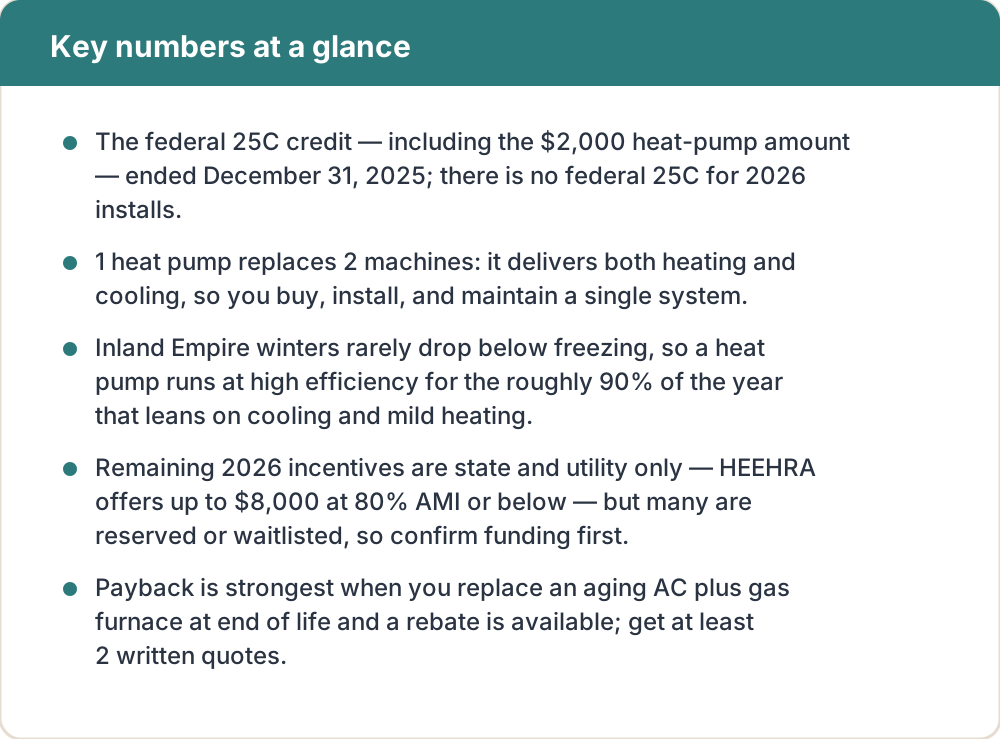
- The federal 25C credit — including the $2,000 heat-pump amount — ended December 31, 2025; there is no federal 25C for 2026 installs.
- 1 heat pump replaces 2 machines: it delivers both heating and cooling, so you buy, install, and maintain a single system.
- Inland Empire winters rarely drop below freezing, so a heat pump runs at high efficiency for the roughly 90% of the year that leans on cooling and mild heating.
- Remaining 2026 incentives are state and utility only — HEEHRA offers up to $8,000 at 80% AMI or below — but many are reserved or waitlisted, so confirm funding first.
- Payback is strongest when you replace an aging AC plus gas furnace at end of life and a rebate is available; get at least 2 written quotes.
On this page
- Is a heat pump still worth it in California in 2026 now that the federal credit is gone?
- What changed: the federal 25C credit ended December 31, 2025
- Heat pump vs. gas furnace plus separate AC: the 2026 comparison
- Why the Inland Empire climate favors a heat pump
- What incentives are left in California for 2026?
- One more 2026 change: the new refrigerant
- When a heat pump pays back fastest — and when it might not
Is a heat pump still worth it in California in 2026 now that the federal credit is gone?
For most Southern California homes, yes — a heat pump is still worth it in 2026 even though the $2,000 federal 25C tax credit ended December 31, 2025. Mild Inland Empire winters, a heavy summer cooling load, and one system for both heating and cooling keep payback attractive. The math is just tighter, so rebates and efficiency matter more.
What changed: the federal 25C credit ended December 31, 2025
The big shift for 2026 is that the federal 25C tax credit — which included up to $2,000 for a qualifying heat pump — is gone. The One Big Beautiful Bill, signed July 4, 2025, moved the credit's sunset from 2032 all the way up to the end of 2025. To claim it on a 2025 return, the equipment had to be installed and in service by December 31, 2025. For any system you install in 2026, there is no federal 25C credit to fall back on.
That's a real change to the buying math, but it doesn't erase the case for a heat pump. The federal credit was never the reason a heat pump made sense in the Inland Empire — it was a discount on top of an already-good fit. What it does mean is that the remaining incentives, right-sizing, and efficiency now carry more of the weight.
Heat pump vs. gas furnace plus separate AC: the 2026 comparison
The clearest way to see the value is to compare a heat pump against the traditional pairing of a gas furnace and a separate air conditioner. Cost figures below are typical ranges that vary by home, equipment tier, and market — always get a written quote for your house before you decide.
| Factor | Heat pump | Gas furnace + separate AC |
|---|---|---|
| Upfront cost | Higher for one dual-purpose system, but you buy only one machine | Two machines (furnace + AC); combined cost can be similar or higher at end-of-life replacement |
| Operating cost | Efficient in mild SoCal winters; sensitive to California's high electric rates, so SEER2/HSPF2 and sizing matter | Gas heat cost depends on gas prices; AC still runs on the same high electric rates all summer |
| Incentives (2026) | State/utility only (HEEHRA, TECH, SCE/SoCalGas) — many reserved or waitlisted; no federal 25C | Same state/utility landscape; typically fewer heat-pump-targeted incentives |
| Systems to maintain | One system for heating and cooling | Two separate systems to service and eventually replace |
| Best for | Homes replacing an aging AC + furnace, high cooling use, when a rebate is funded | Homes with very cheap gas and minimal cooling — rare in the Inland Empire |
Why the Inland Empire climate favors a heat pump
A heat pump's efficiency is highest in mild weather, and that describes most of our year. Inland Empire winters rarely drop below freezing, so a heat pump spends the cold months moving heat efficiently rather than fighting extreme cold. Meanwhile, the region's long, hot summers mean cooling is where you spend the most energy — and a heat pump cools exactly like a high-efficiency AC. When most of your annual load is cooling and mild heating, the heat pump wins on the part of the calendar that actually matters here.
- One system: a heat pump delivers both heating and cooling, so you install and maintain a single unit instead of two.
- Mild winters: freezing nights are uncommon, so a heat pump runs in its efficient range most of the season.
- Heavy cooling load: summer cooling dominates your energy use, and a heat pump cools as efficiently as a modern AC.
- High electric rates: California power is expensive, so choosing higher SEER2/HSPF2 ratings and correct sizing directly lowers your bills.
What incentives are left in California for 2026?
With the federal credit gone, your 2026 savings hinge on state and utility programs — and their status matters as much as their dollar amount. Several are constrained: TECH Clean California single-family heat-pump funds are largely reserved, HEEHRA (income-qualified, up to $8,000 at 80% AMI or below and $4,000 at 80–150% AMI) is reserved or waitlisted statewide, and SGIP storage budgets closed December 31, 2025. SCE and SoCalGas utility rebates may still apply. The rule of thumb: never count on a program until you confirm it's actually funded and open.
Because program status shifts throughout the year, check live availability before you sign. Our California heat-pump rebates guide and the broader California HVAC rebates and tax credits roundup track what's currently funded. If a rebate would make or break your decision, verify it first — then get quotes.
One more 2026 change: the new refrigerant
Every new AC and heat pump installed in 2026 uses the new A2L refrigerants — R-454B or R-32 — instead of the older R-410A. This is an industry-wide transition, not something unique to heat pumps, so it doesn't tip the decision one way or the other between a heat pump and a gas-furnace-plus-AC setup. It's still worth understanding before you buy; see our explainer on R-454B vs R-410A so you know what you're getting either way.
When a heat pump pays back fastest — and when it might not
Payback is strongest in a specific situation: you're replacing an aging AC and a gas furnace that are both near end of life, your cooling usage is high, and a funded rebate is available. In that case you were going to spend money on new equipment anyway, and a single heat pump replaces two machines at once. That's the sweet spot for most Inland Empire homes.
A gas furnace plus separate AC can still edge out a heat pump in the narrow case where natural gas is very cheap and your cooling load is minimal — but that's rare here, where summers are long and hot. If you're only replacing a broken furnace and your AC is newer, the calculus is different; our guide on heat pump vs. furnace in Southern California and the SEER2 explainer can help you weigh operating cost and sizing before you commit.
The only way to know your true payback is a written, itemized quote based on your home's size, ductwork, and current equipment — plus a check that any rebate you're counting on is actually funded. Get an on-site assessment and quote for a heat pump installation.
Frequently asked questions
For most Inland Empire homes, yes. Even without the expired $2,000 federal credit, a heat pump replaces both your AC and furnace with one efficient system, runs cheaply in our mild winters, and can still qualify for state or utility incentives. The best returns come when you're replacing an aging AC and gas furnace at end of life and a funded rebate is available. Get a written quote to see your specific numbers.
The federal 25C tax credit, which included up to $2,000 for a qualifying heat pump, ended December 31, 2025. The One Big Beautiful Bill signed July 4, 2025 moved the sunset from 2032 to the end of 2025. Equipment had to be installed and in service by December 31, 2025 to claim it on a 2025 return. There is no federal 25C credit for systems installed in 2026.
Remaining incentives in 2026 are state and utility programs, not federal. TECH Clean California single-family heat-pump funds are largely reserved. HEEHRA, which is income-qualified, offers up to $8,000 at 80% AMI or below and $4,000 at 80 to 150% AMI, but it is reserved or waitlisted statewide. SCE and SoCalGas rebates may still apply. Always confirm a program is funded before you count on it.
Often, yes, because California electricity is expensive but our winters are mild, so a modern heat pump moves heat very efficiently instead of burning fuel. Efficiency ratings (SEER2 and HSPF2) and correct sizing drive your operating cost. A gas furnace can still edge out a heat pump only where gas is very cheap and cooling is minimal, which is rare in the hot Inland Empire.
Yes. Heat pumps installed in 2026 use the new A2L refrigerants, R-454B or R-32, just like all new AC and heat-pump systems this year. This is an industry-wide change, not something specific to heat pumps. It does not change the core case for a heat pump. See our guide on R-454B vs R-410A to understand what the refrigerant transition means for buying now.
A gas furnace plus separate AC can still edge out a heat pump in the narrow case where natural gas is very cheap, your cooling usage is minimal, and your existing AC is newer and healthy. In the Inland Empire, where summer cooling loads are heavy and homes run AC hard, that combination is rare. When you're replacing both an old AC and an old furnace anyway, a single heat pump usually wins.
Local next step
Turn this guide into a site-specific answer.
Guides explain the decision. Equipment condition, access, and safe next steps still need to match the home or business. Review the relevant service scope or request an assessment for Ontario, the Inland Empire, or East Los Angeles County. Availability depends on the current schedule.