Heat Pump Installation Cost in Southern California (2026): What Drives the Price
A plain-English look at what a heat pump really costs to install in the Inland Empire in 2026 — sizing, efficiency, ducted vs ductless, ductwork, panel upgrades, and Title 24 — plus why only a Manual J and a written quote pin down your number.

Owner & Lead HVAC Technician, Alex Air & Heating · EPA 608 Universal Certified · Ontario, CA
TL;DR
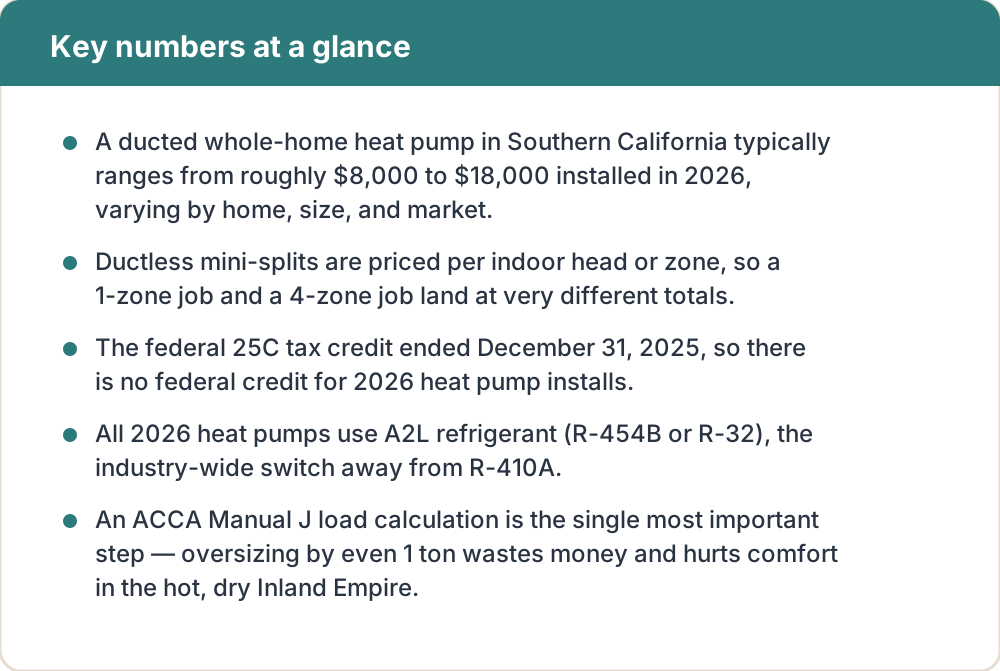
Heat pump installation cost in Southern California in 2026 typically runs roughly $8,000-$18,000 for a ducted whole-home system, while ductless mini-splits are priced per indoor zone — but every number varies by home, size, and market. The real drivers are correct sizing (ACCA Manual J), efficiency (SEER2/HSPF2), ducted vs ductless, the condition of your ductwork, whether your electrical panel needs an upgrade, and permits plus California Title 24 verification. Get a written, itemized quote before you commit.
- A ducted whole-home heat pump in Southern California typically ranges from roughly $8,000 to $18,000 installed in 2026, varying by home, size, and market.
- Ductless mini-splits are priced per indoor head or zone, so a 1-zone job and a 4-zone job land at very different totals.
- The federal 25C tax credit ended December 31, 2025, so there is no federal credit for 2026 heat pump installs.
- All 2026 heat pumps use A2L refrigerant (R-454B or R-32), the industry-wide switch away from R-410A.
- An ACCA Manual J load calculation is the single most important step — oversizing by even 1 ton wastes money and hurts comfort in the hot, dry Inland Empire.
On this page
- How much does heat pump installation cost in Southern California in 2026?
- What drives the price of a heat pump install?
- Why is correct sizing the most important step?
- How much does efficiency (SEER2 and HSPF2) add?
- Ducted vs ductless: which costs more?
- What about ductwork, electrical panels, permits, and refrigerant?
- Are there rebates or tax credits to offset the cost in 2026?
- Local reality: heat pumps in Ontario and the Inland Empire
How much does heat pump installation cost in Southern California in 2026?
In Southern California, a professionally installed heat pump in 2026 typically ranges from roughly $8,000 to $18,000 for a ducted whole-home system, while ductless mini-splits are priced per indoor zone. Every number varies by home, size, and market — a Manual J load calc and a written quote decide the real figure.
That range is deliberately wide because a heat pump quote is really a bundle of decisions, not one sticker. Two homes on the same Ontario street can land thousands of dollars apart depending on how many tons of capacity they need, how efficient a system the owner chooses, and whether the ducts and electrical panel are ready. Below we break down each cost driver so you can read a quote like a pro and spot the difference between a fair price and a padded one.
What drives the price of a heat pump install?
Seven factors move the needle most. Understanding them lets you compare bids on equal footing instead of chasing the lowest number, which often hides skipped steps like a proper load calculation or omitted permits.
| Cost factor | What it is | Rough impact on price |
|---|---|---|
| System size (tons) | Heating and cooling capacity set by an ACCA Manual J load calculation for your home | Primary driver — larger capacity costs more, but oversizing wastes money and hurts comfort |
| Efficiency (SEER2 / HSPF2) | Cooling and heating efficiency ratings; higher numbers use less electricity | Higher-efficiency systems cost more upfront but save on California's high electric rates |
| Ducted vs ductless | Central ducted heat pump vs ductless mini-split priced per indoor head or zone | Ductless totals scale with the number of zones; ducted leans on existing ductwork |
| Ductwork condition | Whether existing ducts can be reused or need repair, sealing, or replacement | Sound ducts save money; leaky or undersized ducts add repair or replacement cost |
| Electrical panel capacity | Whether your panel can safely accept the heat pump's added load | A panel upgrade is a real line item that can add meaningfully to the total |
| Permits + Title 24 (HERS) | California permit plus third-party HERS verification of charge and duct leakage | Adds cost but ensures code compliance and verified performance |
| Refrigerant / A2L | All 2026 systems use A2L refrigerant (R-454B or R-32) instead of R-410A | Baseline for new 2026 equipment; part of the switch away from R-410A |
Why is correct sizing the most important step?
Sizing is where good installs are won or lost. A reputable contractor runs an ACCA Manual J load calculation that accounts for your home's square footage, insulation, window area, and orientation before quoting any equipment. Skipping this and simply matching your old unit's tonnage is the most common shortcut in the trade.
Oversizing is especially costly in the hot, dry Inland Empire. A unit that is even one ton too big costs more to buy and then runs in short bursts, cycling on and off without steadily holding temperature — which leaves some rooms hot and others cold and drives up your electric bill. A right-sized heat pump runs longer, gentler cycles that keep the whole home comfortable for less. If you want to understand the method, see our guide on how to size an air conditioner with Manual J.
How much does efficiency (SEER2 and HSPF2) add?
SEER2 measures cooling efficiency and HSPF2 measures heating efficiency; higher ratings mean the system delivers the same comfort using less electricity. Premium high-efficiency heat pumps cost more upfront than baseline models, and the payback depends on how much you run the system.
In California, where electric rates are among the highest in the country, a higher SEER2/HSPF2 system can be worth the premium over the years you own it — but only if it is correctly sized and installed. Efficiency ratings mean nothing on a system that is oversized or connected to leaky ducts. For a fuller breakdown of the ratings, read SEER2 explained.
Ducted vs ductless: which costs more?
A ducted central heat pump distributes air through your existing ductwork, so if those ducts are in good shape it can be a cost-effective path. A ductless mini-split uses one or more wall- or ceiling-mounted indoor heads, and it is priced per head or zone — so the total scales with how many rooms you want to condition.
- Ducted central: best when you have sound existing ductwork and want whole-home conditioning from one system.
- Ductless mini-split: strong for homes without ducts, additions, garages, converted spaces, or a few problem rooms.
- Mixed reality: many Inland Empire homes end up comparing a ducted replacement against a multi-zone ductless design and choosing on comfort and total cost.
Because the math differs so much by home, get a written quote for each option. Our ductless mini-split pros and cons and mini-split installation cost for 2026 posts walk through the tradeoffs in detail.
What about ductwork, electrical panels, permits, and refrigerant?
These are the line items that surprise homeowners who only asked about equipment. The condition of your existing ductwork matters: sound ducts can be reused, but leaky, undersized, or damaged ducts need sealing, repair, or replacement, and that adds to the job. Because leaky ducts undermine even the best equipment, a good contractor inspects them rather than ignoring them.
Your electrical panel is the other common wildcard. A heat pump adds electrical load, and older homes with 100-amp service or a full panel may need a panel upgrade to add the new circuit safely. That upgrade is a legitimate, sometimes significant line item — a thorough installer checks it during the site visit and puts any electrical work on the quote.
Finally, California requires a permit plus Title 24 verification with third-party HERS testing of items like refrigerant charge and duct leakage. All 2026 systems use A2L refrigerant (R-454B or R-32), the industry-wide replacement for R-410A. Permits and HERS testing add cost but confirm the system performs as designed — a quote that skips them is a warning sign.
Are there rebates or tax credits to offset the cost in 2026?
Here is the change that catches many buyers off guard: the federal 25C Energy Efficient Home Improvement Credit ended on December 31, 2025 under Public Law 119-21, so a heat pump installed in 2026 does not qualify for a federal tax credit. Do not budget around a federal credit that no longer exists.
California state and utility incentives may still offset part of the cost, but many of these programs are reserved, waitlisted, or change quickly, so you have to check live status before you count on any dollar amount. We track what is actually available in our California heat pump rebates guide for 2026, and whether the overall investment pays off in our is a heat pump worth it in California post. If you are weighing the switch from gas, heat pump vs furnace in Southern California compares the two head to head.
Ignore any price a contractor quotes before they measure your home. Insist on an ACCA Manual J load calculation and a written, itemized quote that lists equipment, ductwork, electrical, permits, and Title 24 HERS testing separately. That is how you compare bids fairly and avoid surprises. Mild Inland Empire winters mean a standard heat pump is plenty — no cold-climate premium required. Ready for a real number? Get a heat pump installation quote.
Local reality: heat pumps in Ontario and the Inland Empire
Alex Air & Heating installs heat pumps across Ontario, Pomona, Rancho Cucamonga, Fontana, Riverside, Chino, and greater Los Angeles, and the local climate works in your favor. Inland Empire winters are mild, so a standard air-source heat pump has plenty of heating capacity without the extra cost of cold-climate equipment built for freezing regions.
The bigger local challenge is summer cooling in hot, dry heat, which is exactly why correct sizing and sealed ducts matter more here than the brand on the box. Whether you choose a ducted central heat pump or a ductless mini-split, the path to a fair price is the same: a Manual J, a site visit that checks your ducts and panel, and a written, itemized quote you can compare.
Frequently asked questions
In 2026 a professionally installed ducted whole-home heat pump in Southern California typically ranges from roughly $8,000 to $18,000, and ductless mini-splits are priced per indoor zone. That spread reflects system size in tons, SEER2/HSPF2 efficiency, ductwork condition, and whether your electrical panel needs an upgrade. Only a Manual J load calculation and a written, itemized quote can fix your actual number.
It depends on the home. If you already have sound ductwork, a ducted central heat pump often uses that existing distribution and can be cost-effective. Ductless mini-splits are priced per indoor head, so a single-zone install can be modest while a whole-home multi-zone system adds up quickly. Homes without ducts, or with additions and problem rooms, frequently find ductless the better value. Compare written quotes for both.
No. The federal 25C Energy Efficient Home Improvement Credit ended December 31, 2025 under Public Law 119-21, so heat pumps installed in 2026 do not qualify for a federal credit. California state and utility incentives may still offset part of the cost, but many programs are reserved or waitlisted, so check live status before you count on any amount. See our California rebate guide for current details.
Contractors set capacity with an ACCA Manual J load calculation based on your home's square footage, insulation, windows, and orientation. Buying a bigger unit than the math calls for wastes money upfront and runs in short, inefficient cycles that leave rooms unevenly conditioned. In the hot, dry Inland Empire, a right-sized heat pump holds temperature steadily and costs less to run. Ask any installer to show you their Manual J.
Sometimes. A heat pump adds electrical load, and older Inland Empire homes with 100-amp service or full panels may need an upgrade to accept the new circuit safely. A panel upgrade is a real line item that can add meaningfully to the total, so a good contractor checks your panel during the site visit and lists any electrical work on the written quote rather than surprising you later.
California requires a permit for heat pump replacements plus Title 24 verification, which includes third-party HERS testing of items like refrigerant charge and duct leakage. These steps add cost but confirm the system actually performs as designed and keeps the installation code-compliant. Treat a quote that skips permits and HERS testing as a red flag — it can cause problems at resale and voids the assurance that the job was done right.