Smart Thermostat vs. Smart HVAC System in 2026: What Actually Saves You Money
A smart thermostat is a cheap upgrade to the system you already own; a smart HVAC system is a whole-home replacement decision. Here's which one to buy first in the Inland Empire.

Owner & Lead HVAC Technician, Alex Air & Heating · EPA 608 Universal Certified · Ontario, CA
TL;DR
Smart thermostat vs smart HVAC is really two different decisions. A smart thermostat is a low-cost add-on to your existing equipment that can trim cooling and heating costs and is worth doing now. A smart HVAC system means a variable-speed, communicating replacement that mainly pays off at end of life through comfort, humidity control, and efficiency. For most Inland Empire homeowners: add the thermostat now, and weigh the variable-speed system when it's time to replace.
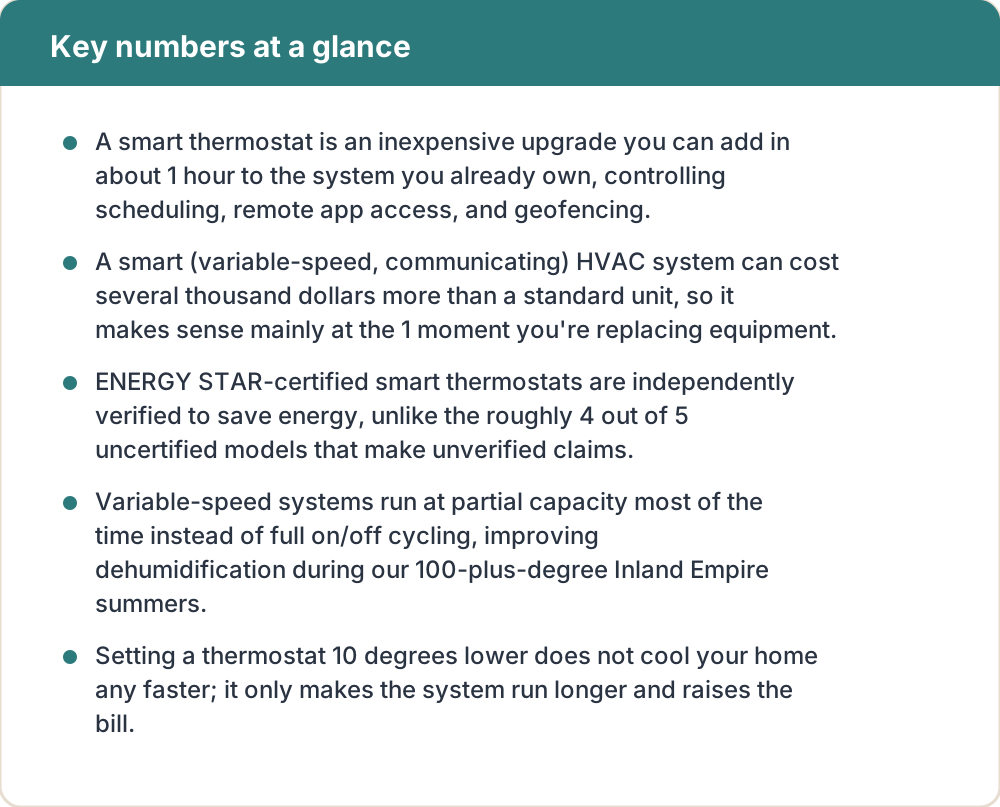
- A smart thermostat is an inexpensive upgrade you can add in about 1 hour to the system you already own, controlling scheduling, remote app access, and geofencing.
- A smart (variable-speed, communicating) HVAC system can cost several thousand dollars more than a standard unit, so it makes sense mainly at the 1 moment you're replacing equipment.
- ENERGY STAR-certified smart thermostats are independently verified to save energy, unlike the roughly 4 out of 5 uncertified models that make unverified claims.
- Variable-speed systems run at partial capacity most of the time instead of full on/off cycling, improving dehumidification during our 100-plus-degree Inland Empire summers.
- Setting a thermostat 10 degrees lower does not cool your home any faster; it only makes the system run longer and raises the bill.
On this page
Smart thermostat vs. smart HVAC system: which one actually saves you money?
They solve different problems. A smart thermostat is a low-cost upgrade to the system you already own and is worth adding now. A smart HVAC system is a variable-speed, communicating replacement that mostly pays off at end of life. Most homeowners should add the thermostat today and consider the system when it's time to replace.
What a smart thermostat actually does
A smart thermostat controls your current furnace, AC, or heat pump. It learns your schedule, allows remote and app control, uses geofencing to adjust when you leave or return, and reports on runtime so you can see where energy goes. It is an inexpensive add-on that most homes can install in about an hour without touching the equipment.
Look for the ENERGY STAR label. ENERGY STAR-certified models are independently verified to save energy, which is not true of every device that calls itself 'smart.' If you're weighing brands, our smart thermostat comparison for 2026 breaks down the leading options, and is a smart thermostat worth it walks through the payback math.
What a 'smart HVAC system' really means
A smart HVAC system usually means variable-capacity, or inverter, compressors paired with communicating controls. Instead of running full-on and then shutting off, the system modulates its output up and down to match the exact load in your home. That steadier operation improves comfort, dehumidification, and efficiency, but it costs much more than a standard single-stage unit.
Because the price jump is significant, a variable-speed system makes the most sense when you're already replacing equipment. Efficiency is rated in SEER2, so compare that number when you shop. Any new 2026 system also uses the current A2L refrigerant, which your installer will be certified to handle.
Three tiers compared: thermostat, variable-speed, and zoning
Most upgrade decisions come down to three tiers. The table below lines up upfront cost, what each one does, where the savings come from, and who each is best for.
| Tier | Upfront cost | What it does | Savings | Best for |
|---|---|---|---|---|
| Smart thermostat | Low | Adds scheduling, app control, geofencing, and reporting to your existing equipment | Trims cooling and heating waste; ENERGY STAR models independently verified | Almost every homeowner, right now |
| Variable-speed (communicating) system | High | Inverter compressor modulates output instead of full on/off; better comfort and dehumidification | Efficiency gains compound over the system's life in a high-runtime climate | Homeowners replacing equipment at end of life |
| Zoned system | Medium to high | Motorized dampers and multiple thermostats condition areas independently | Reduces overcooling of unused areas | Two-story homes or houses with one hot room |
Why this matters in the Inland Empire
Ontario, Pomona, Rancho Cucamonga, Fontana, Riverside, and Chino all share long, hot cooling seasons where systems run for hours a day. In that high-runtime climate, a variable-speed system's efficiency gains add up more than they would in a mild coastal town. Humidity control also matters during our hottest stretches, and variable-speed operation handles it better than a single-stage unit cycling on and off.
Still, do not replace a healthy system just to get smart features. The smart move for most homes here is to add a smart thermostat now, then weigh a variable-speed system when your current equipment reaches the end of its life.
Common mistakes to avoid
- Cranking the thermostat to 65 to cool faster. It does not cool faster; the system just runs longer and the bill climbs. See our guide to the best summer thermostat temperature.
- Buying a thermostat before checking compatibility. Heat pumps and communicating systems often need specific models.
- Replacing a working furnace or AC only for 'smart' features, instead of waiting for a planned replacement.
- Ignoring setbacks while you're away. Smart vacation thermostat settings capture easy savings.
- Skipping the ENERGY STAR label and trusting unverified savings claims.
The bottom line
Add a smart thermostat now: it's cheap, verified to save energy, and works with the equipment you already own. Save the variable-speed system decision for replacement time, when its efficiency and comfort gains have a full lifespan to pay you back. If your real problem is uneven temperatures, look at zoning. For more ways to cut costs this season, see how to lower your summer AC electric bill.
Our Inland Empire technicians can confirm thermostat compatibility, check your current system's health, and tell you honestly whether it's time to replace or just time to upgrade the controls. Start with a fast, no-pressure smart thermostat installation.
Alex Air & Heating serves Ontario, Pomona, Rancho Cucamonga, Fontana, Riverside, Chino, and the greater Los Angeles area. When it is time to replace, our AC installation team can walk you through SEER2 ratings and variable-speed options for your specific home.
Frequently asked questions
A smart (variable-speed, communicating) HVAC system is worth it mainly when you're already replacing equipment. In the high-runtime Inland Empire climate, the efficiency and humidity-control gains add up over a system's life. But you should not scrap a healthy furnace or AC just to get 'smart' features. Add a smart thermostat now for a fraction of the cost, and weigh the variable-speed system when your current unit reaches end of life.
A smart thermostat is a control device that upgrades the equipment you already own with scheduling, app control, and geofencing. A smart HVAC system is the equipment itself: a variable-capacity (inverter) compressor with communicating controls that modulates output instead of running full-on or full-off. The thermostat is an inexpensive add-on; the system is a whole-home replacement investment costing thousands more than a standard unit.
Usually yes for standard systems, but confirm compatibility first. Some equipment, especially heat pumps and communicating (variable-speed) systems, requires specific thermostat models rather than a universal one. A wrong match can lose auxiliary-heat control or fault the system. Check the manufacturer's compatibility tool or have a technician verify wiring before you buy, so the thermostat actually controls every stage your equipment offers.
Savings vary by home and habits, but ENERGY STAR-certified smart thermostats are independently verified to save energy versus running your system with no schedule. The gains come from smarter setbacks when you're asleep or away, geofencing, and reporting that reveals waste. Because the device is inexpensive to add, even modest percentage savings on a high-runtime Inland Empire summer bill add up quickly over a cooling season.
Yes, especially in a high-runtime climate. Instead of blasting full-on then shutting off, a variable-speed (inverter) compressor modulates to match the exact load, running longer at low power. That steadier operation improves efficiency, comfort, and dehumidification during long Inland Empire cooling seasons. Efficiency is rated in SEER2, so compare that number. The tradeoff is a higher upfront cost that pays back best over a full replacement-cycle lifespan.
Zoning uses motorized dampers and multiple thermostats to condition areas independently, which helps two-story homes and houses with a hot upstairs or one stubborn room. It solves an even-comfort problem that a single thermostat can't. Zoning can be paired with either a standard or variable-speed system. If uneven temperatures are your main complaint, zoning may matter more than raw efficiency; if bills are the issue, start with a smart thermostat.