What Refrigerant Does a New AC Use in 2026? R-454B vs R-410A, Explained
Buying a new AC in the Inland Empire? Since January 2025 nearly every new U.S. system uses a low-GWP A2L refrigerant like R-454B instead of R-410A. Here is what changed and what it means for your home.

Owner & Lead HVAC Technician, Alex Air & Heating · EPA 608 Universal Certified · Ontario, CA
TL;DR
Which refrigerant does a new AC use in 2026 — R-454B or R-410A? Since January 1, 2025, virtually all newly manufactured U.S. home central ACs and heat pumps use a low-GWP A2L refrigerant, most commonly R-454B and some R-32, instead of R-410A. The switch is driven by the federal AIM Act and EPA's Technology Transitions rule, which cap new-equipment refrigerant at a GWP under 700. R-454B (GWP ~466) cuts climate impact about 78% versus R-410A (GWP ~2,088), and it is mildly flammable (A2L) rather than non-flammable.
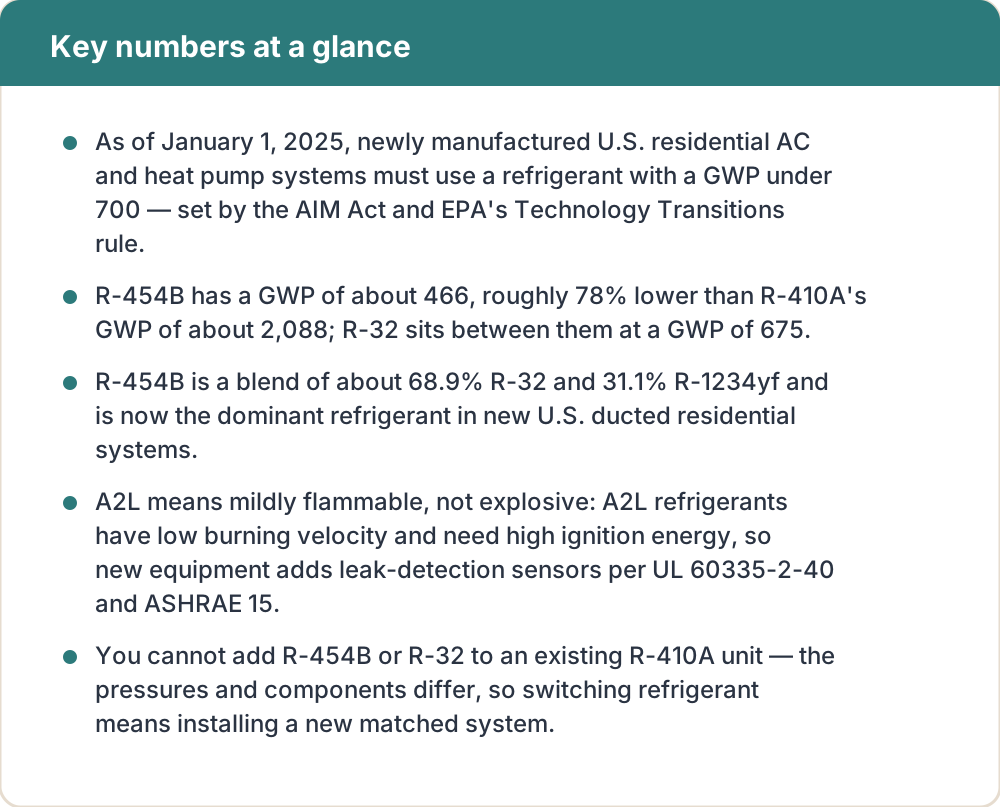
- As of January 1, 2025, newly manufactured U.S. residential AC and heat pump systems must use a refrigerant with a GWP under 700 — set by the AIM Act and EPA's Technology Transitions rule.
- R-454B has a GWP of about 466, roughly 78% lower than R-410A's GWP of about 2,088; R-32 sits between them at a GWP of 675.
- R-454B is a blend of about 68.9% R-32 and 31.1% R-1234yf and is now the dominant refrigerant in new U.S. ducted residential systems.
- A2L means mildly flammable, not explosive: A2L refrigerants have low burning velocity and need high ignition energy, so new equipment adds leak-detection sensors per UL 60335-2-40 and ASHRAE 15.
- You cannot add R-454B or R-32 to an existing R-410A unit — the pressures and components differ, so switching refrigerant means installing a new matched system.
On this page
- What refrigerant does a new AC use in 2026 — R-454B or R-410A?
- Why did the refrigerant change on January 1, 2025?
- R-410A vs R-454B vs R-32: how they compare
- What does A2L mean — is R-454B dangerous?
- Does switching to R-454B change efficiency or my energy bills?
- Can I add R-454B to my existing R-410A system?
- Do I have to replace my R-410A system now?
- The bottom line for California homeowners
What refrigerant does a new AC use in 2026 — R-454B or R-410A?
Since January 1, 2025, virtually all newly manufactured U.S. home central air conditioners and heat pumps use a low-GWP A2L refrigerant — most commonly R-454B, with some R-32 — instead of R-410A. The change is federal law, and it applies to new equipment installed across Ontario, Riverside, and the rest of the Inland Empire. If you buy a new system this year, it will almost certainly be charged with R-454B, not the R-410A your old unit likely uses.
Why did the refrigerant change on January 1, 2025?
The switch is driven by two federal actions. The American Innovation and Manufacturing (AIM) Act of 2020 directs the EPA to phase down high-GWP hydrofluorocarbons (HFCs). EPA's Technology Transitions rule then set the hard deadline: newly manufactured residential AC and heat pump systems must use a refrigerant with a Global Warming Potential (GWP) under 700 as of January 1, 2025.
R-410A, the standard for two decades, has a GWP of about 2,088 — far above the new 700 cap. That is why manufacturers redesigned entire product lines around lower-GWP A2L refrigerants, updating compressors, coils, metering devices, and safety controls in the process. California layers its own oversight on top: the state's Refrigerant Management Program, run by the Air Resources Board, has long pushed the HVAC industry toward lower-GWP refrigerants, so the Inland Empire sees this transition sooner and more completely than some other regions. If you are weighing a purchase, our guide on buying a new AC in 2026 and the A2L refrigerant questions walks through what to ask a contractor.
R-410A vs R-454B vs R-32: how they compare
The three refrigerants you will hear about differ mainly in GWP, flammability class, and where they are used. R-454B has become the dominant choice for ducted central systems in the U.S. because its performance profile is close to R-410A, which let manufacturers adapt existing platforms. R-32 has a slightly higher GWP (675) but is a single component, making it popular in ductless mini-splits and some packaged units. Both come in comfortably under the 700 GWP cap. Here is the side-by-side.
| Property | R-410A | R-454B | R-32 |
|---|---|---|---|
| GWP (Global Warming Potential) | ~2,088 | ~466 (about 78% lower) | 675 |
| Safety class | A1 | A2L | A2L |
| Flammability | Non-flammable | Mildly flammable | Mildly flammable |
| Composition | Blend (R-32 + R-125) | ~68.9% R-32 + 31.1% R-1234yf | Single component |
| Typical use | Existing / outgoing systems | New ducted central AC & heat pumps | Ductless mini-splits |
| Status in 2026 | Phased down; service only | Dominant new-system refrigerant | Widely used, under 700 GWP |
What does A2L mean — is R-454B dangerous?
A2L stands for "mildly flammable," and it is the point that worries most homeowners. It should not. A2L refrigerants have a low burning velocity and require high ignition energy — they are much harder to ignite than propane-type A3 refrigerants used in some appliances. In normal operation the refrigerant is sealed inside the coil and lines.
- New A2L equipment is built to UL 60335-2-40 and ASHRAE 15 safety standards.
- Systems include leak-detection sensors that shut down or ventilate if refrigerant escapes.
- Mitigation features (like circulation fans) disperse any leak below flammable concentration.
- A2L refrigerant charge limits and installation clearances are set by code, not guesswork.
For a deeper look at the flammability question, see is R-454B safe? The A2L refrigerant explained. The short version: a properly installed R-454B system is safe for a California home.
Does switching to R-454B change efficiency or my energy bills?
Not in a way that hurts you. R-454B is thermodynamically similar to R-410A, so manufacturers have kept — and in many cases improved — efficiency in the new generation of equipment. What actually drives your summer cooling cost is the system's SEER2 rating and correct sizing, not the refrigerant label on the sticker.
New R-454B condensers are being built to meet the current federal efficiency minimums, which are measured under the SEER2 test standard. Our SEER2 explained guide breaks down what those numbers mean for a home in a hot inland climate like Ontario or Fontana. If you are replacing a 12-SEER unit from the 2000s, a modern R-454B system can meaningfully cut the cooling portion of your bill during a triple-digit Inland Empire July.
Can I add R-454B to my existing R-410A system?
No — and this is the single most important thing to understand. You cannot add R-454B or R-32 to an R-410A air conditioner. The refrigerants operate at different pressures and require different components, lubricating oils, and safety hardware. Switching refrigerant is not a top-off; it means installing a new, factory-matched system designed for the new refrigerant.
If a salesperson offers to "convert" your old unit to R-454B, that is a red flag. A correct low-GWP upgrade replaces the outdoor condenser and the matched indoor coil together, sized for your Inland Empire home, with the line set and metering device evaluated for compatibility. Matched systems are also how you keep the manufacturer warranty valid and hit the efficiency rating on the label — mismatched parts can quietly cost you both.
If your AC is 10+ years old or facing a major repair, upgrading to a properly matched R-454B system now avoids future R-410A supply and price risk. Our team installs code-compliant A2L systems across Ontario, Pomona, Rancho Cucamonga, Fontana, Riverside, and Chino — get a quote for AC installation.
Do I have to replace my R-410A system now?
No. If your current R-410A system runs well, keep it. R-410A is still legal to buy and use to service existing units, so a technician can recharge and repair your older system while supply lasts. The rule changed what is installed in new equipment — it did not outlaw the AC you already own, and there is no requirement to rip out a working system. For most Inland Empire homeowners, the smart move is routine maintenance plus a clear-eyed plan for when the unit reaches the end of its life.
That said, there is a cost trend worth planning for. As HFC production quotas decline, virgin R-410A prices are expected to rise, and reclaimed R-410A becomes more important for servicing older units. If you are already weighing repairs against a new system, read our breakdown of AC repair vs replace in 2026 and the signs you need a new AC system.
| Your situation | Recommended path |
|---|---|
| System under 10 years, running well | Keep it; maintain and service with R-410A |
| Minor repair on a newer unit | Repair with R-410A; no need to replace |
| System 10+ years old | Plan an R-454B upgrade in the next season or two |
| Major failure (compressor / leaking coil) | Replace with a matched R-454B system |
| High energy bills / poor cooling | Compare SEER2 efficiency of a new R-454B unit |
The bottom line for California homeowners
In 2026, a new central AC or heat pump in California almost certainly runs on R-454B (or R-32 for mini-splits), not R-410A. It is federal policy under the AIM Act, reinforced by California's own refrigerant management program. The refrigerant is lower-GWP and A2L, the equipment is built with modern leak-detection safety, and you do not need to panic about the system you already own. The practical summary is simple: keep and service a healthy R-410A unit, but plan a matched R-454B upgrade once it passes 10 years or faces a major repair. When it is time to upgrade, choose a properly matched R-454B system and a contractor who installs to code. For local pricing context, see our AC replacement cost in California for 2026 guide or plan an AC replacement with us.
Frequently asked questions
R-410A is being phased down, not banned overnight. Since January 1, 2025, new residential AC and heat pump equipment must use a refrigerant with a GWP under 700, so R-410A is no longer installed in most new systems. However, R-410A is still legal to buy and use to service existing units. Technicians can recharge older Inland Empire systems while supply lasts, though virgin R-410A prices are expected to climb as HFC quotas fall.
R-454B is a low-GWP refrigerant blend of about 68.9% R-32 and 31.1% R-1234yf, with a GWP near 466. It is classified A2L, or mildly flammable, which is very different from propane-type A3 refrigerants: it has a low burning velocity and needs high ignition energy to ignite. New systems include leak-detection sensors and mitigation built to UL 60335-2-40 and ASHRAE 15, so a properly installed unit is safe for a California home.
No. You cannot add R-454B or R-32 to an R-410A system. The refrigerants run at different operating pressures and require different components, oils, and safety hardware. Mixing them or retrofitting an old unit is unsafe and voids warranties. If you want a low-GWP system, you install a new, factory-matched condenser and coil designed for R-454B, not a refrigerant swap in your existing equipment.
No. An existing R-410A system is fine to keep and repair. The refrigerant is still legal to service, and a well-running unit does not need early replacement just because the standard changed. The main reasons to replace early are age (10 or more years), poor efficiency, or a major failure such as a compressor or leaking coil. Otherwise, keep it maintained and plan ahead for an eventual R-454B upgrade.
The change is federal law. The 2020 AIM Act directs EPA to phase down high-GWP hydrofluorocarbons, and EPA's Technology Transitions rule set a GWP limit under 700 for newly manufactured residential AC and heat pumps as of January 1, 2025. Because R-410A has a GWP around 2,088, it exceeds that limit for new equipment, so manufacturers moved to lower-GWP A2L refrigerants like R-454B and R-32.
Installed system prices are broadly comparable, and R-454B equipment often meets today's SEER2 efficiency rules. Over time, servicing older R-410A units may get pricier because virgin R-410A costs are expected to rise as HFC production quotas shrink, making reclaimed R-410A more important. New R-454B systems avoid that supply squeeze, which is one reason many Inland Empire homeowners choose to upgrade when a system is already near end of life.
Local next step
Turn this guide into a site-specific answer.
Guides explain the decision. Equipment condition, access, and safe next steps still need to match the home or business. Review the relevant service scope or request an assessment for Ontario, the Inland Empire, or East Los Angeles County. Availability depends on the current schedule.