Buying a New AC in 2026? 7 A2L Refrigerant Questions to Ask Your Contractor
Every new residential AC sold in 2026 runs on a low-GWP A2L refrigerant like R-454B. Here are the 7 questions that separate a qualified Inland Empire installer from a risky one.

Owner & Lead HVAC Technician, Alex Air & Heating · EPA 608 Universal Certified · Ontario, CA
TL;DR
Buying a new AC in 2026? Your system will run on a low-GWP A2L refrigerant, usually R-454B, not the old R-410A. Before you sign, ask your contractor seven things: which refrigerant it uses and why, whether the crew is trained and equipped for A2L, whether they sized it with a Manual J load calc, its SEER2 rating, permit and California Title 24 compliance, its built-in leak detection, and the warranty plus long-term parts and refrigerant availability.
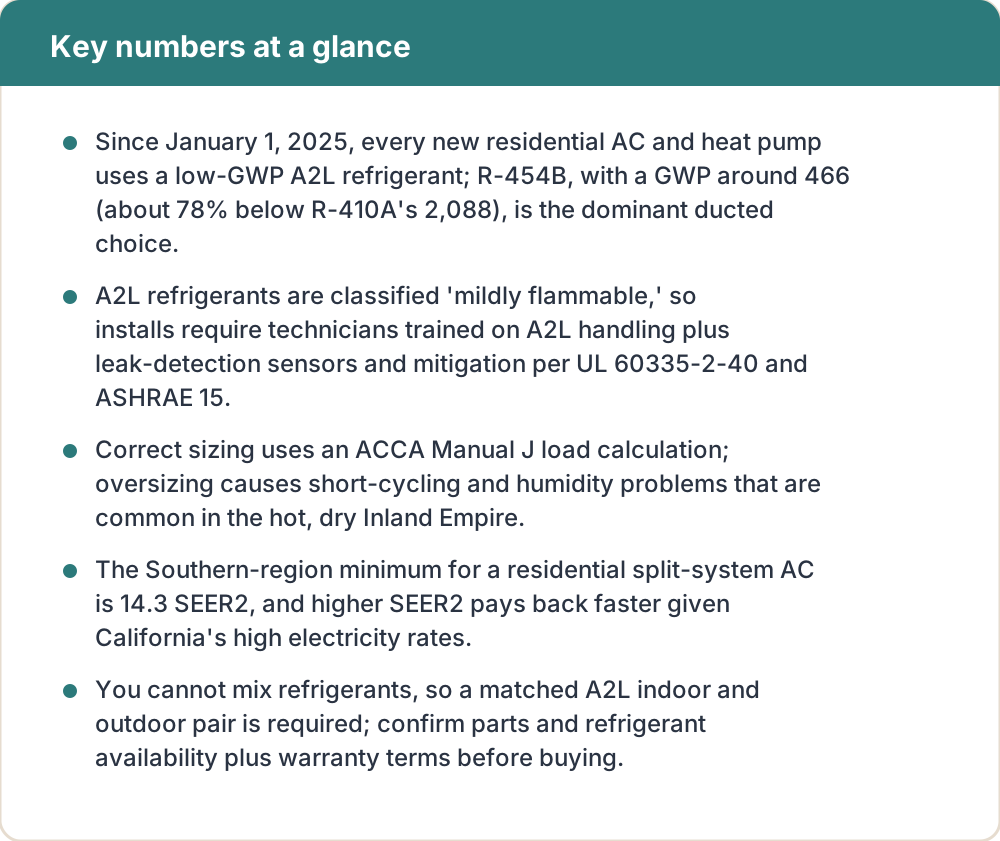
- Since January 1, 2025, every new residential AC and heat pump uses a low-GWP A2L refrigerant; R-454B, with a GWP around 466 (about 78% below R-410A's 2,088), is the dominant ducted choice.
- A2L refrigerants are classified 'mildly flammable,' so installs require technicians trained on A2L handling plus leak-detection sensors and mitigation per UL 60335-2-40 and ASHRAE 15.
- Correct sizing uses an ACCA Manual J load calculation; oversizing causes short-cycling and humidity problems that are common in the hot, dry Inland Empire.
- The Southern-region minimum for a residential split-system AC is 14.3 SEER2, and higher SEER2 pays back faster given California's high electricity rates.
- You cannot mix refrigerants, so a matched A2L indoor and outdoor pair is required; confirm parts and refrigerant availability plus warranty terms before buying.
On this page
- Buying a new AC in 2026 — what should I ask my contractor?
- Question 1: Which refrigerant does this system use, and why?
- Question 2: Is your team trained and equipped to install A2L systems?
- Question 3: Did you size it with a Manual J load calculation?
- Question 4: What's the SEER2 rating, and does it meet 2026 minimums?
- Question 5: Will you pull a permit and meet California Title 24?
- Question 6: What refrigerant leak detection and safety features are included?
- Question 7: What's the warranty, and are matched parts and refrigerant available long-term?
Buying a new AC in 2026 — what should I ask my contractor?
Any new AC or heat pump you buy in 2026 runs on a low-GWP A2L refrigerant, usually R-454B. Before you sign, ask seven things: which refrigerant it uses, whether the crew is A2L-trained and equipped, whether it was sized with Manual J, its SEER2 rating, permit and Title 24 compliance, leak-detection safety features, and warranty plus parts availability.
The rules changed on January 1, 2025. New residential systems can no longer be built with the old R-410A refrigerant, so the equipment on a 2026 quote uses a low-GWP A2L blend. R-454B, with a global warming potential around 466 — roughly 78% below R-410A's 2,088 — is now the dominant choice for ducted split systems, while R-32 (GWP 675) is common in ductless mini-splits. Both are A2L, meaning 'mildly flammable,' which changes how a system must be installed. To learn the background, see our guide to R-454B vs R-410A and whether R-410A is still available in 2026. The seven questions below turn that knowledge into a checklist you can use on any contractor's estimate.
Question 1: Which refrigerant does this system use, and why?
One-line answer: it should be a low-GWP A2L refrigerant — almost always R-454B for a ducted system, or R-32 for some mini-splits. A good contractor names the exact refrigerant, explains that it replaces R-410A under the federal HFC phase-down, and prints it on the quote so there is no ambiguity later. The 'why' matters too: R-454B's global warming potential of roughly 466 is about 78% lower than R-410A's 2,088, which is exactly the environmental goal the transition targets. If the answer is vague, or the estimate still lists 'R-410A' for a brand-new system in 2026, treat that as a red flag — it usually means old stock or an installer who has not adapted. See is R-454B safe for a deeper look.
Question 2: Is your team trained and equipped to install A2L systems?
One-line answer: yes — the crew should be current on A2L handling and use the required leak-detection and mitigation equipment. Because A2L refrigerants are mildly flammable, installation follows UL 60335-2-40 and ASHRAE 15, which cover charge limits, refrigerant leak sensors, and airflow mitigation. Ask directly whether the technicians who will be in your home are trained on A2L, and whether their tools and recovery equipment are A2L-rated. A crew that hesitates here has not caught up to the 2026 standard.
Question 3: Did you size it with a Manual J load calculation?
One-line answer: it should be sized with an ACCA Manual J load calculation, not a rule of thumb. Manual J accounts for your home's square footage, insulation, windows, ceiling height, ductwork, and sun exposure to find the true cooling load in BTUs. In the hot, dry Inland Empire, where summer highs in Ontario, Fontana, and Riverside routinely push past 100°F, oversized equipment is a surprisingly common mistake: a unit that is too big cools the air fast, short-cycles off, then leaves the home clammy and unevenly cooled because it never runs long enough to move air through every room. A right-sized system runs longer, gentler cycles that are quieter and more efficient. Ask to see the Manual J output before approving the tonnage. Our how to size an air conditioner with Manual J guide explains what the report should show.
Question 4: What's the SEER2 rating, and does it meet 2026 minimums?
One-line answer: the matched system should meet or beat the Southern-region minimum of 14.3 SEER2. SEER2 is the efficiency metric from the updated 2023 test standard, and it must be quoted for the matched indoor and outdoor pair, not the condenser alone. Given California's high electricity rates, stepping up to a higher SEER2 unit often pays back its price difference faster than homeowners expect. Our SEER2 explained article breaks down the numbers.
Question 5: Will you pull a permit and meet California Title 24?
One-line answer: yes — a legitimate contractor always pulls a permit and follows Title 24. California's Title 24 energy code requires a permit plus specific installation and verification steps for AC and heat pump changeouts. Permitted work protects you at resale, on insurance claims, and on safety. An offer to skip the permit for a lower cash price is a warning sign. See our Title 24 HVAC requirements overview for what compliance involves.
Question 6: What refrigerant leak detection and safety features are included?
One-line answer: the system should include factory refrigerant leak-detection sensors and mitigation built to UL 60335-2-40. Because A2L refrigerants are mildly flammable, modern equipment senses a leak and can shut down or ramp the blower to disperse refrigerant safely. Ask which safety features are integrated, and confirm the installer will not defeat or bypass them. These features are a core reason A2L systems are safe in the home when installed correctly.
Question 7: What's the warranty, and are matched parts and refrigerant available long-term?
One-line answer: you want a full manufacturer warranty plus confirmed long-term availability of the matched parts and refrigerant. You cannot mix refrigerants, so an A2L outdoor unit must run with a matched A2L indoor coil and air handler — never bolted onto an old R-410A coil. Confirm both the labor and parts warranty, and that the R-454B refrigerant and replacement components will be stocked for years. Ask that all of this is written on the estimate.
| Question | Good answer sounds like | Red flag |
|---|---|---|
| 1. Which refrigerant? | Names R-454B (or R-32 for mini-splits) and puts it on the quote | Vague, or still quotes R-410A for a new system |
| 2. A2L-trained crew? | Technicians current on A2L handling with leak-detection tools | Not sure, or says nothing changed |
| 3. Manual J sizing? | Shows an ACCA Manual J load calc for your home | Sizes by square footage rule of thumb |
| 4. SEER2 rating? | Quotes matched-system SEER2 at or above 14.3 | Only the outdoor unit number, or below minimum |
| 5. Permit + Title 24? | Pulls the permit and schedules inspection | Offers a cash discount to skip the permit |
| 6. Leak detection? | Factory sensors and mitigation to UL 60335-2-40 | Plans to bypass or ignore the sensors |
| 7. Warranty + parts? | Matched system, full warranty, parts and refrigerant stocked | Mixes old and new parts, or vague on warranty |
Alex Air & Heating installs matched A2L (R-454B) systems across Ontario, Pomona, Rancho Cucamonga, Fontana, Riverside, and Chino, with Manual J sizing, pulled permits, and clear warranties. Ask us all seven questions — we welcome them. Book your AC installation consultation.
For homeowners weighing the total spend, our AC installation cost in the Inland Empire and AC replacement cost in California for 2026 breakdowns show where the money goes, and our AC replacement and heat pump installation pages explain each service. Bring this seven-question checklist to every estimate; the contractor who answers all seven clearly is usually the one worth hiring.
Frequently asked questions
In 2026 nearly every new ducted residential AC or heat pump ships with a low-GWP A2L refrigerant, most often R-454B. Some mini-splits use R-32. R-410A equipment is being phased out for new systems, so buying now means buying A2L. Ask your contractor to confirm the exact refrigerant in writing before installation.
R-454B is classified A2L, meaning 'mildly flammable,' but it is difficult to ignite and used safely in millions of systems. Modern A2L equipment includes refrigerant leak-detection sensors and mitigation designed to UL 60335-2-40 and ASHRAE 15. The real risk is a poorly trained installer, which is why crew A2L certification is a key question to ask.
A correctly sized system comes from an ACCA Manual J load calculation that accounts for your home's square footage, insulation, windows, and orientation, not a rule of thumb like 'one ton per 500 square feet.' Oversized units short-cycle and leave your Inland Empire home humid or unevenly cooled. Ask to see the Manual J results before you approve the equipment.
The Southern-region minimum for a residential split-system central AC is 14.3 SEER2. Many California homeowners choose higher SEER2 equipment because the state's high electricity rates mean a more efficient unit pays back the price difference faster. Ask your contractor for the specific SEER2 of the matched system, not just the outdoor unit's number.
Yes. California Title 24 requires a permit and specific installation and verification steps for AC and heat pump changeouts. A legitimate contractor pulls the permit and schedules inspection; skipping it can create resale, insurance, and safety problems. If an installer offers a cash discount to avoid the permit, treat that as a red flag and ask why.
No. You cannot mix refrigerants, and an A2L outdoor unit must be paired with a matched A2L indoor coil and air handler. Installing a new A2L condenser onto an old R-410A coil is not allowed. Before you buy, confirm the full matched system, plus long-term availability of that refrigerant and replacement parts, and the warranty covering both.
Local next step
Turn this guide into a site-specific answer.
Guides explain the decision. Equipment condition, access, and safe next steps still need to match the home or business. Review the relevant service scope or request an assessment for Ontario, the Inland Empire, or East Los Angeles County. Availability depends on the current schedule.